
How to Mount a Drill Press Vise: What to Check Before You Start
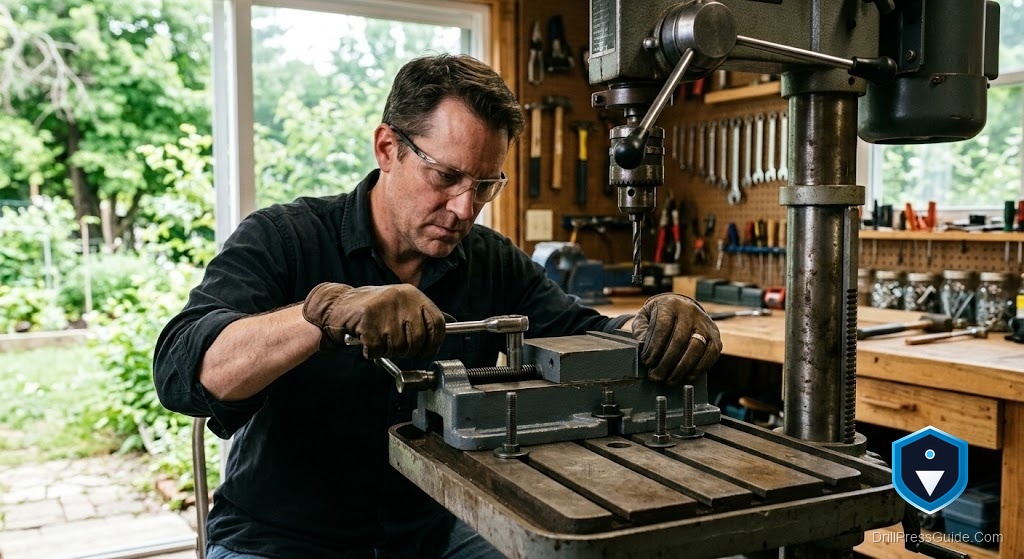
Mounting a vise looks like a two-bolt job, and it can be, right up until you skip the checks that decide whether the holes land where you meant them to. Where the vise sits, which way the jaws face, and whether the table can even take a bolt all matter before a single fastener goes in. A few minutes of checking turns mounting from guesswork into a setup you can trust for every hole after it.
Mounting a drill press vise means fixing it to the table so it cannot move, with the jaws oriented for your work and the whole vise positioned so the bit lands where you want it. A 4-inch drill press vise has mounting holes in its base for this. The checks come first: table slots or holes, jaw orientation, and clearance under the spindle.
Short answer: before mounting, check that your table has slots or holes, decide the jaw orientation for your parts, and position the vise so the bit meets the work under the spindle. Then fix it through the mounting holes so it cannot slide or spin.
Check before you bolt
Three checks save you from re-drilling and re-clamping.
First, the table. Confirm it has T-slots or bolt holes to receive fasteners or clamps. A bare table with neither means you clamp the vise base rather than bolt through it. Second, jaw orientation. Decide which way the jaws should face so long parts overhang safely and the drilling point clears the vise body. Third, spindle clearance. Position the vise so the intended hole sits directly under the spindle with room for the bit and any depth you need.
Get these right first and the actual mounting is quick.
How to mount it
- Clean the table and vise base so the vise seats flat with nothing rocking it.
- Set the jaw orientation you chose and place the vise under the spindle.
- Fix it down with T-bolts through the table slots into the mounting holes, or hold-down clamps pressing the base into the slots.
- Snug the fasteners evenly so no corner lifts and the vise cannot slide.
- Verify by lowering the bit to the marked point before you power on.
Why mounting solidly matters
A vise left loose will spin when the bit grabs, especially on breakthrough, throwing the work and the vise. Fixing it through the mounting holes removes that risk. This is not optional care; OSHA and CCOHS both call for work to be held so it cannot move at the point of operation, and a mounted vise is how you meet that on a drill press.
Bolt-through versus clamp-down mounting
Against clamp-down mounting, bolting through the mounting holes wins on a permanent, immovable hold and loses on how quickly you can move the vise. Clamps in the slots are faster to reposition for varied work; bolts are best for a vise that stays put and for heavier drilling. Both are far safer than a loose vise. You can compare a drill press vise with T-slot clamping hardware for slot mounting.
Who should read this
If your table has no slots or holes, plan to clamp the vise base rather than bolt it, and check that first. If you drill a mix of parts, mount with clamps so you can reposition quickly while staying secure.
Bottom line
Mounting a drill press vise is easy once the checks are done: confirm the table can take a bolt or clamp, set the jaw orientation, and position the vise under the spindle. Then fix it through the mounting holes, evenly and flat, so it cannot move. Check first, mount solid, and every hole after lands where you intend.
- Check the table for slots or holes before choosing bolts or clamps.
- Set jaw orientation and spindle clearance before fixing the vise.
- Fix it flat through the mounting holes so it cannot slide or spin.
FAQ
What do I check before mounting a vise? That the table has slots or holes, which way the jaws should face, and that the drilling point sits under the spindle with clearance.
What if my table has no slots or holes? Clamp the vise base to the table with hold-down clamps instead of bolting through it, and confirm it cannot slide.
Which way should the jaws face? So long parts overhang safely and the drilling point clears the vise body. Orient them to your typical work before fixing the vise.
Do I have to mount a heavy vise? Yes. A heavy vise still spins when the bit grabs. Fix it through the mounting holes or clamp the base every time.
How tight should the fasteners be? Snug and even, so no corner lifts and the vise cannot slide. Tighten in stages rather than one bolt fully first.
How do I confirm alignment? Lower the bit to the marked point before powering on, and adjust the vise position until the bit meets the work exactly.
References
- TEKTON 4-Inch Drill Press Vise Manual: https://media.tekton.com/manuals/manual_53994.pdf
- CCOHS, Metalworking Machines - Drill Presses: https://www.ccohs.ca/oshanswers/safety_haz/metalworking/drillpresses.html
- OSHA Woodworking eTool, Drill Press: https://www.osha.gov/etools/woodworking/production/machines-tools/drill-press


