
Drill Press Milling Vise: Compatibility and Setup Explained
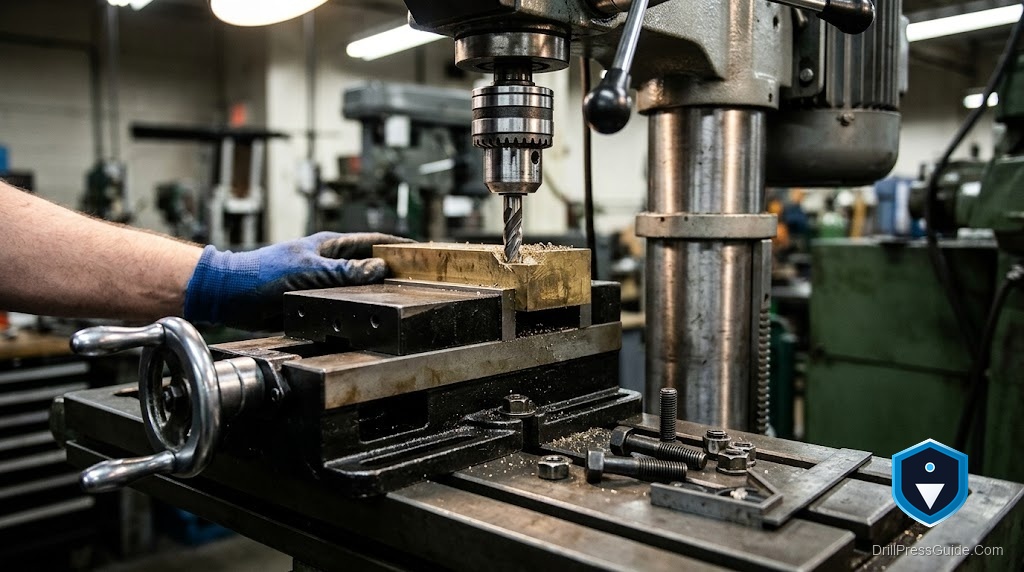
The first time I bolted a milling vise onto my drill press, I felt like I had unlocked a secret level. Here was this heavy, precise, two-axis vise that let me nudge a workpiece left and right, back and forth, all while it sat clamped rock solid under the spindle. I thought I had turned my humble drill press into a milling machine. I had not, and learning why saved me from ruining both a good vise and a decent drill press.
That lesson is the heart of this guide. A milling vise, or cross-slide vise, is a genuinely useful upgrade for a drill press, but only when you understand what it can and cannot do. Get the fit right, respect the machine’s limits, and it becomes one of the most valuable accessories on your bench. Ignore those things, and you will chew up bearings and wonder why your holes wander.
What a Milling Vise Actually Does on a Drill Press
A milling vise built for a drill press is usually a cross-slide design. It clamps your workpiece between hardened jaws, then rides on two screw-driven slides that move the part along the X and Y axes with fine, repeatable control. Turn one handle and the work moves side to side, turn the other and it moves front to back.
That controlled movement is the appeal. For drilling precise hole patterns, positioning a workpiece exactly under the bit, or making light, careful adjustments between operations, it is superb. The HFS cross slide drill press milling vise is a common entry point, offering that two-axis travel in an affordable, cast-iron package that bolts to most tables.
The Hard Truth About Milling on a Drill Press
Here is where I have to be honest with you, because it matters for your safety and your wallet. A drill press is designed for axial loads, meaning force straight down along the spindle axis. Milling generates side loads, forces pushing sideways against the cutter, and a drill press spindle and its bearings are simply not built to handle that.
Push a drill press into real milling work and you risk the chuck working loose, the quill flexing, and the bearings wearing out prematurely. A cross-slide vise lets you position work beautifully, but it does not change the fundamental design of the machine underneath it. Use it for precise drilling and the lightest positioning, not for cutting slots like a mill.
Getting the Fit Right
The single biggest mistake I see is buying a vise without checking it against the drill press table. Measure your table’s dimensions and, crucially, the slots or mounting holes you will bolt through. A vise that overhangs the table or cannot line up with your slots is useless no matter how nice it is.
Then there is height. A cross-slide vise is tall, and it eats into your quill travel and the distance between the chuck and the workpiece. On a benchtop press with limited travel, a bulky vise like a heavy drill press cross slide vise with five inch travel can leave you cramped for room, so check that you will still have clearance for your bits and workpieces before you commit.
Mounting It Down Safely
Once you have a vise that fits, bolt it down. This is not optional. A cross-slide vise is heavy, and when a drill bit grabs the workpiece, an unsecured vise can spin into a genuine hazard. Use the mounting slots in the vise base and fasten it to the table with bolts sized to your table’s slots.
Proper mounting does more than keep you safe, it keeps you accurate. A vise that shifts even slightly under load throws off every hole you place. For heavier, more rigid setups, a substantial cast-iron unit like the Grizzly heavy duty cross slide vise rewards you with stability, but only when it is torqued down firmly to a solid table.
Squeezing Real Value From It
So what should you actually use this thing for? Precise, repeatable hole placement is the sweet spot. Dial in a coordinate, lock what you can, drill, then move to the next position with confidence that everything stayed put. It turns tedious layout work into something almost enjoyable.
Manage the compromises and it shines. Clean the shipping grease off the slides and re-oil them. Take up the backlash in the screws by always approaching a position from the same direction. Keep your movements light and deliberate. Treat it as a precision positioning tool rather than a milling machine, and a good cross-slide vise will serve you for years.
Verdict
A milling vise on a drill press is a case of right tool, adjusted expectations. For most home shops, the HFS cross slide drill press milling vise delivers the best balance of price and capability, giving you real two-axis control without a painful investment. Step up to a heavier Grizzly cross slide vise if you want maximum rigidity and have the table to support it. Just promise yourself one thing: use it to drill with precision, never to mill. Respect that line and this is one of the smartest upgrades you can make.
- A cross-slide milling vise gives your drill press precise, repeatable two-axis workpiece positioning.
- A drill press handles axial loads only, so never use it for true milling with side loads.
- Always check table fit, mounting slots, and quill-travel clearance before buying.
- Bolt the vise down firmly for both safety and accuracy, and manage backlash by approaching positions consistently.
FAQ
Can I use a drill press as a milling machine with a cross-slide vise? No, not safely for real milling. A cross-slide vise lets you position a workpiece precisely for drilling, but a drill press is built for downward axial loads, not the side loads milling creates. Attempting to mill risks damaging the spindle, quill, and bearings.
What is the difference between a milling vise and a regular drill press vise? A regular drill press vise simply clamps a workpiece in a fixed position. A milling or cross-slide vise adds two screw-driven axes so you can move the clamped part left-right and front-back with fine control. That movement makes precise hole placement much easier.
How do I know if a cross-slide vise will fit my drill press? Measure your table dimensions and the mounting slots or holes, then compare them to the vise base. Also account for the vise’s height, since it reduces your quill travel and chuck-to-work clearance. Confirm you will still have room for your bits and workpieces.
Why does my drill press wander when I use a milling vise? Wandering usually comes from backlash in the vise screws or from the vise not being bolted down firmly. Take up the slack by always approaching a position from the same direction, and secure the vise tightly to a solid table. Movement under load ruins accuracy.
Is a cast-iron cross-slide vise better than a lighter one? A heavier cast-iron vise offers more rigidity and stability, which improves accuracy when it is mounted to a sturdy table. The trade-off is added weight and height that eats into quill travel. Choose based on your table’s capacity and your clearance needs.
Do I really need to bolt the vise to the table? Yes, always. A cross-slide vise is heavy, and if a drill bit grabs the workpiece, an unsecured vise can spin dangerously. Bolting it down through the base slots keeps you safe and keeps your holes accurately placed.
What maintenance does a milling vise need? Clean off the factory shipping grease and re-oil the slides so they move smoothly. Periodically check and adjust the gibs and keep the screws lubricated. Managing backlash and keeping the slides clean preserves both accuracy and lifespan.
References
- Machinery’s Handbook, Industrial Press, on spindle loads and workholding
- Grizzly Industrial, drill press and cross-slide vise documentation
- Fine Woodworking, drill press setup and safety guidance
- Popular Mechanics, workshop tool use and safety articles
- Manufacturer owner manuals for benchtop and floor drill presses


