
Choosing a Cross Slide Drill Press Vise That Fits the Work and the Table
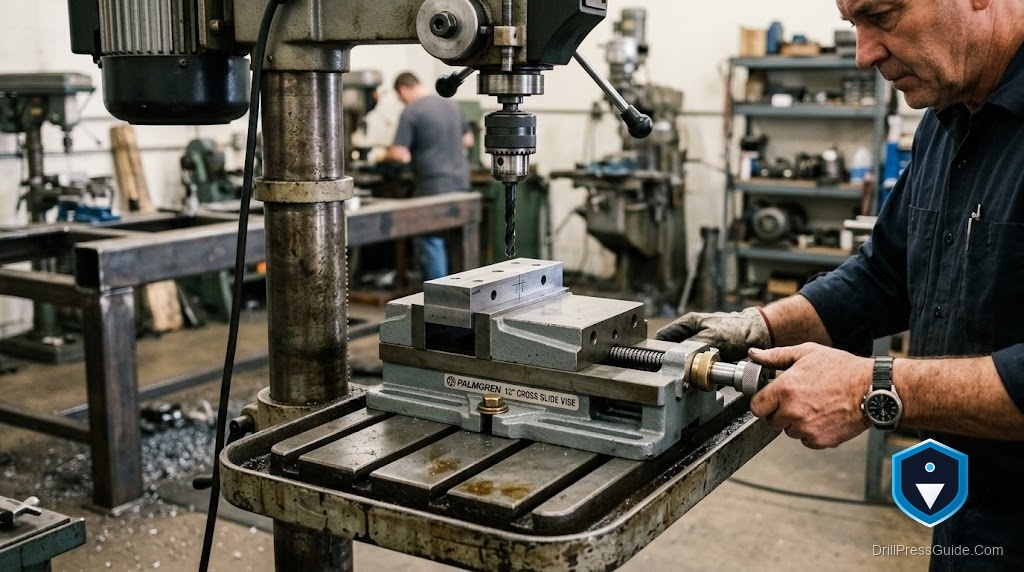
I bought my first cross slide drill press vise on a whim, mostly because it looked serious and I liked the idea of turning two little cranks to place a hole. It arrived heavy, blue, and coated in grease. I bolted it straight onto my drill-press table, dropped in a chunk of aluminum, and immediately learned my first lesson. The vise was so tall that my drill bit barely reached the workpiece at the top of its travel.
That vise taught me more than any tutorial. It showed me how much height these things add, how much they can flex if you clamp poorly, and how genuinely useful they are once you respect their limits. Years later I still reach for one constantly, but I choose it deliberately now instead of by impulse.
This is a guide to picking a cross slide vise that fits both your work and your machine, written by someone who got it wrong first so you do not have to. We will talk sizes, mounting, real flaws, and which ones I actually trust.
What a Cross Slide Vise Is For
A cross slide drill press vise combines vise jaws with a two-axis slide. You clamp the workpiece in the jaws, then use two hand cranks to move it left-right and front-back under the drill bit. It is a hole-positioning tool. You dial the part to a location, lock it if you can, and drill, then move to the next spot.
That positioning ability is the whole point. For repeat parts, for laying out a pattern, and for sneaking a hole into an exact spot, a cross slide vise beats hand-clamping every time. Just keep the same warning in mind that applies to any of these tools on a drill press. The spindle wants axial load, straight down, not the side load of milling.
Sizes: From 3 Inch to 8 Inch
Cross slide vises are sold by jaw width, and the common sizes run 3, 4, 5, 6, and up to 8 inches. Bigger is not automatically better. A larger vise grips wider stock and feels more stable, but it is heavier, taller, and it eats more of your quill travel and cutting area.
For small parts, a drill press vise cross slide 3 in unit like the HFS 3 inch cross slide vise is compact and easy to place, with serrated jaws and dual-axis cranks. Step up one size and the classic all-rounder is the HFS 4 inch 2-way X-Y compound cross slide vise, which offers a useful throat opening, roughly five inches of longitudinal and three and a half inches of cross travel, and a four inch jaw width. For most home shops the 4-inch drill press vise is the sweet spot.
If you regularly hold bigger stock and your machine has the clearance, a 6 cross slide drill press vice such as the VEVOR 6 inch cross slide drill press vise gives you wider jaws and stronger clamping, though it is noticeably heavier and taller. A drill press vise cross slide 5 in size splits the difference for medium work.
Fit to the Table and the Machine
Here is the mistake I made, so please learn from it. A cross slide vise stacks height onto your drill-press table. Before buying, measure from the table up to a chucked bit at the top of its travel, then subtract the vise height and your workpiece thickness. Whatever is left is your real drilling range, and it is often smaller than people expect.
Then check mounting. Good vises have bolt-down slots or mounting holes in the base so you can secure them through the table slots. A vise that is only sitting under gravity will skate under load, and that is dangerous. Confirm that your table slots line up with the vise mounting holes, and gather the right fasteners before your first job.
Honest Flaws: Height, Flex, and Backlash
No cross slide vise is perfect, and the affordable ones share the same tradeoffs. They add height, which limits how thick a part you can drill. They add flex, because a tall stack of slides is inherently less rigid than a part clamped flat to the table. And they have backlash, meaning the crank turns a little before the slide moves.
The Mallofusa 4 inch cross slide vise and similar cast iron models are honest workhorses, but out of the box you should expect to clean off shipping grease, adjust the gibs, and possibly deal with some slop in the screws. None of this makes them bad. It just means you should treat positioning gently, approach each target from the same direction, and not expect milling-machine precision from a positioning accessory.
Cross Slide Vise Parts and Maintenance
It helps to know the cross slide drill press vise parts by name. You have the fixed and moving jaws, the cross-slide and longitudinal screws with their hand cranks, the gibs that set how tightly the slides ride, and the base with its mounting holes. Some units include a hold-down clamp for extra security.
Maintenance is simple and worth it. Strip the packing grease, oil the screws lightly, and set the gibs so the slides move smoothly without rocking. If a vise develops excess play, the gibs or the screw nuts are usually the culprit, and many are adjustable. A vise you keep clean and adjusted will outlast one you neglect by years.
Working Safely Around the Rotating Chuck
A cross slide vise changes how you stand at the machine, so revisit your safety habits. Keep the workpiece fully supported in the jaws, secure the vise to the table, and keep your hands away from the point of operation and the rotating chuck. Wear eye protection, because drilling metal throws swarf and hot chips.
Locate the start and stop button before you begin, not after something goes wrong. Clear chips with a brush, never your fingers, and never reach across a spinning drill bit to crank the slide. The whole appeal of a cross slide vise is that it lets you position without holding the part by hand, so let it do that job and keep your hands clear.
Verdict
For most home shops, a 4-inch cross slide vise is the one to buy, and the HFS 4 inch is my default recommendation for its balance of throat, travel, and grip. Choose the HFS 3 inch if your parts are small and clearance is tight, and step up to the VEVOR 6 inch only if you truly need to hold wider stock and your machine can spare the height. The Mallofusa 4 inch is a solid alternative in the same class.
Buy for positioning, mount it down hard, measure your clearance, and keep the gibs adjusted. Do that, and a cross slide vise becomes one of the most useful things on your bench. Ask it to mill and you are asking for trouble.
- Cross slide vises are for positioning holes, not milling, because a drill press takes axial load, not side load.
- The 4 inch size is the best all-rounder for home shops; go smaller for tight clearance, larger only when needed.
- Always bolt the vise to the table through its mounting holes and measure your real bit-to-work clearance first.
- Expect to clean grease, adjust gibs, and manage backlash on affordable cast iron models.
FAQ
What is a cross slide drill press vise? It is a vise with two built-in slides that let you move the clamped workpiece in two axes under the drill bit. You crank it to an exact position, then drill, which makes repeat holes and precise layouts far easier. It is a positioning accessory, not a milling attachment.
Is there an 8 cross slide drill press vise? Yes, larger cross slide drill press vises exist in wider jaw widths, and an 8 inch class unit will hold big stock with strong clamping. The catch is weight and height, since a large vise eats a lot of quill travel and is heavy to mount. Only buy that big if your work and your machine genuinely need it.
What is the difference between a drill press vise cross slide 3 in and a 5 in? The number refers to jaw width, so a 3 in vise is compact and light for small parts, while a 5 in vise holds wider stock with more stability. The larger size adds height and weight and reduces your drilling clearance. Pick the smallest size that comfortably fits your typical work.
Does Craftsman make a cross slide drill press vise? Craftsman has offered drill press accessories over time, but today the cross slide vise market is led by brands such as HFS, VEVOR, Grizzly, and Wilton. If you locate a Craftsman cross slide drill press vise, judge it on jaw width, travel, rigidity, and mounting rather than the name. The specifications tell you more than the brand.
What are the common cross slide drill press vise parts? The main parts are the fixed and moving jaws, the two lead screws with hand cranks, the gibs that control slide tightness, and the base with its mounting holes. Some models include a hold-down clamp. Knowing these parts makes adjustment and the occasional repair straightforward.
Can a 6 cross slide drill press vice handle bigger workpieces than a smaller one? Yes, a 6 inch vice has wider jaws and usually stronger clamping, so it holds larger stock more securely. In exchange it is heavier and taller, which reduces the thickness of part you can fit under the bit. It is the right choice only when your work regularly exceeds what a 4 inch vise can grip.
Where can I find a Grizzly or Dayton cross slide drill press vise? Grizzly sells cross slide vises and compound tables through its own catalog, and Dayton branded industrial vises turn up through industrial suppliers. These are respected names, but the value-focused HFS, VEVOR, and Mallofusa units cover most home-shop needs well. Compare jaw width, travel, and build before deciding.
References
- Wilton and JET, manufacturer vise specifications and manuals (wiltontools.com)
- Grizzly Industrial, cross slide vise and compound table catalog (grizzly.com)
- OSHA, machine guarding and point-of-operation safety guidance (osha.gov)
- Fine Woodworking, drill press workholding techniques (finewoodworking.com)
- Machinery’s Handbook, workholding and clamping fundamentals (industrialpress.com)


