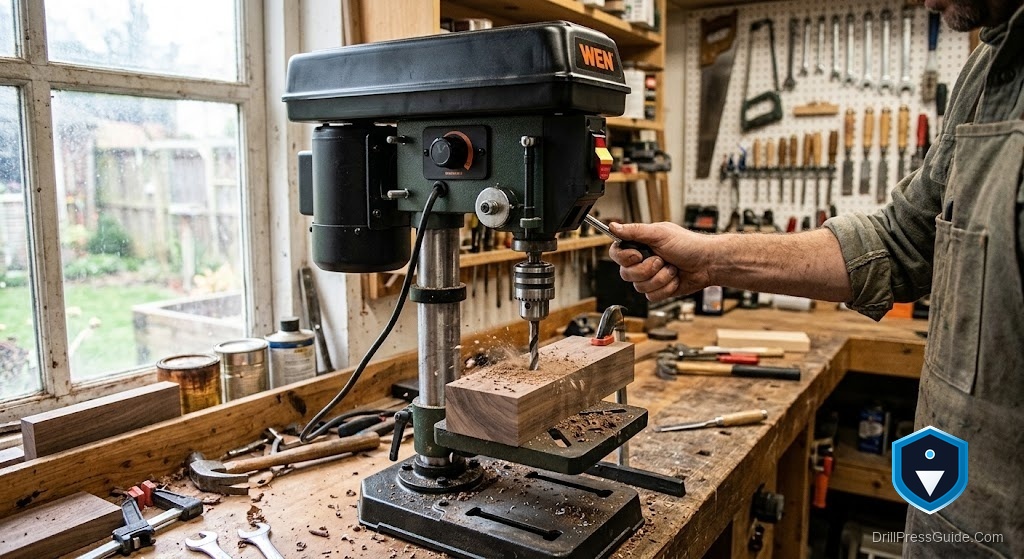
How to Remove the Chuck from a Wilton Drill Press, Step by Step
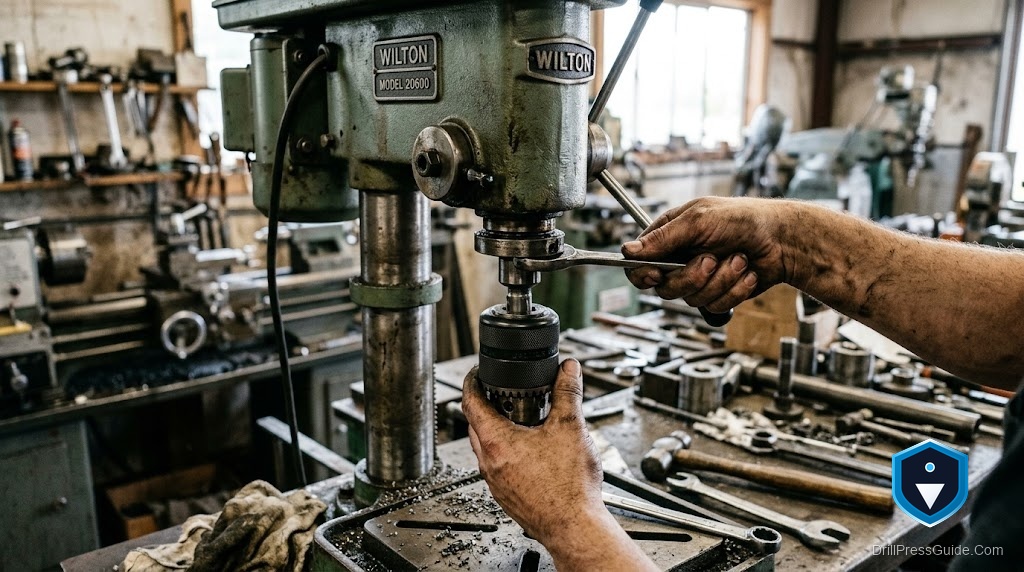
Wilton presses lean toward the heavier, more industrial end of the bench, and that build shows up at the chuck: a larger capacity chuck on a solid Morse taper that has been seated under real clamping force. Removing the chuck from a Wilton drill press uses the same taper-break method as any other press, but the heftier arbor and taper mean you want the right tool and a steady hand rather than a bigger hammer.
The chuck rides on an arbor whose Morse taper wedges into the spindle. Removal means breaking that taper joint, either by driving the arbor out through the spindle cross slot with a drift key, or by pressing the chuck off its arbor with wedges.
Short answer: unplug the press, lower and lock the quill to expose the spindle slot, then drive a drift key or tapered wedges into the slot to press the arbor and chuck straight out, supporting the heavier chuck so it does not drop.
Step by step
- Unplug the press.
- Lower the quill by hand and lock it so the rectangular cross slot in the spindle is fully exposed.
- If the taper is tight, soak the joint with penetrating oil and give it time.
- Drive a drift key or a pair of tapered wedges into the slot with firm, steady taps to press the arbor and chuck out.
- Support the chuck with your other hand; a heavier Wilton chuck drops with more force than a light benchtop unit.
- If the chuck presses off its arbor instead, use wedges between the chuck and the arbor shoulder.
The tool that suits a heavier taper
On an industrial-grade press, the taper is seated firmly, so a tool that spreads a controlled separating force beats hammering. A drill chuck removal wedge set presses the joint apart on the shoulders and fits the JT33 and JT6 tapers these chucks use, which is cleaner and safer than beating on a solid arbor.
The honest drawback: a firmly seated heavy taper may need penetrating oil and more than one attempt, and the chuck is heavier when it releases, so support matters more here. Who should skip the wedges: anyone whose Wilton has a clean slot and the correct factory drift key.
Mind the weight when it lets go
Removing a Wilton drill press chuck follows the standard taper-break routine, with extra respect for the weight and the firmly seated joint. Expose the slot, press the arbor out with a drift or wedges, and be ready to support a chuck that comes off with authority.
Three takeaways:
- The chuck sits on a Morse taper; break the joint rather than forcing it.
- Use a drift or wedges to spread force, not a heavier hammer on the arbor.
- Support the heavier chuck firmly, since it drops with more force when it releases.
FAQ
How is a Wilton drill press chuck attached? By a Morse taper arbor wedged into the spindle. It is not threaded, so you break the taper joint to remove it.
How do I remove the chuck? Lower and lock the quill to expose the spindle slot, then drive a drift key or wedges into the slot to press the arbor and chuck out.
Why is a Wilton chuck harder to remove? These presses are heavier and the taper is seated firmly, so the joint may need more patience, penetrating oil, and a proper tool rather than force.
What if I do not have a drift key? A wedge set presses the joint apart and also removes the chuck from the arbor, without damaging the spindle slot.
The taper will not release. What now? Soak it with penetrating oil, wait, and try again with steady taps. A firmly seated taper takes time.
How do I handle the chuck safely? Support it firmly with your free hand or a padded block, since a heavier chuck drops with more force when the taper lets go.
Can I remove just the chuck and keep the arbor? Yes. Press the chuck off the arbor with wedges and leave the arbor seated in the spindle.
References
- Wilton (JPW Industries), drill press manuals and support: https://www.wiltontools.com