How to Fix a Drill Press Chuck: A Clear, Shop-Ready Method
A chuck problem is the most common complaint on any drill press: the jaws will not grip small bits, the chuck wobbles and drills oval holes, or it drops the bit under load. The reassuring part is that knowing how to fix a drill press chuck rarely means buying a new one. Most chuck faults trace to a dirty mechanism, a poorly seated taper, or a worn arbor, and each has a specific fix. The skill is telling them apart so you clean, reseat, or replace exactly what is wrong.
The chuck is the jawed clamp that holds the bit, mounted on a Jacobs taper arbor that seats in the spindle’s Morse taper. Chuck faults come from grit in the jaws, a taper that is not seated, a worn arbor, or a worn chuck, and the fix depends on which.
The direct answer: diagnose whether the fault is a dirty chuck, an unseated or oily taper, a worn arbor, or a worn chuck, then clean, reseat dry, or replace accordingly. Most chuck problems are cleaning and seating issues, not a dead chuck, so work through those before buying anything.
Diagnose the fault
With the press unplugged:
- Jaws will not grip small bits or feel gritty. Dirt and dried grease in the jaw mechanism. A cleaning fix.
- Chuck wobbles, holes come out oval. Often the taper is not seated square, or has oil on it, or the arbor is worn. Reseat first.
- Chuck drops off the spindle. An oily taper or a worn arbor taper letting go. Clean and dry, or replace the arbor.
- Jaws worn or chipped, will not center. A worn chuck that needs replacing.
Fix the common causes first
Clean the jaw mechanism. Open the jaws fully, flush out old grease and grit, work the jaws through their range, and relube very lightly. This alone fixes a huge share of grip complaints.
Reseat the taper dry. Remove the chuck, wipe the Jacobs and Morse tapers bone dry, and reseat with one straight axial push against a wood block. Never oil a taper. Then indicate a straight pin with a dial indicator.
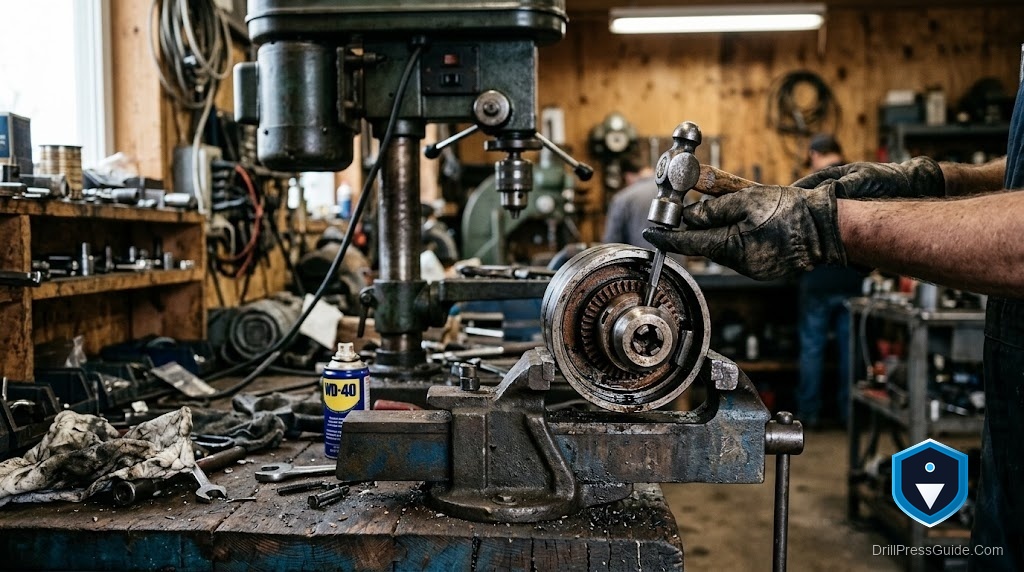
Replace a worn arbor or chuck. If the arbor taper is worn or the jaws are chipped, a replacement drill chuck with JT33 arbor or a matched JT33 to MT2 chuck and arbor set restores true running. Remove the old chuck with chuck removal wedges.
Where people go wrong
The first mistake is buying a new chuck for what was grit in the jaws or oil on the taper, both quick fixes. The second is oiling the taper to cure a wobble, which makes the chuck creep off instead. The third is hammering a wobbling chuck to seat it, which cocks it and adds runout rather than removing it.
The verdict
Fixing a drill press chuck is mostly cleaning and seating, not replacing. Diagnose whether the fault is grit, an unseated or oily taper, a worn arbor, or a worn chuck, then clean the jaws, reseat the taper dry, or replace the worn part. Indicate the result with a straight pin. Work through it in that order and most chuck complaints disappear with a rag and a wood block, leaving replacement for the genuinely worn out chuck.
Three takeaways:
- Most chuck faults are grit or an unseated taper, not a dead chuck.
- Reseat tapers dry, never oil them, then indicate the runout.
- Replace only a genuinely worn arbor or chuck.
FAQ
Why won’t my drill press chuck grip small bits? Usually dirt and dried grease in the jaw mechanism. Open the jaws fully, flush out the grit, work them, and relube lightly. This fixes most grip complaints.
Why does my chuck wobble and drill oval holes? Often the taper is not seated square, has oil on it, or the arbor is worn. Reseat the taper dry first and indicate a straight pin before replacing anything.
Why does the chuck keep falling off? An oily taper or a worn arbor taper. Clean and dry both tapers and reseat. If it still drops, the arbor taper is worn and needs replacing.
Can I fix a chuck without replacing it? Usually yes. Cleaning the jaws and reseating the taper dry fix most faults. Replace only a worn arbor or a chuck with chipped, worn jaws.
Should I oil the chuck jaws? Only a very light lube after cleaning. Never oil the mounting taper, which must stay dry to grip. Too much lube in the jaws also collects grit.
How do I check the chuck runs true after fixing it? Chuck a straight pin and indicate the runout. A few thousandths is normal. Visible wobble means reseat the taper or the arbor or chuck is worn.
How do I remove the chuck to reseat it? Unplug the press, open the jaws, remove any retaining screw, and drive the chuck off its taper with removal wedges tapped evenly from both sides.
References
- Zoro Resource Hub, Morse vs. Jacobs Tapers. https://www.zoro.com/resourcehub/what-are-the-dimensions-and-angles-of-morse-tapers-and-jacobs-tapers/
- Occupational Safety and Health Administration, Woodworking eTool: Drill Presses. https://www.osha.gov/etools/woodworking/production/machines-tools/drill-press