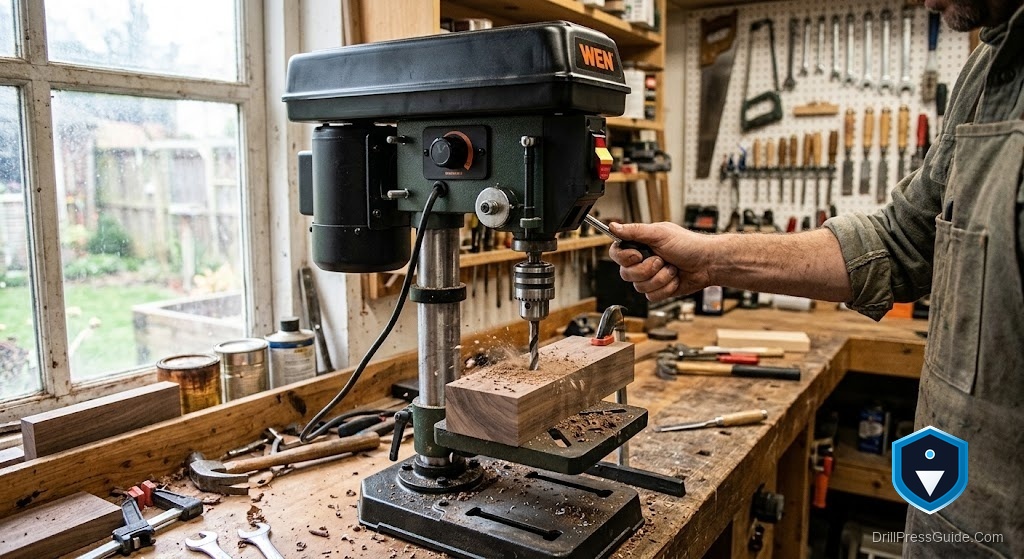
Getting Remove Chuck from Drill Press Right: Fit, Tools, and Final Checks

Removing a chuck from a drill press is a task most owners encounter when the chuck is worn, damaged, or being replaced with a different capacity. The procedure itself is short, but it requires the right tool (a drift key matched to your quill’s slot), the correct technique (one firm blow, not repeated prying), and a final check to confirm the bore is undamaged and ready for the next installation. Getting these three things right means the job finishes in a few minutes with no collateral damage. Getting any of them wrong means a damaged quill or a nicked spindle bore that complicates the next installation.
Straight answer: use a drift key in the quill’s drift slot, one firm mallet blow, and padding below to catch the chuck. The three things to get right are: fitting the correct drift key to the slot (not just any flat bar), directing the blow axially along the taper (not sideways), and cleaning the bore immediately after the chuck drops.
Which tool fits which machine
The drift key is a flat tapered steel bar designed to fit the rectangular slot in the quill housing (for Jacobs Taper chucks) or the top of the quill bore (for Morse Taper chucks). Not all drift keys are the same width or taper angle; using one that is too narrow will contact only one side of the slot and is less effective. Using one that is too wide will not enter the slot.
Match the drift key to your machine:
- Benchtop presses with JT33 spindles (most Harbor Freight, WEN, Craftsman 113-series, JET JDP, Ryobi, Delta benchtop): The drift slot is a rectangular cutout visible in the quill housing when the quill is lowered. The slot width varies by machine but is typically 5/16 to 3/8 inch. Check the machine’s parts manual for the drift tool specification, or bring the old key (if present) to match at a tool supplier.
- Floor presses with MT2 spindles (Delta 17-900, JET floor models, most heavy-duty presses): The ejection slot is at the back (upper) end of the quill bore. The drift is a flat bar sized to span the slot and bear against the arbor tang.
Some machine manufacturers include the drift key with the machine. If yours is missing, the machine’s parts diagram lists it by part number. A general drill press drift key set from a machine tool supplier covers the most common sizes.
The removal technique
- Power off, switch locked, machine unplugged. Essential before any quill work.
- Lower the quill to a comfortable working position; engage the quill lock if present.
- Place a folded rag or scrap wood block on the table directly below the chuck.
- Insert the drift key into the slot with the tapered face oriented to bear axially against the arbor tang — meaning the force pushes the arbor downward and out, not sideways.
- Strike the drift with a dead-blow or rubber mallet, one firm decisive blow. The chuck drops onto the padding.
- If the chuck does not release: reposition the drift squarely in the slot, confirm the bearing face is correctly oriented, and try one more firm blow. If it still does not release, apply penetrating oil to the taper junction, allow 15–30 minutes, and try again.
What not to do: Do not insert a screwdriver or pry bar between the chuck body and the quill face. This applies force at the wrong angle, damages the quill face and chuck skirt, and does not reliably break the taper’s self-holding grip.
What the tool and fit check prevents
- Too-narrow drift: Contacts one side of the slot only, applies uneven force, and may damage the slot edges. Result: incomplete release and a damaged slot.
- Sideways force: A drift inserted at the wrong angle pushes the chuck laterally rather than axially. The taper does not release; instead, the chuck is loaded sideways, potentially damaging the quill bore.
- No padding below: The chuck falls when the taper releases. Without padding, the jaws or chuck body can chip or crack on impact with the cast-iron table.
After the chuck drops: the final checks
-
Inspect the spindle bore. Wipe clean with a dry rag. Look for:
- Chips or grit: wipe again.
- Nicks or raised burrs at the bore mouth: remove with a fine file or 400-grit emery cloth, clean again.
- Oil or grease (if someone previously lubricated the taper): degrease with isopropyl alcohol on a clean cloth, then dry completely.
-
Inspect the old chuck and arbor. If you are reusing the arbor with a new chuck body, inspect the arbor taper surface for scoring, nicks, or corrosion. A damaged arbor transfers its damage to the new chuck installation.
-
Confirm the bore taper is intact. Run a finger along the interior taper surface. It should feel smooth and consistent, not ridged or gritty from a previous installation gone wrong.
Replacing after removal
For the replacement installation, see the full chuck replacement guide for your taper type. The key installation principles: no lubricant on taper surfaces, firm mallet seating through a wood block on the chuck body, draw bar tightened (MT2 only), runout checked after seating.
Recommended matched chuck and arbor combinations for common configurations:
- JT33 benchtop: 5/8-inch keyed chuck with JT33 arbor
- 1/2-inch JT33: JT33 keyed chuck, 1/32–1/2-inch
- MT2 floor press: MT2-to-JT33 arbor with draw bar
- Lost chuck key: Universal ratcheting chuck key
Conclusion: right drift, right direction, clean bore
Removing a drill press chuck correctly means three things: a drift key that fits the slot, force directed axially, and bore inspection afterward.
- Match the drift key width to the quill slot; use the parts manual if the correct key is unknown.
- One firm axial mallet blow; padding below.
- After removal: wipe and inspect the bore; remove burrs if present; degrease if necessary.
FAQ
What is a drift key? A flat tapered steel bar designed to fit the drill press quill’s drift slot and drive the chuck arbor out of the spindle taper.
Where is the drift slot on my drill press? A rectangular cutout in the quill housing (for JT33 presses) or at the top of the quill bore (for MT2 presses). It is visible when the quill is lowered.
What if I do not have the drift key? Source one from the machine manufacturer (by part number from the parts diagram) or from a machine tool supplier. Do not substitute a screwdriver or incorrectly sized bar.
Why does the bore need to be clean before reinstalling? Any debris or oil between the taper surfaces prevents full contact, reduces grip, and causes runout or chuck walk during use.
Can I reuse the old arbor? Yes, if the taper surface is undamaged and free of nicks and scoring.
What if the chuck will not release with two firm blows? Apply penetrating oil to the taper junction and allow 15–30 minutes to soak before trying again.
References
- Jacobs Taper drift tool reference: https://www.jacobs-chuck.com
- Morse Taper ejection procedure reference: https://www.mscdirect.com
- VintageMachinery.org, drill press quill and chuck servicing: https://www.vintagemachinery.org