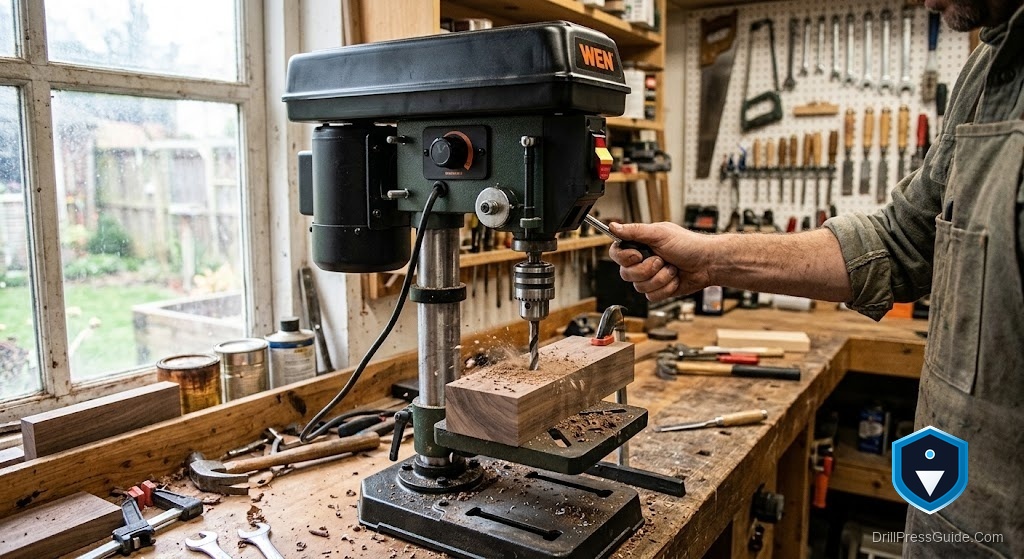
Understanding a 3/4 Drill Press Chuck Before You Buy or Set One Up
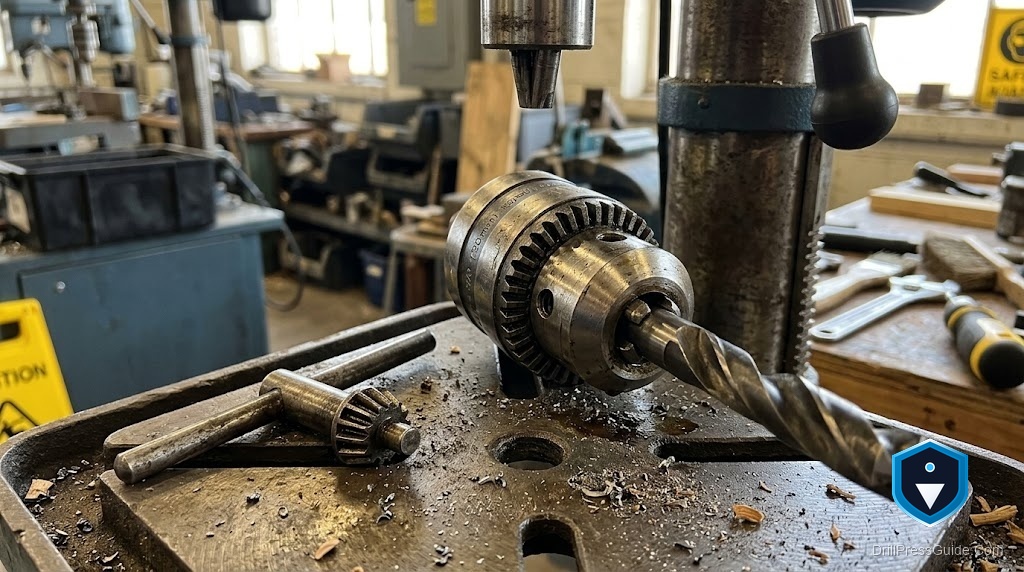
A 3/4-inch drill press chuck is a large-capacity chuck, and it belongs in a specific context. On a standard benchtop press, a 3/4-inch capacity chuck is unusual because most benchtop spindles are not sized for that opening. Where you encounter it is on floor-standing presses, magnetic drill presses, and industrial machines with larger spindles and more substantial Morse taper sockets. Understanding what the 3/4-inch spec actually means, and where it legitimately fits, saves you from ordering a chuck that will not seat on your spindle.
Chuck capacity refers to the maximum shank diameter the chuck’s jaws can open to accept. A 3/4-inch capacity chuck grips bits with shanks from a small minimum (usually 1/32 or 1/16 inch) up to 3/4 inch. That upper range handles large-diameter twist bits, large Forstner bits with full shanks, and some specialty tooling. The mounting taper is a separate spec from the capacity; a large-capacity chuck still mounts by a specific taper standard, typically a Morse taper on the machines that take 3/4-inch capacity.
Straight answer: a 3/4-inch drill press chuck fits machines with large Morse taper spindles, MT3 or larger. If your machine has an MT2 spindle (common on benchtop presses), a 3/4-inch capacity chuck with an MT2 arbor can physically mount, but the spindle’s rigidity is the real limit on capacity, not the chuck size. Confirm your spindle taper and the machine’s recommended maximum chuck capacity from the manual before ordering.
Where 3/4-inch capacity actually belongs
Floor-standing drill presses with MT3 or MT4 spindles are the natural home for a 3/4-inch chuck. These machines have the mass, rigidity, and motor power to use that capacity in practice. Magnetic drill presses (which use annular cutters rather than twist bits) often use a different tooling system entirely, a 3/4-inch Weldon shank rather than a chuck, so confirm which system your magnetic press uses before assuming it needs a conventional chuck.
On a benchtop press with a smaller Morse taper, you can often install a larger-capacity chuck physically, but the machine’s rigidity limits what you can realistically drill. A 3/4-inch chuck mounted on an MT2 spindle does not transform a benchtop press into a floor-press; the spindle and column are still the constraint.
Keyed chucks at this capacity
At 3/4-inch capacity, keyed chucks are the standard. The jaws need to generate enough clamping force to hold a large bit during heavy-duty drilling, and that requires key tightening. A keyless chuck at 3/4-inch capacity exists but is less common; for metalwork at this size, stick with a keyed design.
When shopping for a replacement, confirm both the taper (MT3, MT4, or another Morse size) and the capacity. A universal ratcheting chuck key fits most standard keyed chuck sizes. For smaller press work while using a large-capacity chuck, a drill press vise is essential for securing the workpiece safely when drilling large holes.
What to confirm before buying
- Identify your spindle taper: MT3 or MT4 for most floor presses that legitimately use 3/4-inch capacity.
- Check your machine’s manual for the recommended maximum chuck capacity.
- For a floor-press replacement, order a 3/4-inch keyed chuck with the correct Morse taper arbor.
- Do not assume that installing a larger chuck on a smaller spindle increases practical drilling capacity.
The honest flaws
Two honest points. First, 3/4-inch capacity chucks are heavier and add more weight to the quill assembly than standard 1/2-inch or 5/8-inch chucks; on machines not designed for them, this added weight can affect spindle return spring function. Second, large-capacity chucks cost meaningfully more than standard sizes, so confirm the need before buying. Neither is a reason to avoid one when the machine calls for it; both are reasons to verify the application first.
Who should buy one, and who should reconsider
Buy a 3/4-inch chuck if you own a floor-standing press with an MT3 or larger spindle, your work involves large-diameter bits that regularly exceed 5/8-inch shank, and your machine’s manual supports that chuck size.
Reconsider if you own a benchtop press and think a 3/4-inch chuck will unlock larger drilling capacity. The chuck capacity is not the limiting factor on a benchtop; the spindle and machine mass are. A 5/8-inch chuck is the practical upper end for most benchtop-press work.
Conclusion: large capacity for the right machine
A 3/4-inch drill press chuck is the right tool for floor-standing presses with large Morse taper spindles.
- 3/4-inch capacity handles large twist bits and Forstner bits with full-diameter shanks.
- Belongs on MT3 or larger spindles; confirm your spindle taper before ordering.
- Keyed design is standard at this capacity for metalwork and heavy-duty use.
- Installing a larger chuck on a smaller machine does not increase practical capacity.
FAQ
What is a 3/4-inch drill press chuck? A chuck whose jaws open to accept bit shanks up to 3/4-inch diameter. It is a large-capacity chuck for floor-standing presses and industrial machines.
What spindle taper does a 3/4-inch chuck need? Typically MT3 or MT4 on the floor presses that legitimately use this capacity. Check your machine’s manual.
Can I put a 3/4-inch chuck on my benchtop press? Physically possible if the taper arbor matches, but the machine’s spindle rigidity is the real limit, not the chuck. The practical drilling capacity does not increase.
Should I use a keyed or keyless chuck at 3/4-inch capacity? Keyed. The clamping force required for large-diameter drilling in metal requires key tightening.
What chuck key do I need? A universal ratcheting chuck key fits most keyed chuck sizes. Keep one at the machine.
Do magnetic drill presses use a 3/4-inch chuck? Magnetic drill presses typically use a 3/4-inch Weldon shank tooling system for annular cutters rather than a conventional chuck. Confirm your machine’s tooling system before buying.
References
- Morse taper standards and Jacobs taper reference: https://www.mscdirect.com/browse/Morse-Taper-Reference
- Jacobs Chuck, large-capacity keyed chuck specifications: https://www.jacobs-chuck.com
- Floor drill press spindle taper reference: https://www.jettools.com