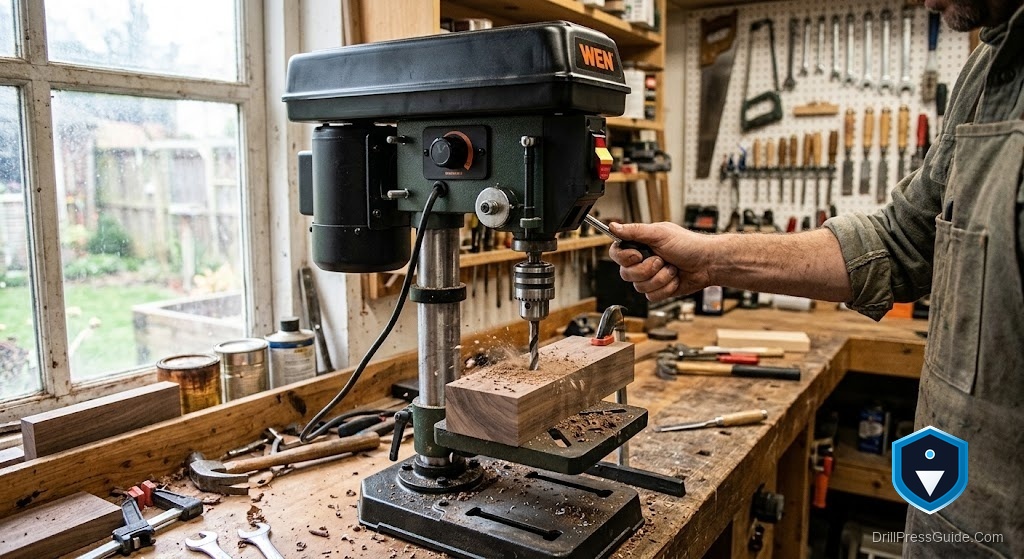
1/2 Drill Press Chuck: What It Is, Where It Fits, and What to Check
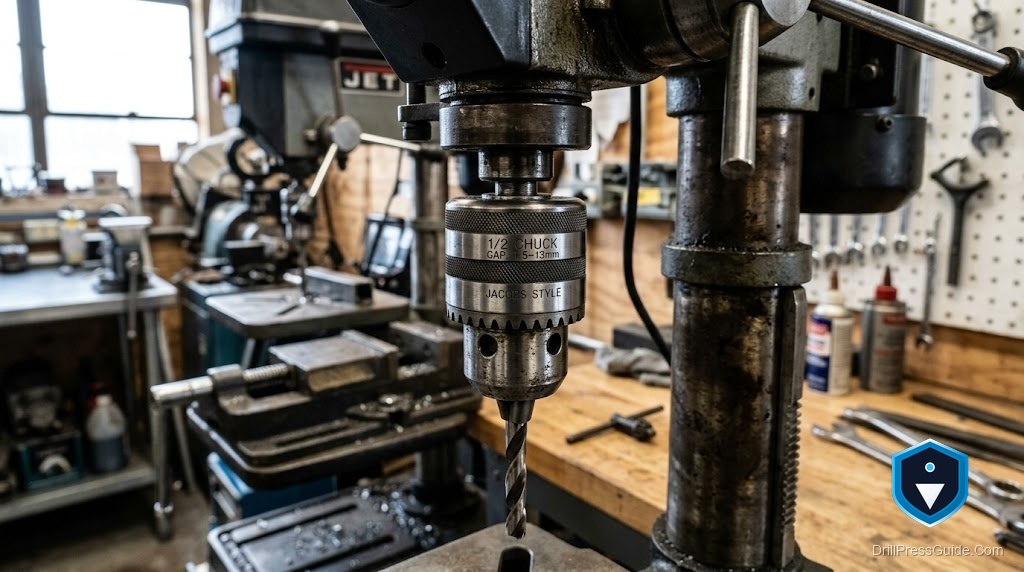
When someone says they need a “1/2 drill press chuck,” they usually mean one of two things: a chuck with a 1/2-inch maximum capacity (the largest bit shank it will grip), or a chuck with a 1/2-inch straight-shank arbor for mounting. Those are different specs that answer different questions. Getting clear on which one you need before you buy saves a trip back to the box.
A drill press chuck is the clamping device on the spindle that holds drill bits. The capacity spec, 1/2 inch, refers to the largest shank diameter the chuck’s jaws can open to accept. Most benchtop and floor drill presses use chucks in the 1/2-inch or 5/8-inch capacity range. The chuck mounts to the spindle via a taper: the two most common on drill presses are the JT33 (Jacobs #33) taper and the Morse taper (MT2 on most benchtop presses, MT3 on larger floor models).
Straight answer: to order the right 1/2-inch drill press chuck, identify your spindle taper (JT33, MT2, or another Morse taper), then choose a chuck and matching arbor. A 1/2-inch capacity chuck on a JT33 arbor fits most benchtop presses; the same capacity chuck on an MT2 arbor fits spindles with a Morse taper socket.
The two specs you need before buying
Chuck capacity tells you the largest shank it grips. A 1/2-inch capacity chuck handles bits from 1/32 or 1/16 inch up to 1/2 inch, which covers the vast majority of general woodworking and metalworking operations on a benchtop press. Most benchtop machines ship with either a 1/2-inch or 5/8-inch chuck; 1/2-inch is the more common on smaller presses.
Spindle taper tells you how the chuck mounts. This is the part owners most often overlook. Common tapers on drill presses:
- JT33 (Jacobs #33): The most common on benchtop presses, a short steep taper. The chuck arbor presses onto the JT33 socket on the spindle.
- MT2 (Morse Taper 2): Found on floor presses and some benchtop machines with a quill that accepts Morse tooling directly. The arbor converts MT2 to JT33 if the chuck has a JT33 bore.
Identify your taper before ordering. The easiest way is to check the machine’s manual or specification sheet; the taper is listed under spindle or chuck specs.
Keyed versus keyless
Keyed chucks require a chuck key to open and close the jaws and grip tightly enough for heavy drilling. They are the standard on most drill presses and the better choice for accurate repetitive work and anything involving larger bits in metal. A 5/8-inch keyed chuck with an MT2 arbor fits MT2 spindles directly, and a 5/8-inch keyed chuck with a JT33 arbor fits JT33 spindles.
Keyless chucks tighten by hand and are convenient for frequent bit changes. They work well for light wood drilling but are less ideal for heavy metalwork where maximum grip matters. Keep a universal ratcheting chuck key on hand regardless of which type you use.
What to check before buying
- Confirm the spindle taper from your machine’s manual or spec sheet.
- Confirm the chuck capacity you need (1/2-inch handles most standard bit sizes).
- Choose a keyed chuck for metalwork or heavy drilling; keyless for convenience in lighter wood work.
- If your spindle is MT2 and you want a JT33 chuck, use a MT2-to-JT33 arbor as the adapter.
The honest flaws
Two honest points. First, a 1/2-inch capacity chuck is the limiting factor for very large bits; if you regularly drill 5/8-inch or larger holes, a 5/8-inch capacity chuck gives you more headroom. Second, guessing the spindle taper is the most common way to order the wrong chuck; a JT33 chuck arbor will not seat in a Morse taper spindle without an adapter. The minute it takes to look up the taper in the manual is well spent.
Who should buy a 1/2-inch chuck, and who needs more capacity
A 1/2-inch chuck is the right size if your work involves standard drill bits up to 1/2-inch diameter. That covers most woodworking operations and general-purpose light metalwork on a benchtop press. It is also the right replacement if your machine shipped with a 1/2-inch chuck and you need a fresh one.
Step up to a 5/8-inch chuck if you regularly use Forstner bits, spade bits, or drill bits larger than 1/2 inch. The larger chuck handles those sizes without requiring bit-shank adapters.
Conclusion: match capacity and taper, then order
A 1/2-inch drill press chuck is a well-defined purchase once you have two numbers.
- Capacity: 1/2-inch maximum shank diameter, which covers most standard bits.
- Taper: JT33 or Morse (MT2 most common on benchtop presses); confirm from your manual.
- Keyed for heavy work; keyless for convenience.
- An MT2-to-JT33 arbor adapts a JT33 chuck to a Morse taper spindle.
FAQ
What does “1/2 drill press chuck” mean? Typically a chuck with 1/2-inch maximum jaw capacity, meaning it grips bits up to 1/2-inch diameter shank.
What taper does my drill press spindle have? Check your machine’s manual or spec sheet under spindle or chuck specifications. JT33 is most common on benchtops; Morse is common on floor models.
What is the difference between JT33 and MT2? JT33 (Jacobs #33) and MT2 (Morse Taper 2) are different taper standards. A JT33 arbor does not fit an MT2 socket without an adapter.
Do I need a keyed or keyless chuck? Keyed for heavy drilling and metalwork; keyless for convenience in light wood work.
How do I remove the old chuck? For JT33 mounts, use a drift through the spindle access slot to break the taper seat. For Morse taper mounts, use a Morse drift from the top of the quill.
Can I use a 1/2-inch chuck for Forstner bits? Only if the Forstner bit’s shank is 1/2 inch or smaller. Many larger Forstner bits have shanks larger than 1/2 inch; those require a 5/8-inch capacity chuck.
References
- Jacobs Chuck Manufacturing, chuck and arbor specifications: https://www.jacobs-chuck.com
- Morse taper standards reference: https://www.mscdirect.com/browse/Morse-Taper-Reference
- General drill press chuck installation and removal guide: https://www.finewoodworking.com