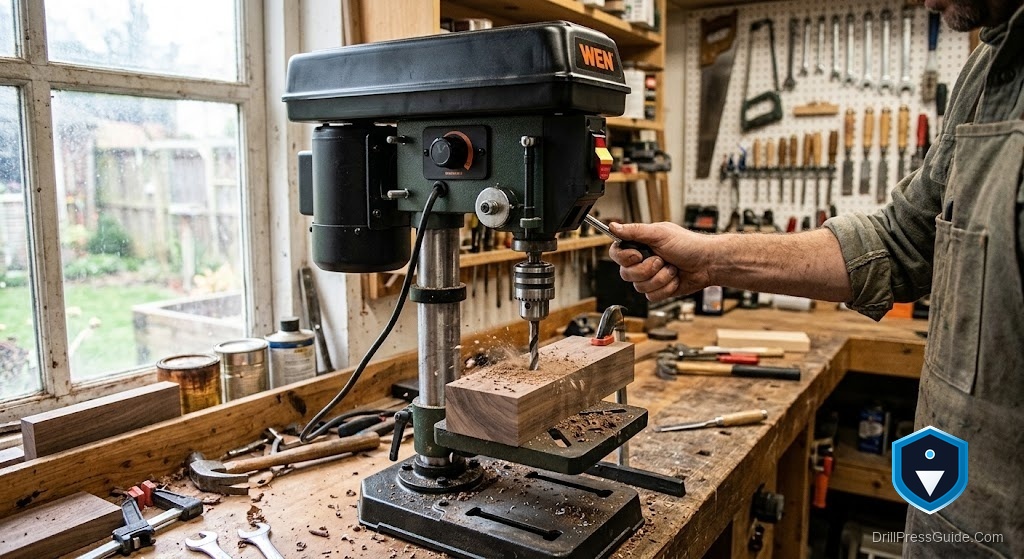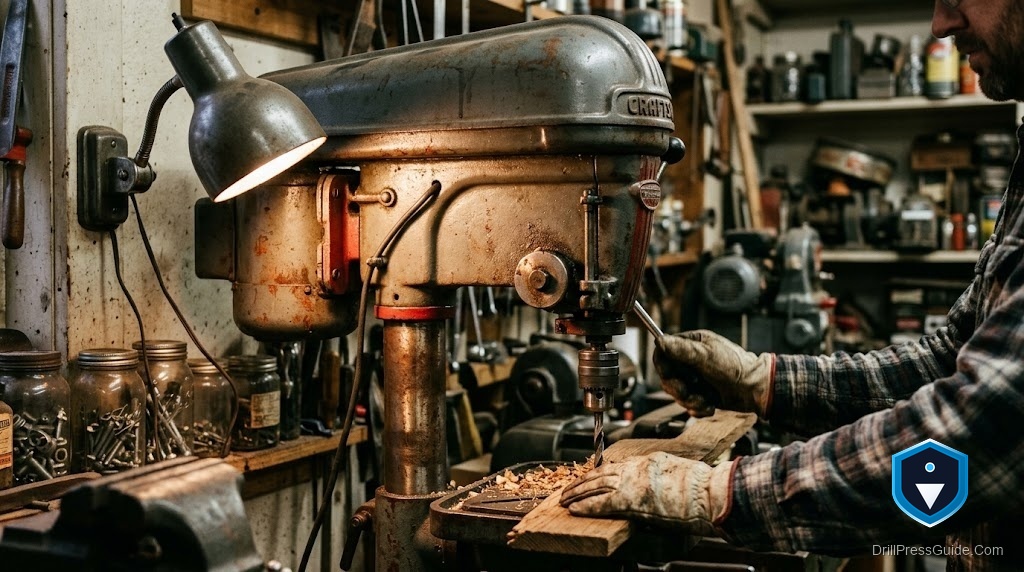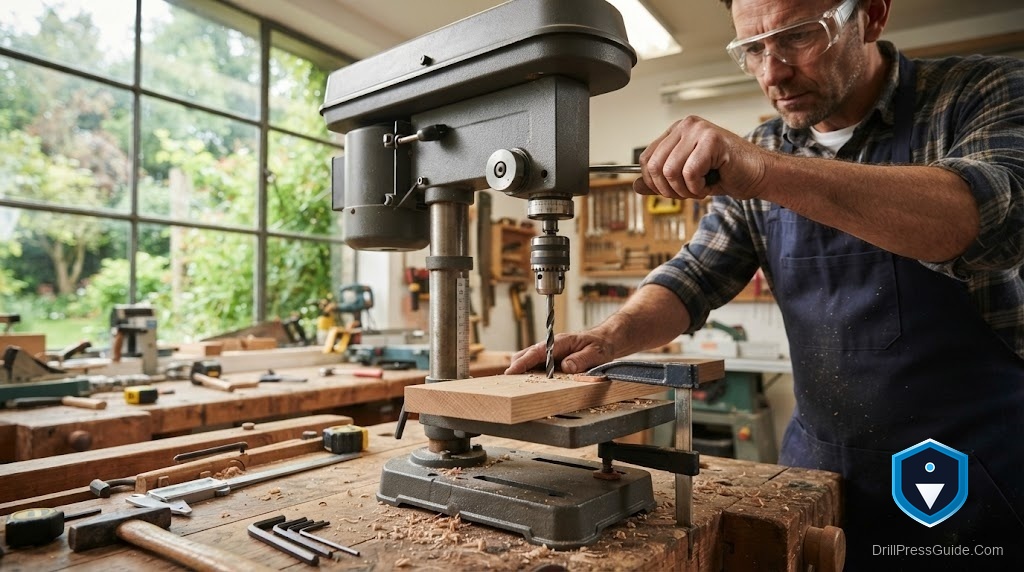
Removing a Chuck From a Drill Press: The Right Way
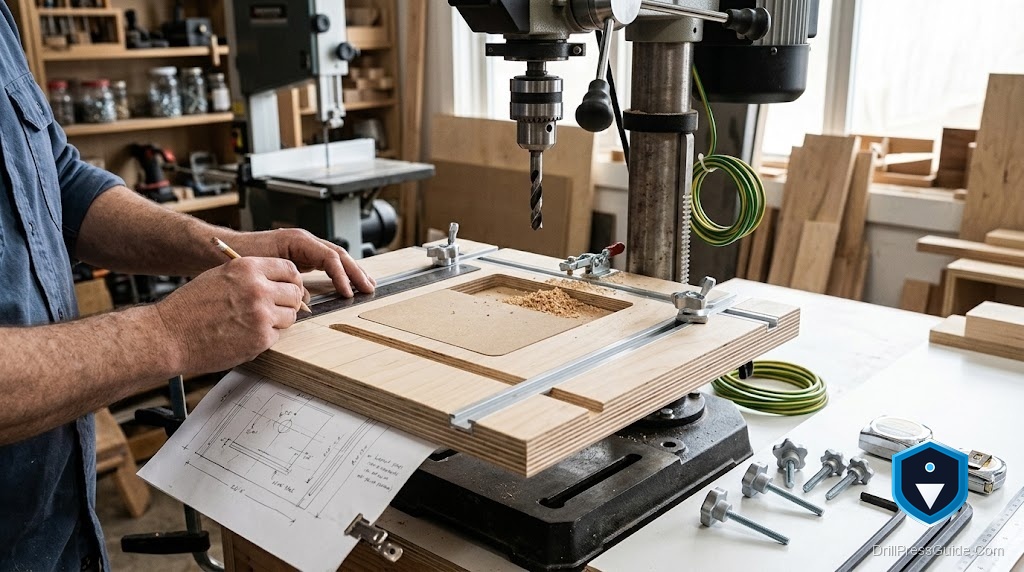
Sooner or later every drill press owner needs to get the chuck off, to replace a worn one, to fit a different taper, or to clean and reseat a chuck that keeps slipping. And this is where a lot of people either give up, thinking the chuck is somehow bolted on, or reach for the wrong tools and pry the jaws, wrecking the chuck in the process. The truth is that a drill press chuck comes off predictably once you understand how it is held on, and the right method takes a couple of minutes with tools you already have. This guide covers removing a chuck the right way, without damaging the chuck, the spindle, or yourself.
A drill press chuck is not threaded or bolted to the machine. It is held by a taper, a precise friction fit, in one of two arrangements. Either the chuck is pressed onto a tapered arbor and that arbor is pressed into the spindle’s socket, or the chuck’s own tapered bore presses directly onto the spindle nose. Removing it means separating a taper, which is a matter of driving the joint apart, not turning or prying anything. Knowing which taper joint you are dealing with is the whole trick.
Figure out how your chuck is mounted
Before removing anything, look at how the chuck attaches, because it decides the method. On most drill presses, the chuck sits on an arbor whose upper end is a tapered shank, a Morse taper, seated up inside the hollow spindle or quill. Look for a slot or a cross-hole in the quill just above where the chuck’s arbor enters, that slot is the clue, because it is where a wedge or drift drives the arbor out. On some machines the chuck presses directly onto a threaded or tapered spindle nose. Identifying which arrangement you have tells you whether to drive the arbor out of the spindle or separate the chuck from a fixed arbor.
Removing an arbor-mounted chuck
This is the common case, and it uses the quill slot. First, lower and lock the quill if the machine allows, so the slot is exposed and the assembly is steady. Support the chuck so it does not fall and get damaged when it releases. Insert the correct drift, a tapered wedge sized to the slot, into the slot in the quill, and give it a firm tap with a hammer. The wedge pushes against the top of the arbor and breaks the taper, dropping the chuck and arbor out together. It usually takes one good tap, not repeated hard blows. Once out, you can separate the chuck from the arbor if needed by pressing or driving them apart by the designed method.
Never drive on the chuck jaws or pry them, since that ruins the chuck without loosening the taper. Use the slot and drift, which is exactly what it is there for.
Removing a chuck with no quill slot
If your machine has no slot, the chuck and arbor are separated with a chuck removal wedge set or arbor press rather than through the quill, or the chuck unthreads if it is a threaded-nose type. The Jacobs mounting and removing guidance details the methods for chucks held directly, using paired wedges to press the chuck off its arbor. The principle is the same: separate the taper by driving or pressing it apart squarely, never by prying the jaws.
Fitting the new chuck
Once the old chuck is off, fitting the replacement is the reverse and depends on a clean taper. Wipe the arbor taper and the spindle socket, or the chuck bore, perfectly clean and dry, since any oil or grit stops the taper seating and makes the chuck slip later. Then press the new chuck’s arbor into the spindle with a firm axial push or a light seating blow so the taper wedges home. Confirm the arbor taper matches, commonly JT33 on mid-size machines; a standard JT33 keyed chuck fits a JT33 arbor, and a larger replacement JT33 chuck mounts the same way for more capacity. Check that the new chuck runs true before precision work.
Conclusion
Removing a chuck from a drill press is simple once you know it is held by a taper, not bolted on. Identify whether your chuck is arbor-mounted in a slotted quill or pressed on a nose, then break the taper the right way, driving a drift through the quill slot for the common arbor-mounted type, or pressing the chuck off with wedges where there is no slot, always supporting the chuck and never prying the jaws. Clean the taper before fitting the replacement so it seats and holds. Done this way, a job that stumps a lot of owners takes a couple of minutes and leaves the chuck and spindle undamaged.
Three takeaways: the chuck is held by a friction taper, not bolted on; drive a drift through the quill slot to break an arbor-mounted chuck free while supporting it, never prying the jaws; and clean the taper before fitting a matching replacement so it seats and holds.
Frequently Asked Questions
How is a drill press chuck attached? By a taper, a precise friction fit, not threads or bolts. Either the chuck sits on a tapered arbor pressed into the spindle, or the chuck’s bore presses onto a tapered spindle nose. Removing it means separating that taper.
How do I remove an arbor-mounted chuck? Lower and lock the quill to expose the slot, support the chuck, insert the correct tapered drift into the quill slot, and give it a firm tap. The wedge breaks the taper and the chuck and arbor drop out together.
What if my drill press has no slot in the quill? Then the chuck is separated from its arbor with a wedge set or an arbor press, or it unthreads if it is a threaded-nose type. The Jacobs guidance details these methods. The principle is the same: separate the taper, never pry the jaws.
Why should I not pry the chuck jaws? Because prying the jaws ruins the chuck without loosening the taper that actually holds it. The taper is broken by driving a drift through the quill slot or pressing the chuck off squarely, not by the jaws.
Why does my new chuck keep falling off after I fit it? Almost always a dirty or oily taper. The taper is a friction fit that needs a clean, dry arbor and socket to seat. Wipe both clean and dry, then press the chuck on with a firm push or light seating blow.
How do I know which replacement chuck fits? By the arbor taper, commonly JT33 on mid-size machines. Confirm the taper, and a chuck of that taper fits once the old one is off. A JT33 chuck will not seat on a smaller JT2 arbor.
References
- Jacobs Chuck Manufacturing, Mounting and Removing Chucks. http://www.jacobschuck.com/uploads/ueditor/file/20200604/1591240204146153.pdf
- VintageMachinery.org, machine tool references and literature. http://vintagemachinery.org