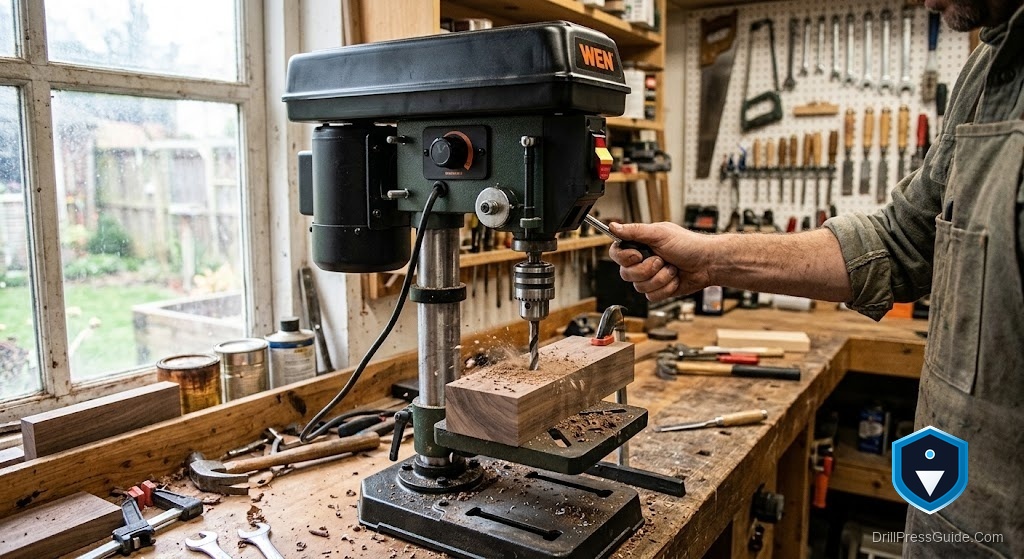
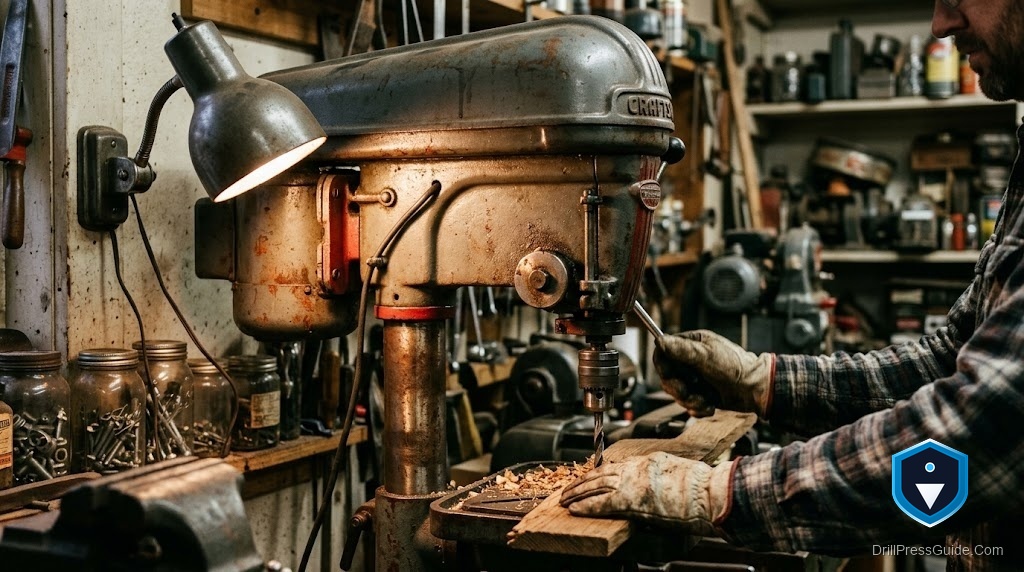
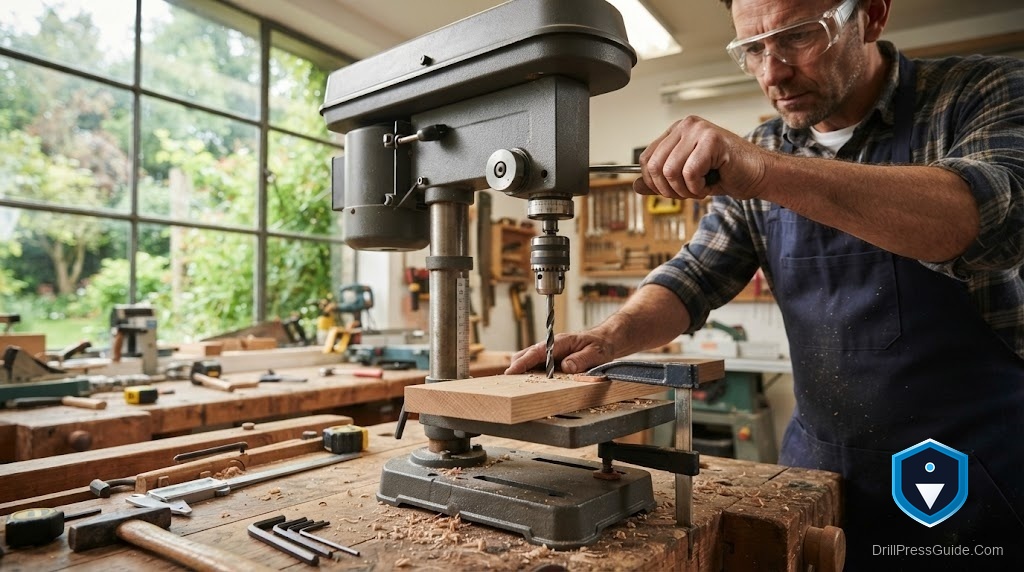
DIY Wood Drill Press Vise: Layout, Hardware, and Setup Choices
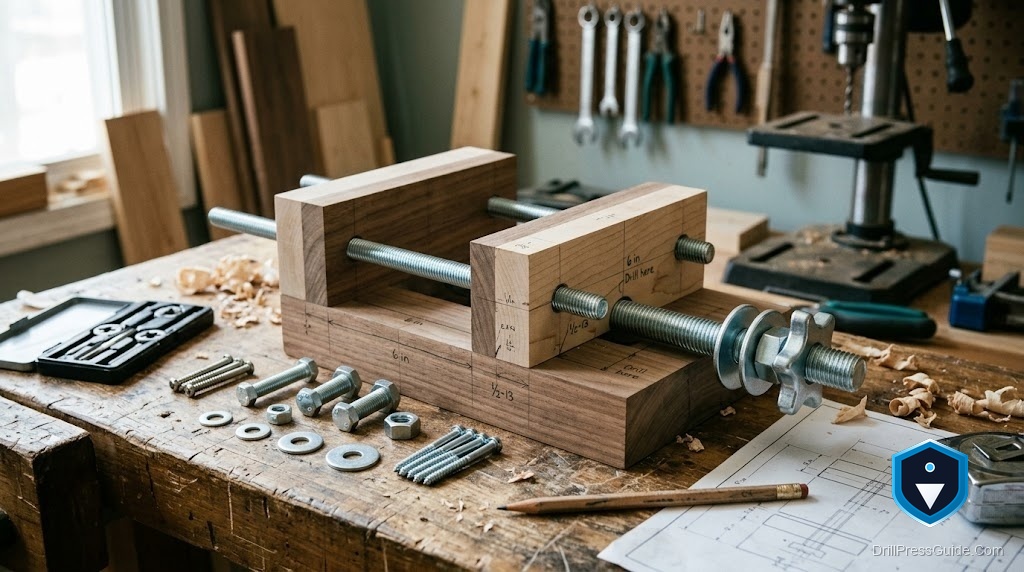
Holding a workpiece by hand under a spinning bit is how holes get ruined and fingers get hurt, and a vise solves both by gripping the work and letting you clamp it to the table. A wooden drill press vise is a satisfying shop project, and for woodworking it works well, but only if it does the one thing a vise must: hold the work square and immovable. That comes down to a few choices about layout, hardware, and setup, so this guide walks through the decisions that make a wooden vise actually grip.
A DIY wood drill press vise is a shop-built clamping device, made largely of wood, that grips a workpiece between two jaws and can be secured to the drill press table, holding the work steady, square, and safe while you drill. Building one comes down to layout, how the jaws and screw are arranged, hardware, the screw, nut, and guides, and setup, how the jaws stay parallel and how the vise mounts to the table.
Short answer: lay out a fixed jaw and a screw-driven moving jaw that stay parallel and square as they close, choose a solid screw and nut plus guides that stop the moving jaw racking, and set it up so the vise clamps firmly to the drill press table. A wooden vise holds fine for woodworking if the jaws stay parallel and it locks to the table, so those choices matter most.
Layout: jaws, screw, and travel
Lay out the vise around a fixed jaw anchored to a base and a moving jaw that travels straight toward it, driven by a screw through the middle of the jaw’s travel so it closes evenly rather than tilting. Decide the jaw width and opening from the work you will hold, and position the screw and any guide rods symmetrically so force is balanced. Plan the base wide and flat enough to sit stable on the table and to carry mounting holes. A layout with a centered screw, symmetric guides, and a stable base is what lets the jaws close square, so think the arrangement through before cutting, since a poorly laid-out vise racks no matter how well made.
Hardware: screw, nut, and guides
The hardware is what makes a wooden vise grip. Use a stout threaded rod or an acme screw with a matching nut captured solidly in the fixed jaw or base, since a wooden thread will not hold up, so metal screw hardware is the sensible choice. Add guide rods or runners that keep the moving jaw traveling straight without twisting, because a wooden jaw on a single screw racks easily. Fit a handle for turning. Choose a screw and nut sized to apply real clamping force without stripping, and guides that eliminate side play. Good metal screw hardware combined with straight guides is what turns wooden jaws into a vise that actually holds, so do not skimp here.
Setup: parallel jaws and table mounting
Set the vise up so the jaws stay parallel and square as they close, checking with a square and adjusting the guides or jaw faces until a clamped block sits square and does not rock. Face the jaws flat and true, and consider adding replaceable wooden faces so they can be renewed or shaped for odd work. Then set up mounting: build bolt holes, slots, or a lip into the base so the vise clamps or bolts firmly to the drill press table, because a vise that grips the work but can slide on the table is unsafe, a bit can grab the work and spin the whole vise. Parallel jaws plus solid table mounting are the setup choices that make the vise both accurate and safe.
Using it well and its limits
In use, clamp the workpiece firmly in the jaws and secure the vise to the table before drilling, every time, and back up through-holes with a sacrificial piece so the bit does not drill into the vise. Keep the bit guarded and hands clear. Be honest about limits: a wooden vise is well suited to woodworking and light holding, but it will not match a metal vise for gripping force or durability, and heavy metalwork can crush or split wooden jaws. Check the jaws stay parallel and the screw runs smoothly over time. Used within its role, a wooden drill press vise holds work securely and turns dangerous hand-holding into safe, accurate drilling.
Conclusion
A DIY wood drill press vise is a rewarding build that works well for woodworking when you make the right choices. Lay out a fixed jaw and a centered screw-driven moving jaw with symmetric guides and a stable base, choose solid metal screw hardware and guides that stop the jaw racking, and set it up so the jaws stay parallel and the whole vise clamps firmly to the table. Always clamp the work and secure the vise before drilling, and stay within its limits of woodworking and light holding rather than heavy metalwork. Built and used this way, a wooden vise holds the work square and immovable, which is the entire job of a vise.
Frequently asked questions
Does a wooden drill press vise work well? Yes, for woodworking and light holding, if the jaws stay parallel and square and the vise clamps to the table. It will not match a metal vise for gripping force or durability.
What is the most important thing for accuracy? Jaws that stay parallel and square as they close, without racking. That takes a centered screw, straight guide rods, and flat jaw faces, checked square with a reliable square.
Can I make the screw out of wood too? No. A wooden thread will not hold up under clamping force. Use a stout metal threaded rod or acme screw with a matching nut captured solidly in the fixed jaw or base.
Why does the vise need to attach to the table? Because a vise that grips the work but can slide on the table is unsafe, a bit can grab the work and spin the whole vise. Build in holes, slots, or a lip to clamp it down.
How do I keep the jaws from racking? Drive the moving jaw with a centered screw and add guide rods or runners that keep it traveling straight without twisting, eliminating side play. A single screw with no guides racks easily.
What should I not use a wooden vise for? Heavy metalwork or high clamping force that can crush or split the wooden jaws. It suits woodworking and light holding; use a metal vise for demanding metal drilling.
References
- Forest Products Laboratory, wood properties and machining references, fpl.fs.usda.gov
- OSHA, Machine Guarding eTool: Drill Presses, osha.gov