Choosing a Keyless Chuck for Drill Press: What Separates a Good Fit from a Bad One
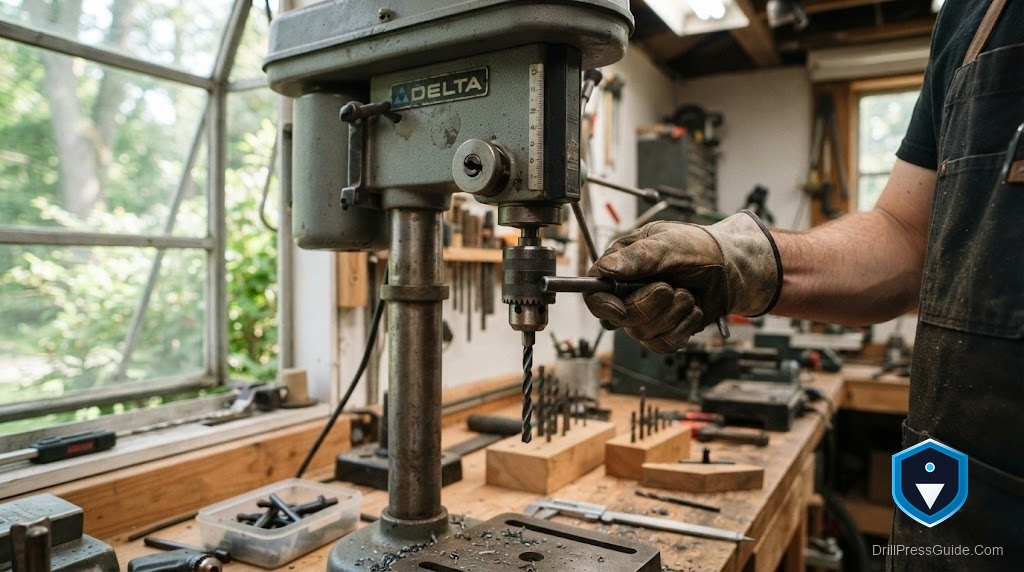
You reach for the chuck key, twist it in the three holes, and tighten the bit. Then you drop the key. It rolls under the bench, and you spend five minutes on your hands and knees. A keyless chuck promises to end that ritual. One hand twists the collar, the bit locks, and you are drilling. But not every keyless chuck is a good fit for a drill press, and some are worse than the keyed chuck they replace.
I have installed and used keyless chucks on benchtop and floor drill presses. A good keyless chuck saves time and frustration. A bad one slips, loses grip under load, and introduces runout that ruins hole quality. This guide covers what to look for in a keyless chuck for drill press use and which models are worth installing.
A keyless chuck is a drill chuck that tightens and loosens by hand, without a separate chuck key. It uses an internal mechanism, usually a ball-lock or threaded collar system, to grip the bit when you twist the outer sleeve. On a drill press, a keyless chuck is useful for quick bit changes and for situations where the chuck key is hard to use due to space or angle. However, keyless chucks are generally less precise and less powerful than keyed chucks in the same price range.
The best keyless chuck for a drill press is one that matches the spindle taper of your machine, has a capacity that covers your bit sizes, and holds tight enough for the torque you apply. For drill presses, you need a chuck with a Jacobs taper (JT) or Morse taper (MT) mounting that matches your quill spindle. Common sizes are JT33 for benchtop presses and JT6 or MT2 for larger machines.
Why Keyless Chucks Are Tricky on Drill Presses
Handheld drills use keyless chucks because they are fast and the side loads are low. A drill press applies more torque and axial force. When you plunge a large Forstner bit into hardwood or a large twist drill into steel, the bit can slip in a keyless chuck if the grip is not tight enough. Keyed chucks distribute clamping force evenly through three geared jaws. Keyless chucks rely on a single manual twist, and the grip strength depends on how hard you tighten.
Runout is another issue. Keyless chucks have more internal moving parts than keyed chucks. The extra tolerances can add wobble, especially in budget models. On a drill press, runout is more visible than on a handheld drill because the machine is fixed and the bit is longer. A keyless chuck with poor runout will drill oversized holes and wear bits unevenly.
That said, high-quality keyless chucks from reputable manufacturers can perform as well as mid-range keyed chucks. They are made with tighter tolerances, better materials, and stronger locking mechanisms. The difference is price. A good keyless chuck costs more than a good keyed chuck.
What to Look for in a Keyless Chuck
Taper matching is the first requirement. Check your drill press manual for the spindle taper. Most benchtop presses use a JT33 taper. Some larger presses use a JT6 or MT2 taper. A chuck with the wrong taper will not seat properly, and it can fly off under load. Always verify the taper before ordering.
Capacity is the range of bit diameters the chuck can hold. A 1/2-inch capacity chuck is the standard for most benchtop presses. It covers most woodworking and general drilling bits. If you use small precision bits, look for a chuck with a 1/64-inch minimum capacity. Some chucks start at 1/32 inch, which is too large for very small bits. If you use large shank bits, make sure the maximum capacity is at least 1/2 inch.
Build quality is visible in the materials and finish. A good keyless chuck has a metal body, hardened steel jaws, and a smooth-twist collar. Avoid chucks with plastic collars or bodies. Plastic deforms under pressure and temperature. The jaws should be ground and hardened so they grip bits without marring. A ball-bearing locking mechanism is better than a simple threaded collar because it holds tighter under vibration.
Runout specification is rarely published for consumer chucks, but you can check reviews for complaints about wobble. Chucks from Albrecht, Rohm, and Jacobs tend to have lower runout than generic import chucks. If you need precision for metalwork or doweling, pay for a name-brand chuck.
Top Keyless Chuck Picks for Drill Presses
Albrecht Keyless Chuck 1/2-Inch Capacity
The Albrecht keyless chuck is the standard by which others are measured. It is made in Germany with a ball-bearing locking mechanism, hardened steel jaws, and a precision-ground taper. The 1/2-inch capacity version fits JT33, JT6, or MT2 spindles depending on the arbor you choose. The grip is strong enough for heavy drill press work, and the runout is minimal.
I have used Albrecht chucks on benchtop and floor presses. The collar twists smoothly and the lock is positive. You can feel the ball bearing engage when the grip is tight. Bits do not slip, even with large Forstner bits in hardwood. The jaws are precise enough to hold small bits without runout.
The flaw is cost. An Albrecht chuck costs several times more than a generic keyless chuck. For a hobbyist who changes bits a few times a month, the cost is hard to justify. Also, the chuck is heavier than a keyed chuck of the same capacity, which adds a small amount of load to the quill bearings.
Skip the Albrecht if you are on a tight budget or only use a drill press for light work. It is the best choice for professional shops, production work, and anyone who demands the lowest runout in a keyless design.
Check the Albrecht Keyless Chuck on Amazon
Jacobs Keyless Chuck 1/2-Inch Capacity
Jacobs is the historic name in drill chucks, and their keyless models are a solid mid-range option. The Jacobs keyless chuck uses a threaded collar with a metal body and hardened jaws. It is available in JT33 and other common tapers. The capacity is 1/64 to 1/2 inch, which covers the full range of standard bits.
This chuck is a good fit for home shops and small businesses that want the convenience of a keyless chuck without the premium price of an Albrecht. The grip is adequate for most wood drilling and light metal work. The runout is acceptable for general work, though not as low as the Albrecht.
The flaw is grip strength under heavy load. When I used this chuck with a 1-inch Forstner bit in dense maple, the bit slipped slightly after a deep plunge. The collar was as tight as I could make it by hand. A keyed chuck or an Albrecht would have held. Also, the collar can loosen slightly during long sessions with vibration.
Skip the Jacobs keyless if you drill large holes in hardwood or metal regularly. It is a good choice for general woodworking, hobby use, and situations where you change bit sizes often and do not push the machine to its limit.
Check the Jacobs Keyless Chuck on Amazon
Rohm Supra Keyless Chuck 1/2-Inch Capacity
Rohm is another German manufacturer known for precision chucks. The Supra keyless line is a ball-bearing design with a slim profile and low runout. It is available in several tapers and is popular in European and American machine shops.
The Supra is a strong competitor to the Albrecht. The grip is excellent, the runout is very low, and the collar action is smooth. I have seen these chucks on CNC drill stations and benchtop presses alike. The build quality is consistent and the jaws are long-lasting.
The flaw is availability and cost. Rohm chucks are less common in the consumer market than Albrecht or Jacobs, so you may wait longer for delivery. The price is also in the premium range. For a home shop, the performance difference between Rohm and Albrecht is academic. Both are overkill for casual use.
Skip the Rohm if you need a chuck quickly or if you are buying for light hobby work. It is the best choice for machinists, instrument makers, and anyone who needs the absolute lowest runout in a keyless design.
Check the Rohm Supra Keyless Chuck on Amazon
Generic Import Keyless Chuck 1/2-Inch Capacity
A generic 1/2-inch keyless chuck is the budget option. These chucks are imported under many brand names and sold at low prices. They typically have a threaded collar, a metal body, and a stated capacity of 1/32 to 1/2 inch. They fit JT33 and other common tapers.
The value is low cost. If you want to try a keyless chuck without a big investment, a generic model is the way to go. It works for light drilling, small bits, and occasional use. For a hobbyist who drills a few holes a week, it may be adequate.
The flaw is quality control. Runout varies from chuck to chuck. Some are acceptable, others wobble visibly. The grip is weak with large bits, and the collar can loosen during use. The jaws are not always hardened, so they wear and mar bits over time. I have used generic chucks that worked fine for 6 months, and others that failed within a week.
Skip the generic chuck if you do precision work, drill large holes, or use your press frequently. It is only a good choice if you have a very tight budget and very light demands. Even then, a good keyed chuck is often a better value.
Keyless Chuck vs Keyed Chuck: When to Switch
A keyless chuck is worth installing if you change bits frequently and your work is light to moderate. Woodworkers who switch between brad-point bits, Forstner bits, and hole saws will save time with a keyless chuck. Metalworkers who use a few specific sizes for long production runs are usually better served by a keyed chuck because the grip is stronger and the runout is lower.
If your drill press came with a good keyed chuck, think twice before replacing it. Many stock keyed chucks on mid-range presses are better than cheap keyless upgrades. A good keyed chuck is more accurate and more powerful than a mediocre keyless chuck. The time saved changing bits is not worth the loss of accuracy if you do precision work.
For drill presses that will be used by multiple people, including children or students, a keyless chuck is safer. There is no chuck key to lose or misplace, and the risk of leaving the key in the chuck is eliminated. Schools and community shops often prefer keyless chucks for this reason alone.
Installation and Removal Tips
Installing a keyless chuck is the same as installing a keyed chuck. Clean the taper on the chuck and the spindle thoroughly. A speck of dust or a burr will prevent proper seating and cause the chuck to run out. Seat the chuck by raising the table, placing a wood block on the table, and lowering the quill so the chuck presses against the block. Do not hammer the chuck directly. The wood block cushions the blow and protects the chuck.
To remove a chuck, lower the quill to the bottom of its travel and look for the spindle through the hole in the side of the quill. Insert a wedge or drift key into the slot and tap the other end of the key. The wedge separates the taper and the chuck pops off. If your drill press does not have a through-hole in the quill, you may need a special chuck removal tool or a thin wedge inserted from below.
Always remove the chuck before installing a new one, even if the tapers match. Stacking tapers or forcing a new chuck over debris will damage both the chuck and the spindle. A damaged spindle taper is expensive to repair.
Frequently Asked Questions
What taper does my drill press use? Most benchtop drill presses use a JT33 taper. Larger presses may use JT6 or MT2. Check your manual or measure the spindle with a taper gauge. Do not guess. A wrong taper will not seat properly.
Can I use a keyless chuck on a drill press? Yes, if the chuck matches the spindle taper and has enough capacity. High-quality keyless chucks work well on drill presses. Cheap keyless chucks may slip and add runout.
What is the best keyless chuck for a drill press? The Albrecht keyless chuck is the best overall for grip strength, runout, and durability. The Jacobs keyless is a solid mid-range option. Generic keyless chucks are acceptable only for light, occasional use.
Do keyless chucks have more runout than keyed chucks? Generally yes, but premium keyless chucks like Albrecht and Rohm can match or exceed mid-range keyed chucks. Budget keyless chucks usually have more runout than budget keyed chucks.
What is the maximum bit size for a keyless chuck? Most keyless chucks for benchtop presses have a 1/2-inch maximum capacity. Some go to 5/8 inch. Check the capacity before buying. A chuck that is too small for your bits is useless.
Why does my keyless chuck slip? Slipping is caused by insufficient grip, worn jaws, or a dirty taper. Clean the bit shank and the chuck jaws. Make sure the collar is tight. If the chuck still slips, the jaws may be worn or the chuck may be too light for the work.
Can I replace a keyed chuck with a keyless chuck myself? Yes, if you can remove the old chuck and install the new one with the correct taper. The process takes 10 minutes and requires no special tools beyond a drift key or wedge for removal.
Are keyless chucks safer than keyed chucks? They are safer in one way: there is no chuck key to leave in the chuck. However, a keyless chuck that slips can grab the bit and spin it, which is a hazard. Always tighten the collar firmly before starting the machine.
Do keyless chucks wear out faster than keyed chucks? The locking mechanism can wear over time, especially in cheap chucks. The jaws also wear from repeated clamping. A high-quality keyless chuck will last for years. A cheap one may need replacement in one to two years of regular use.
Should I buy a keyless chuck or a keyed chuck for a new drill press? If the press comes with a good keyed chuck, keep it. If you are buying a separate chuck, choose based on your work. Frequent bit