
Drill Press Vise Reviews: An Evidence-Led Look at Workholding
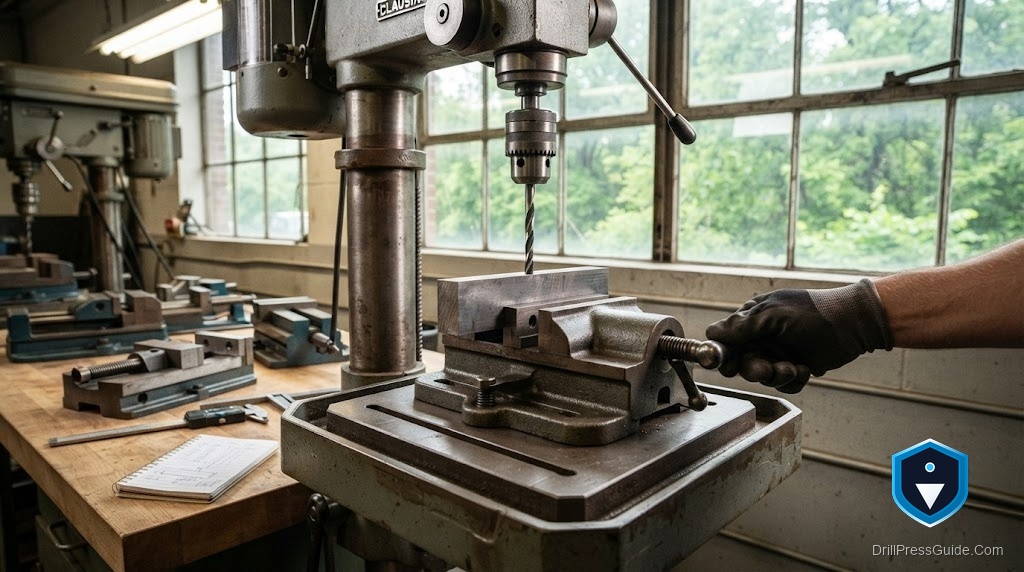
The drill press vise is the accessory that separates safe, accurate metal drilling from a spinning workpiece and a trip to the emergency room, and yet it is the part most buyers give the least thought. A bit that grabs in metal can rip an unclamped piece out of your hand and turn it into a spinning blade, which is exactly why a vise is not optional for metalwork. But vises vary more than their simple looks suggest, in how flat their jaws clamp, how square they hold, and whether their bolt slots line up with real drill press tables. Here is an evidence-led review of the workholding options, judged on the traits that actually decide safety and accuracy.
A drill press vise is a clamping fixture that holds a workpiece flat and square to the table so a bit cannot grab and spin it. Reviews turn on jaw flatness and grip, how square the vise holds, and whether its mounting slots fit standard tables, since those decide both safety and hole accuracy.
The short answer: buy a vise whose jaws clamp flat and square and whose base bolts to your table, since those traits decide whether it holds safely and drills accurately, and expect basic drill press vises to need a check for jaw parallelism and slot fit. The picks below cover standard and positioning workholding.
What makes a drill press vise good
A vise’s job is narrow, so the traits that matter are few and clear. Jaw flatness and parallelism come first: jaws that clamp flat and parallel hold the work truly square to the bit, while warped or misaligned jaws let the piece tilt or slip, which is both an accuracy and a safety failure. Grip strength is second, the vise must hold firmly enough that a grabbing bit cannot spin the work. Squareness to the table is third, since a vise that holds the work tilted drills an angled hole. Mounting is fourth: slots or holes in the base must bolt to your table’s slots, and a mismatch here is the most common real-world frustration. Judge any drill press vise on these four, and the simple-looking accessory sorts quickly into the trustworthy and the not.
The reviewed picks
Best standard drill press vise: Yost 6D. The Yost 6D drill press vise is a widely owned cast-iron vise with a usable jaw width and solid grip for general metal drilling. Its honest flaw, reflected in mixed owner reviews that average around three and a half stars, is that the base bolt slots do not always line up with every table’s slots, so confirm your table’s slot spacing before counting on bolting it down. Who should skip it: anyone whose table slots are an unusual spacing, who should verify fit first or choose a clamp-mounted option.
Best drill press vise for grip: Yost LDPV-6. The Yost LDPV-6 is a heavier drill-press-specific vise with strong, flat clamping for secure metalwork. Its honest flaw is weight and a larger footprint that crowds a small table. Who should skip it: owners of a small benchtop table with little room.
Best positioning vise: Yost CSV8 cross-slide. The Yost CSV8 cross-slide vise adds two-axis positioning to place holes precisely without moving the work by hand. Its honest flaw is that the slide is for positioning under drilling loads, not milling, and treating it as a milling table will wear it. Who should skip it: anyone wanting simple clamping, who does not need the slides.
Best value cross-slide: compound cross-slide vise. The compound cross-slide vise offers two-axis positioning at a lower outlay. Its honest flaw is more slop in the slides than a premium unit, so expect to snug the gibs. Who should skip it: precision users who need tight, repeatable positioning.
Standard versus cross-slide: which to review for
The biggest choice among vises is whether you need positioning, and reviewing the two types against your work saves money and frustration. A standard vise clamps the work in one place, which is all most drilling needs, since you position the table and the work under the bit and then drill; it is simpler, holds more rigidly, and costs less, the right choice for straightforward hole drilling. A cross-slide vise adds two-axis movement so you can dial the work under the bit precisely, useful for laying out hole patterns or placing holes to a fine measurement without repositioning the whole piece. The trade is real: cross-slides add slop and cost and are not built for milling loads. Review for a standard vise if you simply need to hold work to drill it, and for a cross-slide only if precise repositioning genuinely serves your work.
Fit and safety: the checks reviews stress
The recurring theme across honest vise reviews is that fit and setup matter as much as the vise itself. Before trusting any vise, confirm its base slots align with your table’s slots, since a vise you cannot bolt down is a vise that can shift, and this is the single most common complaint. Check the jaws close flat and parallel by clamping a known-square block and looking for a gap. Bolt the vise to the table for metal drilling rather than relying on its weight, because a grabbing bit generates more force than a heavy vise resists. And keep the work low in the jaws so it cannot tilt. These checks turn a decent vise into a safe, accurate one, and skipping them is why some owners blame a vise for problems that were really a setup fault.
The workholding verdict
Drill press vise reviews come down to four traits, flat and parallel jaws, firm grip, squareness to the table, and mounting slots that fit your table, and to one big choice between standard clamping and cross-slide positioning. The Yost 6D is the standard pick for general metalwork if you confirm the slot fit its reviews flag, the Yost LDPV-6 the heavier-grip option, and the Yost CSV8 or the value compound cross-slide the choices when precise positioning serves your work. Whichever you choose, confirm the slot fit, check the jaws clamp flat, and bolt it down for metal, because a vise is a safety tool first and an accuracy tool second, and both depend on setup as much as on the vise.
- A drill press vise is a safety tool first: it stops a grabbing bit from spinning the work.
- Judge vises on jaw flatness and grip, squareness to the table, and mounting slots that fit.
- Choose a standard vise for simple clamping, a cross-slide only if precise positioning helps your work.
- Confirm slot fit, check jaws clamp flat, and bolt the vise down for metal drilling.
The humblest accessory on the machine is also the one keeping your fingers clear. Buy the vise that clamps flat and bolts to your table, set it up right, and metal drilling turns safe and accurate.
Frequently asked questions
Do I need a vise for a drill press? For metal drilling, yes, it is a safety necessity, since a grabbing bit can rip an unclamped piece loose and spin it into a hazard. For wood you can often clamp to the table instead, but a vise still improves accuracy by holding the work square to the bit.
What is the best drill press vise? For general metalwork the Yost 6D, a widely owned cast-iron vise with solid grip, provided you confirm its base slots fit your table, a point its reviews flag. The Yost LDPV-6 offers heavier grip, and the Yost CSV8 or a compound cross-slide adds precise positioning.
What is a cross-slide drill press vise for? It adds two-axis movement so you can position the work precisely under the bit without moving the whole piece, useful for hole patterns and fine layout. The trade is more slop and cost, and it is built for positioning under drilling loads, not for milling.
Why won’t my drill press vise bolt to the table? Usually the vise’s base slots do not align with your table’s slots, the most common vise complaint. Confirm your table’s slot spacing before buying, and choose a vise whose mounting matches, or use T-slot hardware or a clamp setup that bridges the mismatch.
How do I use a drill press vise safely? Bolt it to the table for metal drilling rather than relying on its weight, keep the work low in the jaws so it cannot tilt, confirm the jaws clamp flat and parallel, and never hold metal by hand. A grabbing bit generates more force than a loose vise resists.
Are cheap drill press vises worth it? A basic vise is fine for light work if you check it, since jaw parallelism and slot fit vary at the low end. Clamp a square block to confirm the jaws close flat, and verify the base bolts to your table. A cheap vise that passes those checks holds work safely.
References
- OSHA, machine guarding and point-of-operation safety: https://www.osha.gov/machine-guarding
- Fine Woodworking, drill press techniques and workholding: https://www.finewoodworking.com/
- Norseman Drill and Tool, drilling feeds and speeds chart: http://www.norsemandrill.com/feeds-speeds-drill.php


