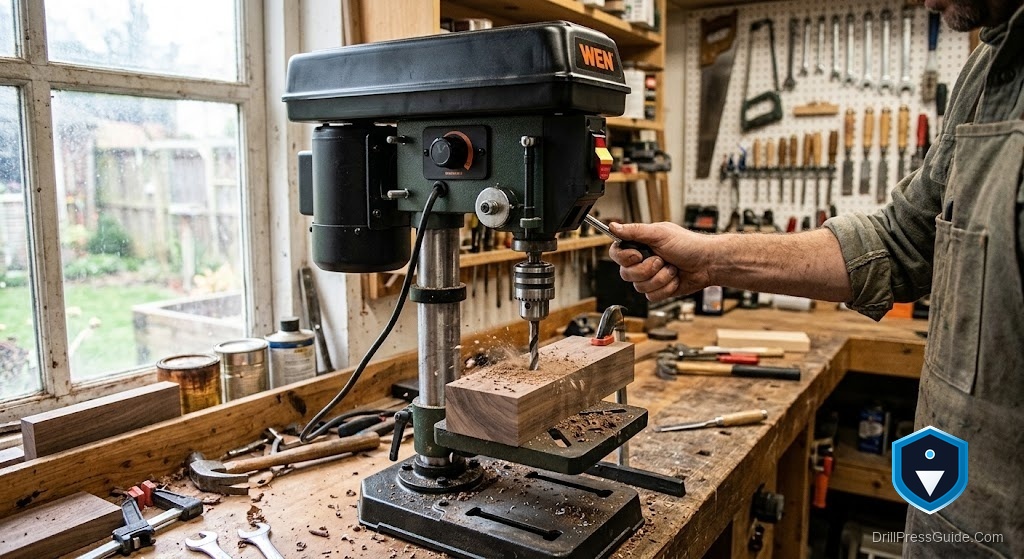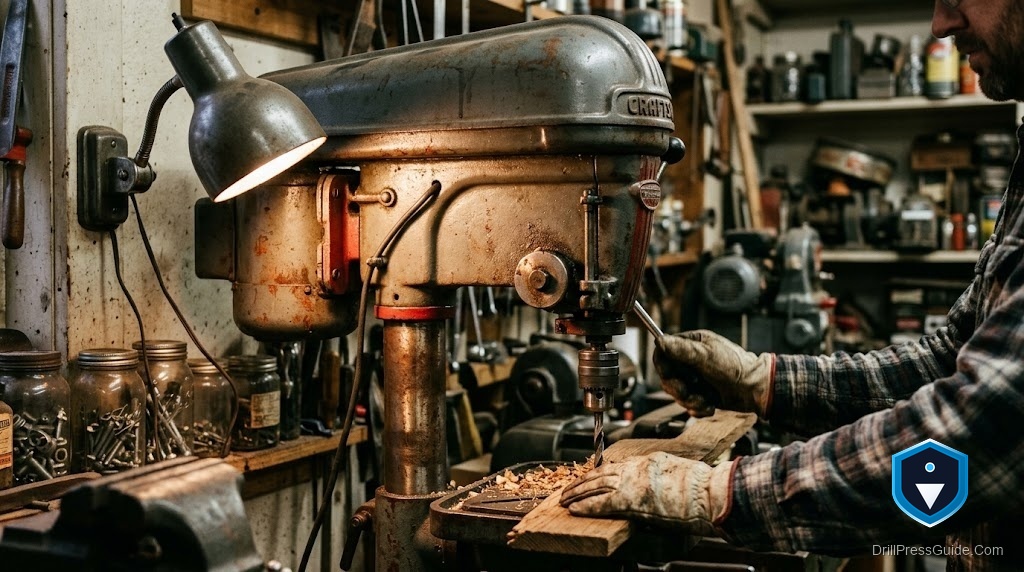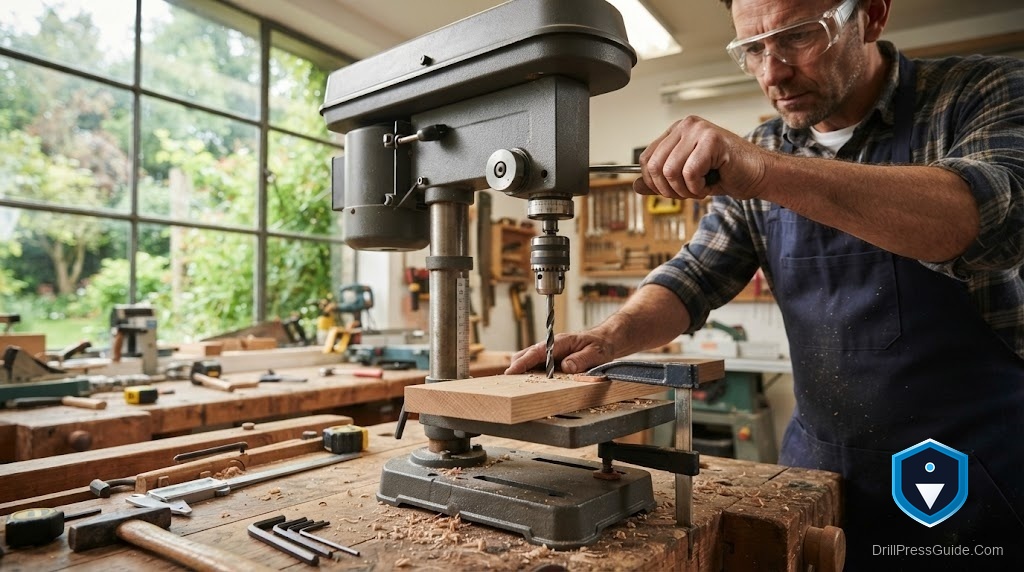
Getting Better Results from a Mortise and Tenon Attachment for Drill Press
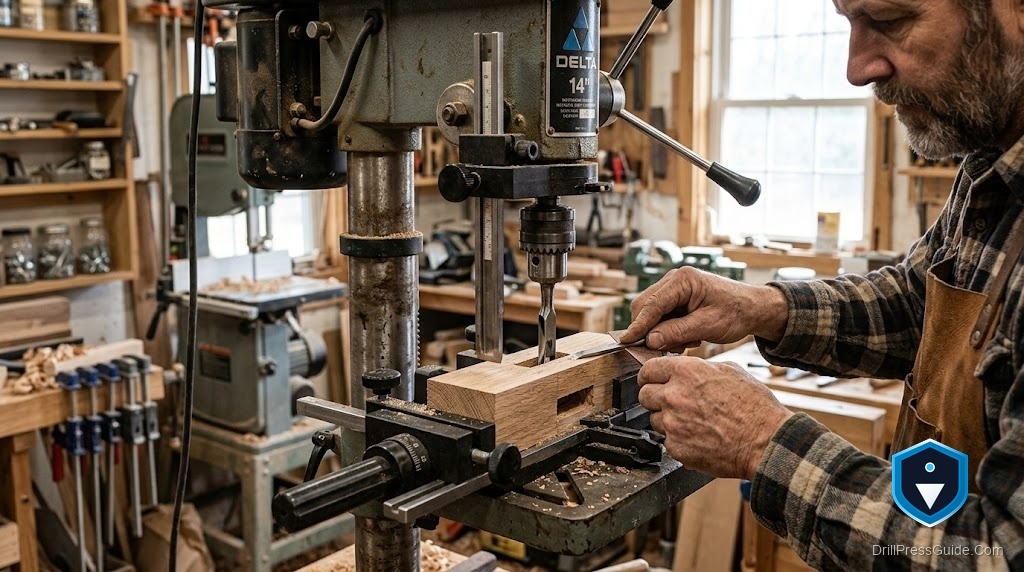
The promise is hard to resist: bolt an attachment to the drill press you already own and start cutting square mortises like you have a dedicated machine. It works, mostly. But the people who love their mortise and tenon attachment for a drill press and the people who leave it in the box tend to differ on one thing, whether they matched the kit to their press before they bought it.
A mortising attachment turns round drilling into square-hole cutting by pairing a bit that drills the waste with a four-sided chisel that squares the corners. Clamped to the quill and column of a drill press, it lets the machine chop the mortise while the tenon is cut to match elsewhere. The result is a real joint, and the results get much better once you understand what the attachment needs from your machine.
Short answer: a mortising attachment works well on a drill press when the kit fits your quill diameter and your column, when the chisel is sharp and set with the right gap, and when the work is clamped hard against a fence. Skip any one of those and you get burnt chisels, wandering holes, and blown-out corners.
Fit comes before technique
Every good mortise starts with a kit that actually clamps to your machine.
The attachment grips two places: the quill, where a collar holds the chisel bushing, and the column or table, where a fence steadies the work. Kits are built around common quill diameters and column sizes, so the first job is matching those numbers. A well-known example is the Grizzly H7789 mortising attachment kit, which ships with adapters and a column collar and lists the presses it fits, including several Grizzly, Shop Fox, Delta, and JET models such as the G0485, G0491, G7943, G7948, W1680, Delta 11-990, and JET JDP-17M. That kind of published compatibility list is exactly what you want to check against your own machine before buying.
The honest limitation: a drill press quill is built for downward thrust, not the sideways racking a chisel puts on it. Push too hard and you feel the quill flex, which shows up as a mortise that is not quite square to the face. This is why the attachment suits hobby and light production work far more than heavy daily mortising.
The settings that make or break the cut
Once it fits, three adjustments decide the quality.
Bit-to-chisel gap. The drill bit must sit slightly below the chisel tips so it clears waste before the chisel squares the corner, but not so far that it rubs. A business-card gap is the classic starting point.
Chisel sharpness. A dull chisel is the single most common cause of burning and heavy pushing. A sharpened chisel with a clean interior wall cuts with far less force.
Fence and hold-down. The work has to stay pinned against a fence so each cut lines up with the last. A 4-inch drill press vise or a dedicated hold-down keeps it there. Loose work is how you get a stepped, wandering mortise.
Attachment versus a dedicated mortiser
Be honest with yourself about volume.
Against a dedicated benchtop mortiser, the drill press attachment wins on cost and storage and loses on rigidity and speed. The dedicated machine has a longer lever, a stouter quill, and a fixed fence, so it chops faster and stays squarer under load. If you cut mortises all day, it is worth the bench space.
Against hand chisels or a router, the attachment wins on repeatability. A router needs jigs for square ends; a chisel needs skill and time. For a handful of joints a weekend, the drill press attachment is the sweet spot. You can compare the current mortise and tenon attachment for drill press kits and the mortising chisel set options to plan your setup.
Setting it up cleanly
- Confirm the kit’s quill and column sizes match your press before anything else.
- Mount the chisel bushing to the quill and the chisel square to the fence.
- Set the bit slightly below the chisel tips.
- Clamp the workpiece hard against the fence with a vise or hold-down.
- Cut overlapping holes along the mortise, leaving a thin wall between each, then clean the last passes.
Eye protection is not optional. CCOHS lists it as basic drill press practice, and mortising throws chips harder than plain drilling. Clamp the work rather than holding it, per both CCOHS and OSHA guidance, because a chisel that grabs can pull a hand-held board.
Who should skip it
If you cut mortises in volume or in hardwood daily, skip the attachment and buy a dedicated mortiser; the quill flex will frustrate you. If you build the occasional table, door, or frame and already own a solid drill press, the attachment is a smart, affordable way to add a real joinery capability.
Bottom line
A mortise and tenon attachment makes a drill press into a part-time mortiser, and it rewards preparation over force. Match the kit to your quill and column, keep the chisel sharp with the right gap, and pin the work to a fence. Do that and the joints come out crisp; ignore it and you fight the tool.
- Check quill and column compatibility before you buy the kit.
- A sharp chisel and correct bit gap prevent burning and heavy pushing.
- Clamp the work to a fence so every cut lines up.
FAQ
Can a drill press really cut mortises? Yes, with a mortising attachment that pairs a drill bit and a square chisel. It suits light and hobby work better than heavy daily production.
How do I know an attachment fits my drill press? Check the kit’s listed quill diameter and column size against your machine. Kits like the Grizzly H7789 publish the specific presses they fit.
Why is my mortising chisel burning? Usually a dull chisel or too little clearance between the bit and chisel. Sharpen the chisel and set the bit slightly below the tips.
What gap should I set between the bit and chisel? A small gap, roughly the thickness of a business card, so the bit clears waste before the chisel squares the corner.
Do I need a fence for mortising? Yes. A fence and a clamp keep the work fixed so overlapping cuts stay aligned, which is also the clamping practice OSHA and CCOHS call for.
Attachment or a dedicated mortiser? Attachment for occasional joinery on a press you already own; dedicated mortiser if you cut mortises often or in hardwood.
References
- Grizzly H7789 Mortising Attachment Kit: https://www.grizzly.com/products/grizzly-mortising-attachment-kit-for-drill-presses/h7789
- CCOHS, Metalworking Machines - Drill Presses: https://www.ccohs.ca/oshanswers/safety_haz/metalworking/drillpresses.html
- TEKTON 4-Inch Drill Press Vise Manual: https://media.tekton.com/manuals/manual_53994.pdf