Drill Press Mobile Base: Roll It Where You Need It
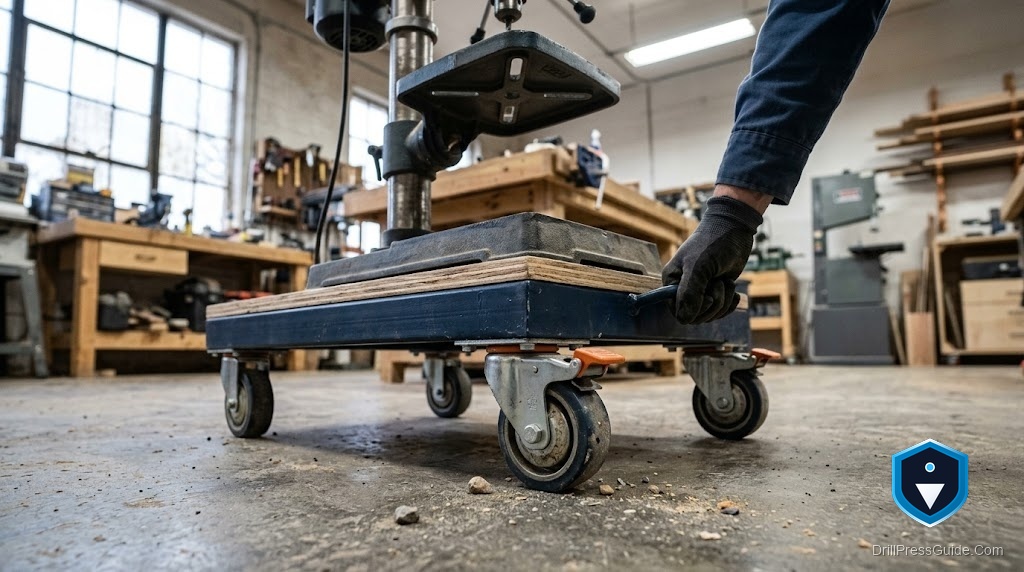
My floor-standing drill press weighs enough that the first time I tried to reposition it, I pulled something in my back and knocked over a can of finish in the process. It sat in that same inconvenient corner for two years because moving it was such a misery. Then I put it on a mobile base, and suddenly the machine went wherever the work needed it. That single accessory changed how I used my whole shop.
A mobile base is one of those upgrades nobody thinks they need until they have one. If you have a small shop, a multi-use garage, or any situation where tools must share space, the ability to roll a heavy machine out, use it, and tuck it back against the wall is transformative. Let me explain what makes a good base, where the compromises hide, and how to choose the right one for your press.
Why a Mobile Base Earns Its Keep
A floor drill press is top-heavy and awkward, with a narrow footprint and a tall column that makes it genuinely unpleasant to drag across a floor. A mobile base solves this by giving the machine a wheeled platform you can lock in place for use and unlock to roll. In a shared or cramped space, that means one corner can serve several tools throughout a project.
The value is not just convenience, it is capability. A machine you can move is a machine you will actually position correctly for long stock, awkward angles, or better light. A machine stuck in a corner forces you to contort the work around it. Mobility quietly makes you a better, safer worker.
Universal Bases and How They Work
Most mobile bases are universal, meaning they adjust to fit a range of machine footprints. The Bora Portamate PM-3550 mobile base is a popular heavy-duty option that assembles into a rectangle sized to your machine, with locking casters that hold it steady during use. You cut or adjust the rails to match your press’s base, then the machine sits inside the frame.
The Bora Portamate PM-2500 mobile base works on a similar principle with a different capacity and adjustment range, giving you options depending on how heavy your press is. The universal approach means one product fits many tools, which is handy if you plan to move the base between machines or upgrade your press later.
Matching Capacity to Your Machine
Here is where people make mistakes. A mobile base has a weight rating, and you must respect it. A benchtop press on a stand weighs far less than a cast-iron floor model, and putting a heavy machine on an underrated base is asking for a wobble or a collapse. Check your press’s weight against the base’s rating before buying.
Footprint matters just as much as weight. The base must adjust small enough to grip your machine’s base tightly and large enough to accommodate it, so measure your press’s base dimensions first. A base that is too large leaves the machine loose inside the frame, and one too small simply will not fit. The WEN mobile base is a budget-friendly option for lighter machines, while heavier presses demand a sturdier frame.
The Stability Trade-Off Nobody Mentions
Let me be honest about the compromise at the heart of every mobile base: anything on wheels is inherently less stable than something bolted to the floor. A tall drill press is top-heavy, and raising it even slightly on a wheeled frame can make it feel tippy, especially when you are wrestling long stock or applying side pressure.
Good bases counter this with locking casters or leveling feet that lift the wheels off the floor during use, effectively planting the machine. Always engage those locks before drilling. A base that only has swiveling casters without a solid lock is a compromise too far for a top-heavy machine, so prioritize genuine locking or foot-down designs. The Delta 50-345 mobile base is an example built with stability in mind for heavier stationary tools.
Setup and Everyday Use
Assembly is usually straightforward: you build the frame to your machine’s footprint, set the press inside, and secure it according to the instructions. Take the time to get the fit snug, because a machine that shifts within its base defeats the purpose and introduces risk. A few minutes of careful adjustment pays off every time you move the tool.
In daily use, the routine is simple. Unlock, roll to where you need it, lock the casters or drop the feet, and work. Then reverse it to stow the machine. That small ritual is a tiny price for reclaiming floor space and gaining the freedom to position your press wherever the job demands.
Verdict
If your drill press lives in a shared or cramped shop, a mobile base is one of the best quality-of-life upgrades you can buy. For heavy floor-standing machines, the Bora Portamate PM-3550 is my top pick for its capacity and locking stability, with the PM-2500 a strong alternative for lighter loads. Budget-minded owners of lighter machines can look at the WEN base, while heavier stationary tools suit a stability-focused frame like the Delta 50-345. Whichever you choose, match the weight rating and footprint to your press, and always lock it down before you drill.
- A mobile base lets you roll a heavy drill press where the work needs it and stow it to save space.
- Most bases are universal and adjust to fit a range of machine footprints.
- Match both the weight rating and the footprint to your specific press before buying.
- Anything on wheels is less stable, so prioritize genuine locking casters or drop-down feet and always engage them.
FAQ
Do I need a mobile base for my drill press? If you have a small or shared shop, or ever struggle to reposition a heavy press, a mobile base is genuinely worth it. It lets you roll the machine to the work and stow it to reclaim space. For a press with a permanent dedicated spot, it is optional.
Will a universal mobile base fit my drill press? Most universal bases adjust to a range of footprints, but you must measure your machine’s base dimensions and check the weight rating first. The frame needs to grip the base snugly, neither too loose nor too small to fit. Confirm both size and capacity before buying.
How much weight can a drill press mobile base hold? Capacity varies by model, from a couple hundred pounds for light-duty bases to well over five hundred for heavy-duty frames. Always check your press’s weight against the base’s rating. Putting a heavy machine on an underrated base risks wobble or failure.
Are drill presses stable on a mobile base? They are stable enough when the base has genuine locking casters or drop-down feet that plant the machine during use. Anything on wheels is inherently less rigid than a bolted machine, and a tall press is top-heavy. Always engage the locks before drilling.
Can I build a DIY drill press mobile base? Yes, many woodworkers build wooden bases with locking casters, and it is a reasonable project for lighter machines. The key is a snug fit, sufficient caster rating, and locks that stop movement during use. For very heavy presses, a rated steel base offers more predictable stability.
What is the difference between the Bora PM-3550 and PM-2500? The two models differ mainly in capacity and adjustment range, with the PM-3550 built for heavier machines and the PM-2500 for lighter ones. Both use the same universal, adjustable-frame approach with locking casters. Choose based on your press’s weight and footprint.
Should the casters lock or should the base have feet? Either works as long as the mechanism truly stabilizes the machine during use. Locking casters hold the wheels still, while drop-down feet lift the wheels off the floor entirely for maximum steadiness. For a top-heavy drill press, a foot-down design offers the most reassurance.
References
- Bora Tool (Portamate) official product documentation
- Delta Machinery owner manuals and mobile base specifications
- WEN Products accessory documentation
- Fine Woodworking, shop mobility and space-saving articles
- Manufacturer weight and footprint specifications for floor drill presses