
Buying a Used Delta Drill Press: How to Inspect, Value, and Choose
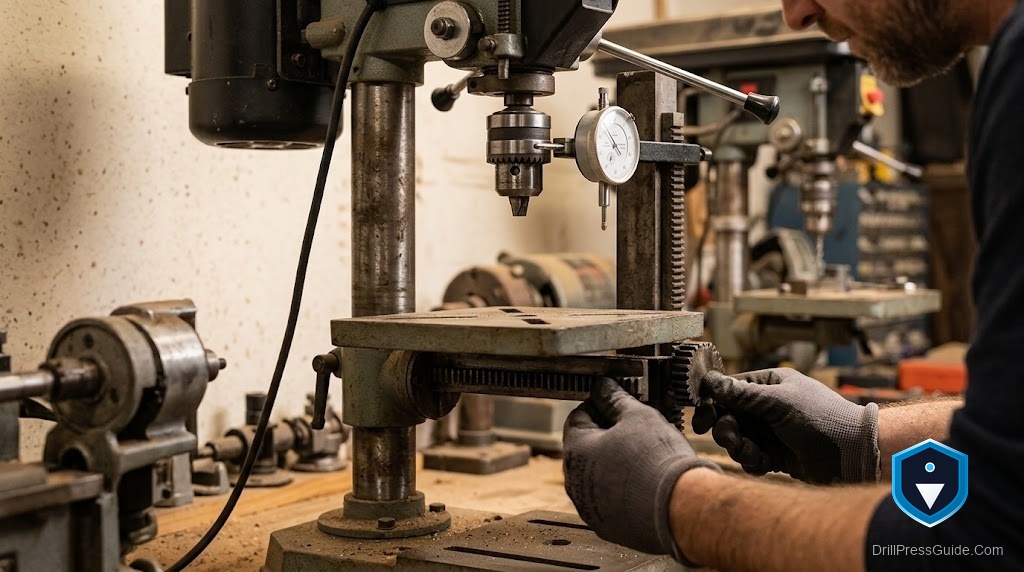
Delta built drill presses that people hold onto, which is exactly why the used market is full of them and why they are worth buying. A used Delta can give you cast-iron quality and a name with real parts support for far less than a new machine, but only if you buy the right one in the right condition. The difference between a bargain and a headache comes down to knowing which models to look for, how to inspect a machine before you commit, and which faults are cheap fixes versus deal-breakers. Here is how to buy a used Delta drill press well.
A used Delta drill press is a pre-owned Delta drilling machine, ranging from entry Shopmaster benchtop units to larger floor models like the 17-900 series, bought on the secondhand market and valued by model, condition, completeness, and parts availability.
Short answer: to buy a used Delta well, target a model that fits your work (a Shopmaster benchtop for light use, a 17-inch floor press like the 17-900 for heavier work), inspect the spindle, quill, motor, and table carefully, and factor in completeness and parts. Cheap fixes (belt, chuck) are fine; worn spindles and cracked castings are not. Here is the full method.
Which used Delta to target
Delta’s range gives you clear choices:
- Shopmaster benchtop (DP200, DP350, and similar): Entry-level 10-inch to 12-inch machines for light drilling. Common and inexpensive used. See our Delta Shopmaster DP200 and DP350 review.
- Mid and full-size benchtop: More swing and power for general work.
- Floor presses (17-900 series): A 16-1/2 to 17-inch floor machine, often around 3/4 HP with 12 speeds spanning roughly 250 to 3,000 RPM and an MT2 spindle. The workhorse choice; see the Delta 16-1/2 inch drill press guide.
Match the class to your work: benchtop for hobby, floor for serious or frequent drilling.
How to inspect before you buy
This is where the deal is won or lost. Run through this checklist on the machine:
- Spindle runout: Put a bit in the chuck and spin it by hand. Slight wobble is usually a worn chuck (a cheap fix); heavy wobble can mean a bent arbor or worn spindle bearings (a bigger job).
- Quill travel: Pull the feed through its full stroke. It should be smooth with a clean spring return, no binding or grinding.
- Motor: Start it. Listen for a quiet, smooth run with no rumble or hum, and confirm it starts under its own power without hesitation.
- Belt and pulleys: Old V-belts crack; expect to replace one. Check the pulleys for chips.
- Table and column: The table should lock firmly and raise and lower smoothly; check for deep rust or cracks. Sight the column for straightness.
- Castings: Look for cracks or welded repairs, especially around the head and table bracket. A cracked casting is a deal-breaker.
- Completeness: Confirm it has the chuck, chuck key, guards, and handles. Missing parts add cost.
Which faults are fine, and which are not
Cheap, expected fixes: A cracked belt, a worn chuck, surface rust, a missing chuck key. These are normal and inexpensive. A replacement chuck that fits the 17-900, for example, is readily available, such as the Delta drill press chuck for the 17-900.
Deal-breakers or heavy discounts: Cracked castings, a bent column, seized quill, a dead motor, or heavy spindle-bearing wear. Walk away or pay accordingly.
How to value a used Delta
Value tracks model, condition, and completeness. A complete, smooth-running floor press with only a belt and chuck to replace is worth a premium over a benchtop; an incomplete machine missing its chuck and guards, or one with runout and a rough motor, is worth much less. Because Delta parts have real support through Delta’s parts network and Sears PartsDirect, a machine with a solid casting and spindle is worth restoring even if it needs several wear parts. Our Delta drill press models, parts, and support guide covers what is available.
The honest trade-offs
As-is condition. Used means no warranty; your inspection is the only protection.
Belt-change speeds on many models. Most used Deltas set speed by moving the belt, not a dial.
Weight on floor models. A 17-inch floor press is heavy; plan the move.
Parts vary by era. Confirm parts availability for the specific model and type number before buying an incomplete machine.
How it compares to buying new
A used Delta floor press gives you cast-iron mass and a supported name for a fraction of new-machine cost, but without variable speed, a warranty, or guaranteed completeness. A new benchtop like the JET JDP-17MF or a WEN floor press offers modern convenience and support out of the box. Buy used Delta for value and mass; buy new for convenience and peace of mind.
The verdict
Buying a used Delta drill press is a smart value move when you inspect carefully and choose the right model. Target a Shopmaster benchtop for light work or a 17-900 floor press for heavier drilling, run the full inspection (spindle runout, quill travel, motor, belt, table, castings, completeness), and separate the cheap fixes (belt, chuck, surface rust) from the deal-breakers (cracked castings, bent column, dead motor, heavy bearing wear). A complete, smooth machine needing only wear parts is worth restoring thanks to Delta’s real parts support. Pay for condition, walk away from cracked iron, and a used Delta will serve for decades.
Frequently asked questions
Which used Delta drill press should I buy? A Shopmaster benchtop (DP200, DP350) for light hobby work, or a 17-inch floor press like the 17-900 series (around 3/4 HP, 12 speeds, MT2 spindle) for heavier or frequent drilling. Match the class to your work.
How do I inspect a used Delta drill press? Check spindle runout, quill travel and spring return, motor sound and starting, belt and pulley condition, table locking and column straightness, castings for cracks, and completeness (chuck, key, guards, handles).
What faults are deal-breakers on a used drill press? Cracked castings, a bent column, a seized quill, a dead motor, and heavy spindle-bearing wear. A cracked belt, worn chuck, surface rust, or missing chuck key are cheap, expected fixes.
Can you still get parts for a used Delta drill press? Yes, Delta parts have real support through Delta’s parts network and Sears PartsDirect by model and type number, plus generic belts and chucks. Confirm availability for the specific model before buying an incomplete machine.
What chuck fits a Delta 17-900 drill press? Replacement chucks matched to the 17-900’s spindle are readily available. Confirm the MT2 taper and 1/2-inch (or as specified) capacity for your machine before ordering.
How do I value a used Delta drill press? By model, condition, and completeness. A complete, smooth floor press needing only a belt and chuck commands a premium; an incomplete machine with runout and a rough motor is worth much less.
Is a used Delta drill press better than a new budget press? A used Delta offers cast-iron mass and a supported name for less money, without variable speed, a warranty, or guaranteed completeness. A new budget press offers modern convenience and support out of the box. Choose based on which matters more to you.
References
- Delta Machinery, drill press models and parts support: https://www.deltamachinery.com
- Sears PartsDirect, Delta drill press parts and diagrams: https://www.searspartsdirect.com
- Fine Woodworking, buying a used drill press: https://www.finewoodworking.com


