
Powermatic 1200 Drill Press: What Owners Should Check Before Buying or Repairing
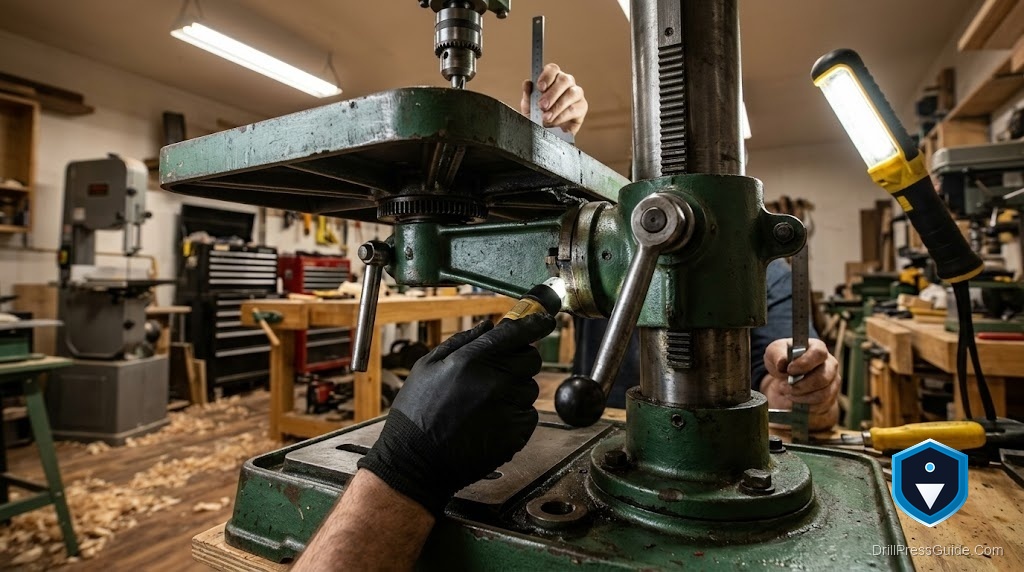
The Powermatic 1200 is one of those machines that vintage-tool people speak about with real affection. It is a 20-inch variable-speed floor drill press built when Powermatic made its tools in McMinnville, Tennessee, and it uses a Reeves-style variable-speed drive that lets you dial the spindle speed while the machine runs, decades before that was common. Owners keep them running for good reason: they are heavy, capable, and rebuildable. But buying or repairing one means understanding a few specific things, starting with the fact that this is a large, mostly three-phase industrial machine, not a benchtop press. Here is what to check.
The Powermatic 1200 is a vintage 20-inch variable-speed floor drill press with a Reeves-drive variable speed system (commonly around 105 to 2,000 RPM), an MT3 spindle taper, roughly 6 to 6-1/4 inches of spindle travel, a large cast-iron table, a 4-inch column, a 1 to 1.5-HP motor (often three-phase), and a weight in the several-hundred-pound range.
Short answer: before buying or repairing a Powermatic 1200, confirm the power supply (many are three-phase and need a converter or VFD), check the Reeves variable-speed drive and belts, verify the spindle and quill condition, and know that parts come through vintage channels rather than a retail page. It is an excellent heavy drill press if the drive and spindle are sound. Here is the detailed checklist.
What the Powermatic 1200 is
The 1200 is a serious floor machine. Typical specifications:
- 20-inch swing, drilling to the center of a 20-inch workpiece.
- Drill capacity around 3/4 inch in mild steel and 7/8 inch in cast iron.
- MT3 spindle taper, heavier than the MT2 on most shop presses.
- Reeves-drive variable speed, commonly about 105 to 2,000 RPM, adjustable while running.
- Spindle travel around 6 to 6-1/4 inches, a deep stroke.
- Quill diameter about 2-3/4 inches, a 4-inch column, and a large cast-iron table.
- Motor typically 1 to 1.5 HP, frequently three-phase.
- Weight in the several-hundred-pound range.
The 1200 has a jackshaft at the front that its 15-inch sibling, the Powermatic 1150, does not, which is part of why owners rank these among the best American Reeves-drive presses.
Check 1: the power supply
This is the single most important pre-purchase check. Many Powermatic 1200 machines came with three-phase motors. If your shop only has single-phase power, you will need a variable-frequency drive (VFD) or a phase converter to run it. This is entirely workable, VFDs for this class of motor are common, but it is a cost and a step you must plan for. Confirm the motor’s phase and voltage on the plate before you buy.
Check 2: the Reeves variable-speed drive
The variable-speed system is the heart of the 1200 and the thing most likely to need attention on a neglected machine. The Reeves drive uses sheaves and belts that change effective diameter to vary speed. Check that the speed adjusts smoothly across its range while running (never adjust a Reeves drive while stopped, it can damage the drive), and inspect the variable-speed belt for cracking and wear. A drive that binds or will not change speed needs service, and belts are a known wear item.
Check 3: spindle, quill, and taper
- Spindle runout: Spin the spindle and watch for wobble; a worn spindle or bad bearings is a bigger job than a chuck swap.
- Quill travel: Should be smooth through the full 6-inch stroke with a clean return.
- MT3 taper: Confirm the taper is clean and undamaged, since the chuck or tooling seats there.
Check 4: parts and support
The 1200 is long out of production, so parts come through vintage channels: eReplacementParts lists some components, VintageMachinery.org hosts the maintenance and parts manual (the Model 1200 20-inch manual is available there), and the vintage-machinery community trades parts. Belts, bearings, and chucks are the common serviceable items. This is not a machine you buy new or order parts for from a standard retail product page.
The honest trade-offs
Three-phase power. Many need a VFD or converter for a home shop. Plan for it.
Reeves-drive maintenance. The variable-speed drive is wonderful when working and a service item when not. Adjust it only while running.
Weight and installation. Several hundred pounds; a permanent installation and a real moving project.
No retail parts channel. Everything comes through vintage suppliers and the community, not a current catalog.
Top speed around 2,000 RPM. Ample for metal and general work, but a little lower than dedicated high-speed woodworking presses reach for the smallest bits.
The verdict
The Powermatic 1200 is a genuinely excellent vintage 20-inch drill press, heavy, capable, and built around a Reeves variable-speed drive that still feels modern. Before buying or repairing one, run four checks: confirm the power supply (many are three-phase and need a VFD or converter), test the Reeves drive and its belt while running, verify the spindle and quill condition, and accept that parts come through vintage channels. A 1200 with a sound drive and spindle is a machine you will keep for life. Just go in knowing it is a large industrial press with a specialized drive, not a plug-and-play benchtop. For the smaller sibling, see our Powermatic 1150 review.
Frequently asked questions
What is the Powermatic 1200 drill press? A vintage 20-inch variable-speed floor drill press with a Reeves-drive speed system (commonly about 105 to 2,000 RPM), an MT3 spindle, roughly 6 inches of travel, a large cast-iron table, and a 1 to 1.5-HP motor, often three-phase.
Is the Powermatic 1200 three-phase? Many are. Check the motor plate for phase and voltage. If your shop is single-phase, you will need a variable-frequency drive or a phase converter to run a three-phase 1200.
What is the speed range of the Powermatic 1200? Commonly around 105 to 2,000 RPM, adjusted with the Reeves variable-speed drive while the machine is running. Always change the speed only while it is running.
What is the difference between the Powermatic 1200 and 1150? The 1200 is a 20-inch machine with a front jackshaft; the 1150 is a 15-inch press without it. Both are American Reeves-drive presses, with the 1200 being the larger, heavier machine.
Where can I get parts for a Powermatic 1200? Through vintage channels: eReplacementParts for some components, VintageMachinery.org for the maintenance and parts manual, and the vintage-machinery community. Belts, bearings, and chucks are the common serviceable parts.
How much does a Powermatic 1200 weigh? Several hundred pounds. It is a floor-standing industrial machine and a permanent installation, so plan for the weight when moving or placing it.
Is the Powermatic 1200 good for woodworking? Yes for general and larger work, with the benefit of variable speed. Its roughly 2,000-RPM top speed is a touch lower than dedicated high-speed presses for the smallest bits, but the wide low-end range is excellent.
References
- VintageMachinery.org, Powermatic Model 1200 20-inch drill press manual: http://vintagemachinery.org
- eReplacementParts, Powermatic 1200 drill press parts: https://www.ereplacementparts.com
- Practical Machinist, Powermatic 1150/1200 drive discussion: https://www.practicalmachinist.com


