
Delta 10-Inch Drill Press Model 11-980: Specs, Capacity, Parts, and Owner Notes
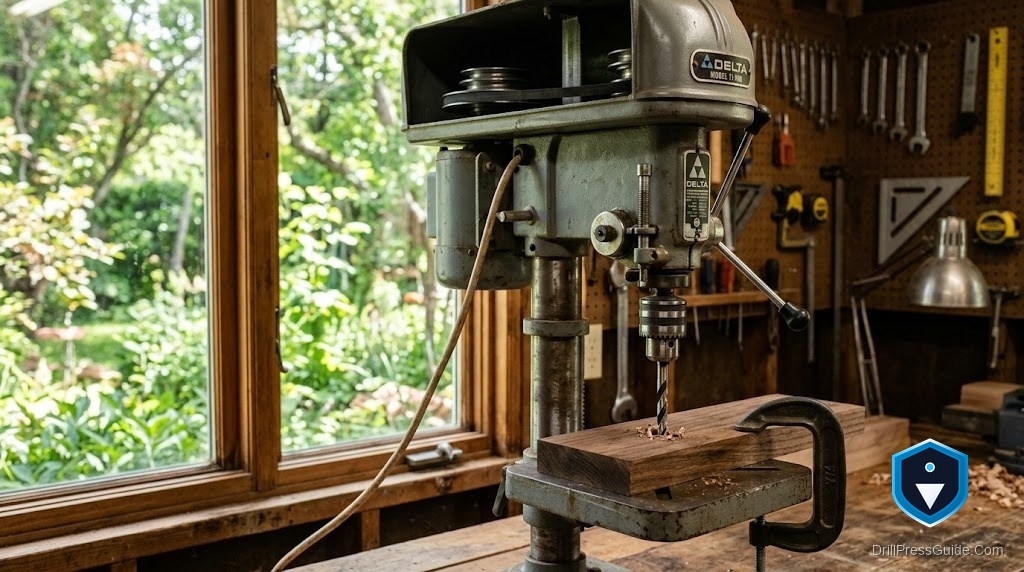
Delta has built drill presses in the United States since the 1930s, and the Model 11-980 represents a particular moment in that lineage — a compact 10-inch benchtop press with serious build quality, reasonable parts availability, and a spec sheet that competes well against modern imports. If you own one, picked one up used, or are comparing it against other benchtop options, here’s everything worth knowing.
What You Need to Know First: Model 11-980 vs. 11-990 vs. 11-950
Delta’s 10-inch benchtop press family is small but confusingly named. Let’s clear it up before anything else.
| Model | Type | Speeds | Key Notes |
|---|---|---|---|
| 11-950 | Benchtop | 5 | Basic configuration, older tooling |
| 11-980 | Benchtop | 5 | Mid-tier, solid cast table |
| 11-990 | Benchtop | 5 | Updated version of 11-980 family |
| 17-900 | Floor | 5 | 17-inch swing floor press, entirely different machine |
The 11-980 sits between the entry-level 11-950 and the revised 11-990 in Delta’s benchtop lineup. The 11-990 shares many parts with the 11-980 but incorporates some design revisions. In practice, owners report that belts and certain hardware transfer between them — but always verify part numbers before ordering.
The 17-900 is frequently confused with the 11-series by new buyers. It is a full floor press with 17-inch swing. The belt for it — the Delta 17-900 replacement belt — is a completely different specification than what the 11-980 uses.
For the 11-980 and related 11-990, the correct belt is the Delta 11-990 replacement belt. Confirm your model number before ordering, but this belt fits the 11-series benchtop family including the 11-980.
Specifications
| Feature | Delta 11-980 |
|---|---|
| Swing | 10” |
| Motor | ¼ HP |
| Speeds | 5 |
| Speed range | 620–3100 RPM |
| Chuck capacity | ½” |
| Chuck mount | JT33 taper (Jacobs) |
| Quill travel | 2” |
| Table diameter | 7¼” round |
| Table tilt | ±45° |
| Column diameter | ~2½” |
| Drive type | V-belt, step pulley |
| Weight | ~40 lbs |
The ¼ HP motor is honest about the machine’s category — this is a light to medium benchtop press. It handles drill bits up to ½ inch through typical wood and soft metal, and runs cleanly at lower speeds for Forstner work in wood up to ¾ inch.
The Chuck System
The 11-980 uses a JT33 (Jacobs Taper #33) chuck mount — the same standard taper used across most benchtop drill presses in this class. This is good news for replacement and upgrade parts.
If your chuck has wobble, won’t tighten, or needs replacement after years of use, the JT33 keyed replacement chuck is a direct-fit upgrade. ½-inch capacity, keyed, drops right onto the JT33 spindle.
Chuck removal: Use the drift pin slot in the quill. Insert a drift punch horizontally through the slot and give it a sharp tap with a mallet — the taper releases. On older machines, a penetrating oil soak overnight helps if the taper has seized from corrosion.
Don’t forget a replacement chuck key. On 20–30 year old presses, the original key is frequently missing.
Common Failure Points
V-Belt Wear
The single most common maintenance item on any belt-drive press is the V-belt. On the 11-980, the belt runs between the motor pulley and the step pulley on the quill shaft. After years of use, rubber belts harden, crack, or stretch — causing slipping, vibration, and reduced power transfer.
The Delta 11-990 replacement belt is the correct belt for this machine family. For an even better long-term solution, the link belt fits any belt-drive press by snapping segments to the needed length. It installs without removing the motor bracket and runs with less vibration than a solid rubber belt — a worthwhile one-time upgrade.
Quill Spring
The quill return spring pulls the quill back up after each drilling pass. On older 11-980 units, the spring loses tension or breaks entirely. Symptoms: sluggish quill return or a quill that drops under its own weight without the handle engaged.
Replacement quill springs are available from Delta/Porter-Cable through their parts system and from eReplacementParts.com. This is a ~30-minute repair with the right spring in hand.
Toggle Switch
The on/off toggle switch on the 11-980 is a known wear item. The contacts corrode over time, causing intermittent starts or complete failure. Standard SPST toggle switches from any electrical supplier match the mounting profile — measure the panel cutout and confirm voltage/amperage rating before substituting.
Table Clamp Handle and Table Bracket
The table on the 11-980 clamps to the column with a standard collar-and-handle arrangement. Cast handles crack on machines that have been dropped or subjected to heavy lateral loads. Delta and aftermarket suppliers carry replacement table clamp handles.
The table alignment pin (a small pin that locks the table’s rotational position when set square) is another part that goes missing on used machines. It’s a simple hardware item — a bolt of appropriate diameter and thread pitch from a hardware store works as a substitute.
Table Raising Handle
The rack-and-pinion mechanism for raising and lowering the table on the 11-980 includes a table raising handle that takes wear at the pinion. Check for slop in the rack when inspecting a used machine.
Parts Sourcing
Delta drill press parts have a slightly better sourcing story than vintage Craftsman, primarily because Delta/Porter-Cable (now under Stanley Black & Decker) has maintained parts availability more consistently.
Primary sources:
- Delta/Porter-Cable parts (deltamachinery.com or similar SBD-managed channels) — official parts by model and part number
- eReplacementParts.com — comprehensive Delta exploded diagrams with part numbers; best starting point for any repair
- Amazon — belts and universal hardware (chuck, chuck key, link belt) are the same JT33-standard parts used across the industry
- eBay — for discontinued castings and hard-to-find specific hardware
When ordering, use the full model number including revision suffix if present. The 11-980 and 11-990 share some parts but not all.
How It Compares to the Competition
| Feature | Delta 11-980 | Ryobi DP103L | WEN 4212 (10”) |
|---|---|---|---|
| Swing | 10” | 10” | 10” |
| Motor | ¼ HP | ½ HP | 3.2A |
| Speeds | 5 | 5 | 5 |
| Table | 7¼” round | 7¾” × 6½” rect. | 7¾” × 7¾” rect. |
| Construction | Cast iron table, USA-era | Import | Import |
| Chuck taper | JT33 | JT33 | JT33 |
| Weight | ~40 lbs | ~53 lbs | ~37 lbs |
| Street price (used) | $80–$200 | $160–220 (new) | $130–160 (new) |
| Parts | Moderate-good | Good | Moderate |
Delta 11-980 vs. Ryobi DP103L: The Ryobi is heavier, uses a more powerful motor, and has a rectangular table that many woodworkers prefer for clamping. The Delta wins on build quality (cast-iron table vs. the Ryobi’s aluminum), but the Ryobi’s ½ HP motor gives it meaningfully more cutting power for larger bits and harder materials.
Delta 11-980 vs. WEN 4212: The WEN is a comparable import-built alternative at lower cost new. For someone choosing new, the WEN is excellent value. The Delta 11-980 used, in good condition, is a better-built machine — but comes with the inherent parts-chase risk of older equipment.
Accessories
Work-holding vise: A drill press vise is non-optional for anything beyond the most casual hobby drilling. The WEN 3-inch drill press vise fits the 11-980’s round table cleanly and holds small-to-medium stock securely.
Magnetic LED work light: Delta’s 11-series head casts a shadow directly on the work. The magnetic LED work light attaches to the column and angles to illuminate the table.
Quick Buyer’s Checklist (Used Machine Inspection)
If you’re buying a used Delta 11-980:
- Run the machine — listen for smooth operation and check for vibration
- Check quill return spring — quill should snap back crisply
- Inspect the V-belt — any cracking, glazing, or hard spots means replacement
- Chuck a rod and check for runout — more than 0.005” suggests chuck reseating or replacement needed
- Verify toggle switch — start and stop several times; confirm clean engagement
- Check table clamp — table should hold firmly at 90° without drift
- Inspect table raising mechanism — smooth rack-and-pinion movement with no excessive slop
- Confirm chuck key is present (or budget for a replacement)
FAQ
Q: What belt does the Delta 11-980 drill press use? A: The Delta 11-990 replacement belt is correct for the 11-series benchtop family including the 11-980. Confirm by model number before ordering.
Q: What’s the difference between the Delta 11-980 and 11-990? A: The 11-990 is a revised version of the 11-980 family with some design updates. Many parts are interchangeable, but verify part numbers — don’t assume full compatibility.
Q: How does the 11-980 differ from the Delta 17-900? A: They’re completely different machines. The 17-900 is a floor press with 17-inch swing. The 11-980 is a 10-inch benchtop. Belt sizes, parts, and configurations are entirely different.
Q: What chuck does the Delta 11-980 use? A: A JT33 taper Jacobs-style keyed chuck, ½-inch capacity. This is a standard taper used across most benchtop presses.
Q: Where do I find Delta 11-980 parts? A: Start with eReplacementParts.com for exploded diagrams and part numbers. Delta/Porter-Cable (under Stanley Black & Decker) maintains some direct parts availability. eBay fills the gap for discontinued hardware.
Q: Is the Delta 11-980 motor strong enough for regular use? A: The ¼ HP motor handles light-to-medium work well — drilling up to ½ inch in wood and soft metals. For production woodworking or regular drilling in hard materials above ½ inch, a higher-powered machine is a better fit.
Q: Can I replace the V-belt with a link belt on the Delta 11-980? A: Yes, and it’s an excellent upgrade. Link belts self-size, install without removing the motor bracket, and run quieter than solid rubber belts.
Q: My Delta 11-980 quill doesn’t spring back. What’s the fix? A: The quill return spring has either broken or lost tension. Replacement springs are available from eReplacementParts.com by model number; this is a 30-minute repair.
Q: Is the Delta 11-980 table round or rectangular? A: Round, approximately 7¼ inches in diameter. This is a minor limitation compared to the rectangular tables on some competitors — clamping setups require a bit more planning.
Q: How does the Delta 11-980 compare to the WEN 4212? A: Similar specs overall. The Delta (used) benefits from heavier cast-iron construction; the WEN (new) offers better value for money at current retail prices and good current parts support.
SEO Metadata


