
A Practical Guide to the Rockwell Compactool Drill Press Lineup
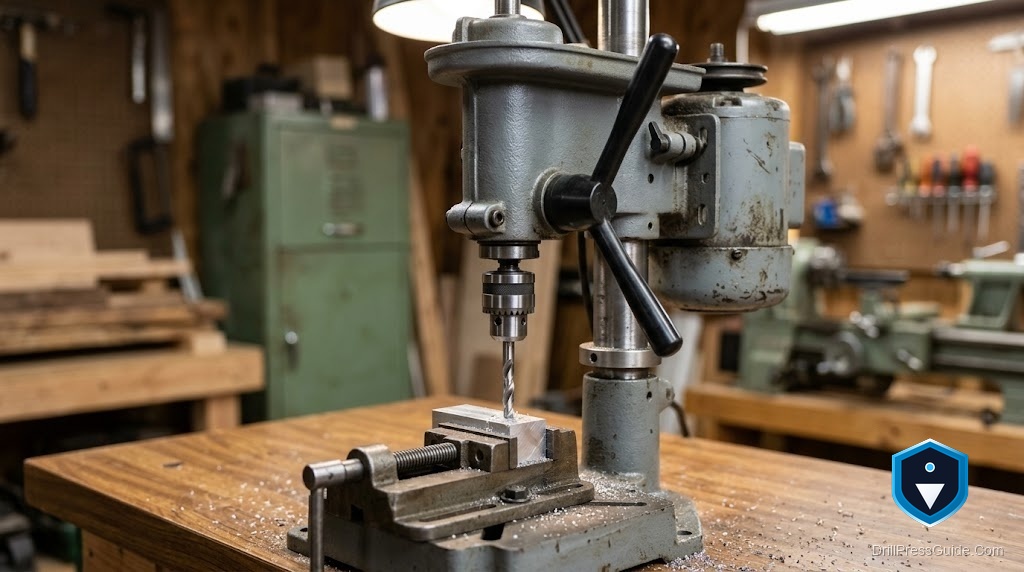
The Rockwell Compactool name carries a certain nostalgia for anyone who has spent time around vintage shop machines. It was Rockwell’s line of compact, light-duty tools, and the drill presses in the range are small, simple machines that still turn up in home shops and estate sales decades later. If you have found a Rockwell Compactool drill press, or you are weighing one, the useful thing is to understand what the lineup was, what these little machines do well, and how to keep one running now that they are long out of production. Here is that practical guide.
What the Rockwell Compactool drill press is
The Compactool line was Rockwell’s range of small, accessible, light-duty tools, and its drill presses fit that identity: compact benchtop machines built for light drilling in wood, plastic, and thin metal. They use the standard small-press layout, a motor driving a belt for a few speeds, a spindle with a small keyed chuck (models in the 1/4-inch and 3/8-inch chuck-capacity range are common), a quill with a return spring, and a small cast table that tilts. Rockwell was a serious tool maker (the same company behind Rockwell-Delta machines), so even these compact tools were built with reasonable quality for their light-duty purpose. Being vintage, they are simple, all-mechanical machines with no modern features.
What these little machines do well
Let me be honest about the fit. A Rockwell Compactool drill press is a light-duty tool, and it shines at exactly that: small pilot holes, hobby work, model making, light assembly drilling, and small parts. Its compact size makes it easy to place on a crowded bench, and its simplicity means there is very little to go wrong. What it is not is a machine for large bits, thick metal, or heavy repetitive work, so matched to small, precise tasks it is genuinely useful, while asking more of it only disappoints. For a hobbyist or a small-parts shop, a clean Compactool is a charming and capable little press.
How the lineup breaks down
The Compactool drill presses sort by their modest capacity:
- 1/4-inch chuck models. The smallest, for very light drilling and hobby work.
- 3/8-inch chuck models. A step up in capacity while staying compact and light-duty.
- Benchtop configuration. These are bench machines; the Compactool line was about compact size, not floor-standing capacity.
Across the range, judge the specific machine by its chuck capacity, its swing, and its condition, since a clean, smooth-running example is what makes one of these worth owning.
Keeping one running
Because the Compactool line is long out of production, there is no factory parts counter, but these are simple machines and their wear items are generic. A worn small chuck, a stretched belt, a lost key, and a tired return spring are all standard consumables you can match by measurement. For anything model-specific, lean on the vintage-machine community and Rockwell literature to identify the exact tool. Match the chuck by taper, the belt by size, and keep the machine clean and lubricated, and a Compactool keeps working as it always did.
Tooling and replacement parts
Keep a Rockwell Compactool running with standard tooling. Fit a quality small keyed drill chuck with the matching arbor if the original loosens, keep a fresh drill press V-belt on the shelf, and replace the missing key with a small drill press chuck key. A set of small twist drill bits suits its light-duty capacity. Confirm the chuck taper by dropping the chuck before ordering an arbor.
The verdict
The Rockwell Compactool drill press lineup is a set of charming, light-duty benchtop machines that still earn a place in a hobby or small-parts shop when you find a clean, smooth-running example. Match one to what it does well, small pilot holes, hobby work, and light assembly drilling, and its compact size and simplicity are real virtues. Judge the specific machine by its chuck capacity (1/4-inch or 3/8-inch), swing, and condition, and accept that as a vintage, out-of-production tool you will source its generic wear parts by measurement. Keep it clean, fit a good small chuck and belt, and a Compactool keeps doing its light-duty job. For anything heavier, a modern benchtop or floor press is the right tool.
Takeaways:
- The Rockwell Compactool line was a range of compact, light-duty tools, including small benchtop drill presses.
- The drill presses have small chuck capacities (commonly 1/4-inch and 3/8-inch) for light drilling and hobby work.
- They shine at small, precise tasks; they are not for large bits, thick metal, or heavy work.
- Long out of production, but their generic wear parts (chuck, belt, key, spring) are easy to match by measurement.
FAQ
What is a Rockwell Compactool drill press? A compact, light-duty benchtop drill press from Rockwell’s Compactool line, built for small drilling in wood, plastic, and thin metal, with a small keyed chuck and a few belt speeds.
Are Rockwell Compactool drill presses any good? For light-duty hobby and small-parts work, yes. They are simple, compact, and reasonably built. They are not for large bits or heavy work.
What chuck capacity do they have? Commonly 1/4-inch and 3/8-inch, matching their light-duty purpose. Judge the specific machine by its chuck capacity and condition.
Can I still get parts for a Compactool? There is no factory parts counter, but the wear items (small chuck, belt, key, return spring) are generic and easy to match by measurement. Use the vintage community for model-specific parts.
Who made the Rockwell Compactool? Rockwell, the same serious tool maker behind Rockwell-Delta machines. The Compactool line was its range of compact, light-duty tools.
What can a Compactool drill? Small pilot holes, hobby work, model making, and light assembly drilling in wood, plastic, and thin metal. Keep the bits and loads small.
How do I identify my exact model? Use any numbers on the machine plus Rockwell literature and the vintage-machine community to identify it, then match generic parts by measurement.
References
- VintageMachinery.org, Rockwell manufacturer index and Compactool literature: http://vintagemachinery.org/mfgindex/detail.aspx?id=202
- OWWM.org, Rockwell and Delta compact tool identification forums: https://owwm.org/
- VintageMachinery.org, Rockwell publication library (compact tool references): http://vintagemachinery.org/pubs/


