
The Multi Spindle Drill Press: One Stroke, Many Holes
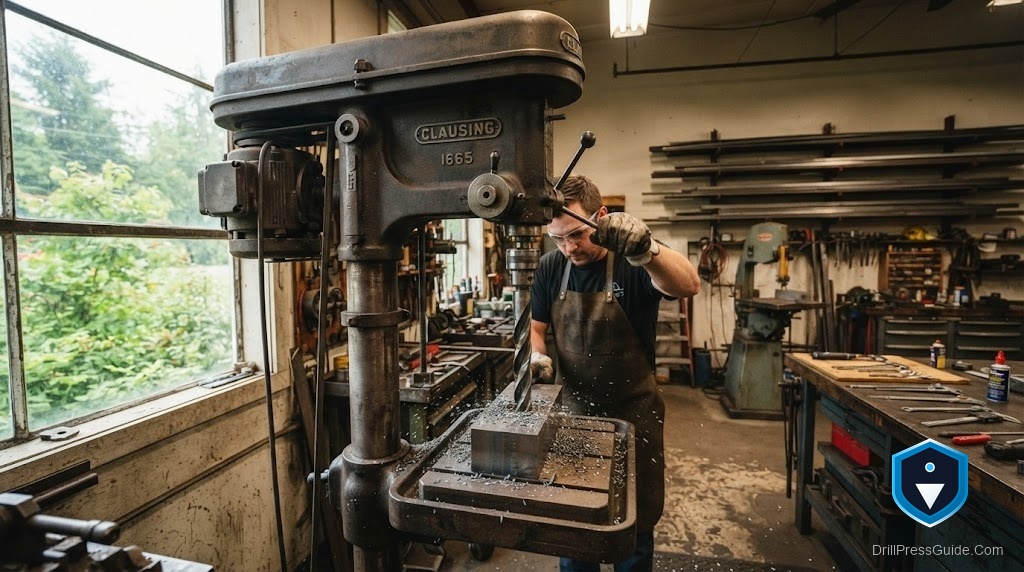
Picture a part that needs the same eight holes drilled in the same pattern, thousands of times. On an ordinary drill press that is eight separate plunges per part, multiplied by thousands, an enormous amount of repetitive positioning and drilling. The multi spindle drill press collapses all of that into a single stroke: several spindles, arranged in the exact hole pattern, drill every hole at once. It is a production machine with one clear purpose, and understanding what a multi spindle drill press is and when it earns its place tells you whether it belongs in your shop. This guide explains it.
A multi spindle drill press is a machine that drives several drilling spindles at the same time from one head, so a single downward feed drills multiple holes simultaneously in one workpiece. The spindles are arranged to match the required hole pattern, either in a fixed layout or, on adjustable heads, positioned to suit the job, and they are driven together through gearing or a multi-spindle head. The defining idea is simultaneous drilling of a fixed pattern in one motion, which is what makes it so fast for repetitive parts.
How it differs from a multi head press
These two production machines are easy to confuse, so the distinction is worth drawing clearly. A multi head press has several separate heads, often for a sequence of operations, and the operator moves the part from head to head, drilling here, countersinking there, tapping at the next. A multi spindle press drives several spindles from one head, and they all drill at once in a single stroke, making a whole hole pattern in one motion. Put simply, multi head is about doing different operations in sequence, while multi spindle is about drilling many identical holes at the same time. Choose by whether you need a sequence of steps or a repeated hole pattern.
Where the multi spindle press earns its keep
The multi spindle press is a specialist, so its value is entirely about the right kind of volume. It shines when a part has a fixed pattern of holes that must be drilled identically on many pieces, because drilling them all in one stroke saves the time of positioning and plunging each hole separately, on every single part. That time saving compounds over a production run into a large gain. It is the wrong tool for varied one-off work, where the fixed spindle pattern cannot adapt and a single-spindle press with quick setups is far more flexible. The honest question is whether you drill the same hole pattern in quantity often enough to justify a machine built for exactly that.
Setting up for simultaneous drilling
Because every hole is drilled at once, the setup is where accuracy is won or lost, and it centers on repeatability. Set the spindle pattern to match the part’s hole layout precisely, and confirm every spindle is fitted with the correct matching bit, since all of them cut together and one wrong or missing bit ruins the part. Fixture the work so each piece registers in exactly the same place, because with a fixed spindle pattern the part must sit identically every time for the holes to land correctly; a solid fixture or a heavy drill press vise bolted to the table locates the work repeatably and holds it against the combined torque of several bits cutting at once. Set the speed and depth for the material and bits.
Using it well
Run a multi spindle press with production discipline. Keep every bit sharp and matched, since all the spindles cut simultaneously and a single dull or odd bit shows up on every part and can overload that spindle; replace bits as a set before they degrade. Feed steadily, remembering that driving several bits at once demands real power and generates real torque, so the machine and the work-holding must handle the combined load. Use cutting fluid on metal across the run, clear chips from all the holes, and guard and keep clear of the multiple spinning spindles, which make careful handling and clamped work even more important than on a single-spindle machine.
Conclusion
The multi spindle drill press turns a repetitive hole pattern into a single stroke, driving several spindles at once so every hole in the pattern is drilled simultaneously on each part. It differs from a multi head press, which does a sequence of operations across heads, by drilling many identical holes together, and it earns its place only where the same pattern is drilled in real quantity, being overkill for varied work. Win its speed through repeatable fixturing, a correctly matched set of sharp bits, adequate power and clamping for the combined load, and proper guarding. Matched to high-volume, fixed-pattern drilling, a multi spindle press does in one stroke what a single-spindle machine grinds through one hole at a time.
Three takeaways: a multi spindle press drives several spindles from one head to drill a whole hole pattern in a single stroke; it differs from a multi head press (a sequence of operations) by drilling many identical holes at once; and it earns its keep only with high-volume fixed-pattern work, through repeatable fixturing and a matched set of sharp bits.
Frequently Asked Questions
What is a multi spindle drill press? A machine that drives several drilling spindles at once from one head, so a single feed stroke drills multiple holes simultaneously in one part. The spindles are arranged to match the required hole pattern.
What is the difference between a multi spindle and a multi head drill press? A multi spindle press drills many identical holes at once in one stroke. A multi head press has separate heads for a sequence of operations, and the operator moves the part from head to head. One is simultaneous, the other sequential.
When is a multi spindle drill press worth it? When a part has a fixed hole pattern drilled identically on many pieces, so making all the holes in one stroke saves positioning and plunging each separately, compounded over a production run. It is overkill for varied one-off work.
Can a multi spindle press adapt to different parts? Some heads are adjustable to reposition the spindles, but the machine is built around drilling a set pattern in quantity, not flexible one-off work. For varied jobs, a single-spindle press with quick setups is more flexible.
How do I set up a multi spindle drill press? Set the spindle pattern to match the hole layout, fit every spindle with the correct matching bit, and fixture the work so each piece registers identically, since the fixed pattern requires the part to sit the same every time.
Does a multi spindle press need more power? Yes. Driving several bits at once demands real power and generates real torque, so the motor, the machine, and the work-holding must handle the combined load. Clamp the work solidly and keep all the bits sharp and matched.
References
- VintageMachinery.org, industrial machine tool references and literature. http://vintagemachinery.org
- Jacobs Chuck Manufacturing, Mounting and Removing Chucks. http://www.jacobschuck.com/uploads/ueditor/file/20200604/1591240204146153.pdf


