
Drill Press Made in USA: How to Tell and What to Buy
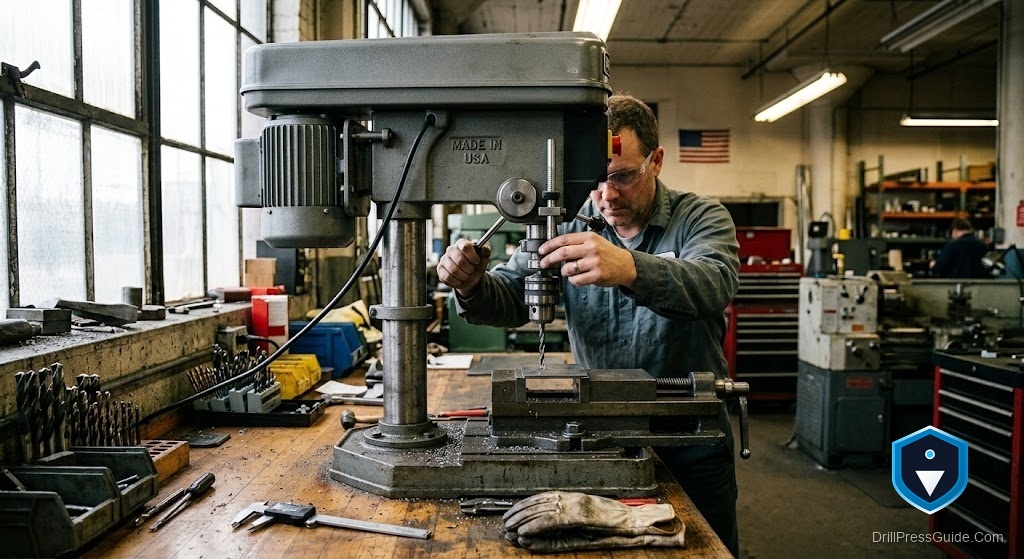
The phrase made in USA gets stamped, printed, and advertised freely, and on drill presses it is muddier than it looks. Some machines are genuinely built in an American foundry; some are assembled here from imported parts and marketed on the label; and many of the truly American machines are decades old, found only on the used market. If a domestically made drill press matters to you, whether for durability, for supporting domestic manufacturing, or for serviceability, the skill you need is telling a real one from a marketing claim. This guide is about how to tell, and what to actually buy.
A drill press made in USA is one manufactured domestically, but that plain definition hides three different situations you need to separate: genuine current domestic manufacture, machines assembled in the USA from a mix of domestic and imported components, and the large population of vintage American machines from the country’s classic toolmakers. Each is legitimately American in some sense, but they are bought differently and offer different things, so the first job is figuring out which one a given machine is.
Reading the label honestly
Marketing language is where buyers get misled, so read it precisely. Made in USA and assembled in USA are not the same claim: the first implies domestic manufacture, the second means the machine was put together here from components that may be imported. Watch for vague phrasing, American company, designed in USA, that describes the brand rather than where the machine was built. When a machine matters to you for its origin, ask the seller specifically what is manufactured domestically versus imported, and do not assume the strongest interpretation of a soft claim. The label tells you less than the answer to a direct question does.
Verifying a vintage American machine
For vintage machines, origin is usually clear once you identify the maker, and this is where most genuine American drill presses live. The classic domestic makers, Delta and Delta/Rockwell, Walker-Turner, Buffalo Forge, and the Atlas- and King Seeley-built machines sold under names like Craftsman, are documented, and you can confirm a machine’s identity and American manufacture from its castings, nameplate, and model or serial number. The VintageMachinery.org archives hold the catalogs and manufacturer histories that verify a maker and date a machine. A confirmed vintage American press is genuinely domestic iron; the task there is not proving origin but judging condition.
Judge the machine, not the flag
Whichever category a machine falls into, remember why made in USA appeals to you in the first place, and check for that directly. The label is meant to stand for heavy rigid castings, a true-running spindle, and serviceable, repairable design, so inspect for those qualities rather than trusting the words. Spin the spindle for runout, feel the quill for smooth travel, look for generous castings and a stout column, and confirm standard wear parts fit and, on a vintage machine, the model-specific parts are present. A genuinely well-built machine, current or vintage, delivers the durability you are after; a machine coasting on the label without the build does not. So verify the origin, then verify the machine.
Setting up and keeping an American press
A well-built domestic press rewards proper setup and maintenance. Square the table to the spindle, and on a vintage machine clean and protect the cast-iron surfaces and keep the quill lubricated. Clamp metal work in a heavy cast-iron drill press vise bolted to the table for safe, accurate holes. Replace standard wear items as needed, a belt by profile and length, bearings by their numbers, and if the chuck is worn on a standard JT33 arbor, a JT33 keyed chuck restores true holes once the old one is driven off. Run correct speeds and use sharp bits, and a durable machine stays accurate for decades.
Conclusion
Drill press made in USA covers three different situations, current domestic manufacture, domestic assembly of imported parts, and vintage American iron, so buying one well starts with telling them apart. Read the label precisely, treating made in USA and assembled in USA as different claims and asking the seller directly what is made where, and verify a vintage machine’s American origin through its maker and the vintage machinery archives. Then judge the machine on the qualities the label is supposed to signal, heavy castings, a true spindle, serviceability, since those, not the words, are what you actually want. Verify origin, verify the build, set it up right, and you get the durable domestic machine you were looking for.
Three takeaways: made in USA on drill presses spans current domestic manufacture, domestic assembly of imported parts, and vintage American machines, so tell them apart; read the label precisely and ask the seller what is made where; and judge the machine on castings, spindle, and serviceability rather than the label alone.
Frequently Asked Questions
Are there drill presses made in the USA? Yes, in three senses: a smaller number of currently made domestic machines, machines assembled here from a mix of parts, and a large population of vintage American machines from classic toolmakers found on the used market.
What is the difference between made in USA and assembled in USA? Made in USA implies domestic manufacture, while assembled in USA means the machine was put together here from components that may be imported. They are different claims, so a machine matters, ask the seller what is made where.
How do I verify a vintage drill press is American made? Identify the maker (Delta, Delta/Rockwell, Walker-Turner, Buffalo Forge, Atlas- or King Seeley-built Craftsman) from the castings, nameplate, and model or serial number, using the vintage machinery archives to confirm and date it.
Should I trust a made in USA label on a new drill press? Read it precisely and ask what is manufactured domestically versus imported, since vague phrasing like American company or designed in USA describes the brand, not where the machine was built. Judge the actual build too.
Why do people want an American made drill press? Usually for heavy rigid castings, a true-running spindle, and serviceable, repairable design, the qualities the label is meant to signal. Check for those directly, since a well-built machine delivers the durability, not the words alone.
How do I keep an American made drill press running? Square the table, protect the cast-iron surfaces, lubricate the quill, and replace standard wear parts (belt, bearings, chuck, spring) as needed. Clamp work, run correct speeds, and use sharp bits for lasting accuracy.
References
- VintageMachinery.org, American machine tool manufacturer index and archives. http://vintagemachinery.org
- Jacobs Chuck Manufacturing, Mounting and Removing Chucks. http://www.jacobschuck.com/uploads/ueditor/file/20200604/1591240204146153.pdf


