
Understanding the Annular Cutter in a Drill Press
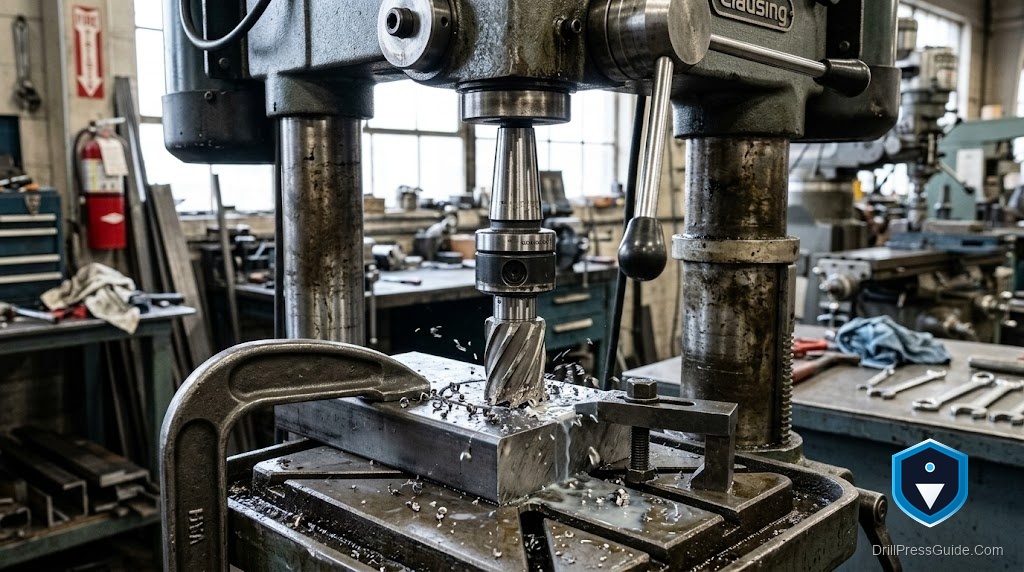
The first time you watch an annular cutter work, it looks like cheating. Where a twist bit grinds an entire hole into chips and labors through thick steel, the annular cutter carves only a thin ring and drops out a clean slug, making a large hole in a fraction of the time and effort. These cutters are standard on magnetic drills for structural steel, and shops naturally wonder whether they can run one in a drill press. The answer is a qualified yes, and understanding the annular cutter, how it works and what it needs from the machine, is the key to using one safely and well. This guide explains it.
An annular cutter, also called a broach cutter or core drill, is a hollow cylindrical cutter with teeth only around its rim. Instead of removing all the material in the hole like a twist bit, it cuts a narrow annulus (a ring) around the perimeter, leaving a solid slug in the center that ejects when the cut is complete. Because it only cuts the ring, it removes far less material, so it drills large holes faster, with less thrust, and with a cleaner result than a twist bit of the same diameter. That efficiency is the whole appeal.
Why the annular cutter is so efficient
Understanding the mechanics explains the payoff. A twist bit must cut the entire cross-section of the hole into chips, which takes a lot of thrust and energy, especially at large diameters. An annular cutter cuts only the thin ring, so it needs far less force to advance and far less power to drive, and it produces a cleaner, more accurate hole with a better finish because the teeth around the rim shear rather than grind. The ejected slug is proof of the difference, that solid center is material a twist bit would have turned entirely into chips. For large holes in plate and structural steel, this is a genuine leap in speed and effort.
What the annular cutter needs from the machine
Here is the qualified part of the yes, because annular cutters were designed for magnetic and heavy drills, and a drill press must meet their needs. They need a proper mount, since annular cutters use a specific arbor (often a Weldon shank with set screws), so the drill press must accept that arbor rather than gripping the cutter in a standard chuck, which cannot hold it securely. They need low speed and rigidity, running slower than twist bits and demanding a rigid machine to avoid chatter that chips the teeth. They need coolant or cutting fluid, often delivered through the center, to clear the ring and cool the teeth. And they need enough travel and power for the cut. A light benchtop press generally cannot meet these; a heavy, rigid floor or industrial press with the right arbor and low speed can.
Using one safely in a drill press
If your machine is suitable, use the cutter with respect. Mount it on its correct arbor, seated and locked, never in a plain chuck. Clamp the work absolutely solidly, because an annular cutter in thick steel generates real torque and an unclamped or poorly held piece is dangerous; a heavy cast-iron drill press vise bolted to the table, or bolting the work directly to the table, holds it against the cut. Run the correct low speed for the cutter and material, feed steadily so the teeth shear rather than rub, use plenty of cutting fluid, and keep clear of the ejecting slug, which drops out hot. Let the cutter and fluid do the work rather than forcing it.
When a twist bit is the better choice
An annular cutter is not the answer to every large hole. It shines for large-diameter holes in plate and structural steel on a suitable heavy machine. For everyday holes, small and medium diameters, thin material, and general drilling, a twist bit is simpler, cheaper, and entirely sufficient, and it does not demand the special arbor, low speed, and rigidity the annular cutter requires. Match the tool to the job: reach for an annular cutter when a large hole in thick steel would punish a twist bit, and use a twist bit for the rest.
Conclusion
The annular cutter drills large holes in thick steel with startling efficiency by cutting only a thin ring and ejecting the center as a slug, needing far less thrust and power than a twist bit and leaving a cleaner hole. Running one in a drill press is possible, but only on a heavy, rigid machine that accepts the cutter’s proper arbor, runs slow, and can deliver cutting fluid, since these tools were built for magnetic and heavy drills. Mount it correctly, clamp the work hard, run slow with plenty of fluid, and keep clear of the slug, and reserve it for the large steel holes where its efficiency pays off, leaving everyday holes to a twist bit.
Three takeaways: an annular cutter cuts only a ring and ejects a slug, drilling large steel holes with far less effort than a twist bit; it needs a suitable heavy machine with the correct arbor, low speed, rigidity, and coolant; and it is for large holes in thick steel, while twist bits suit everyday drilling.
Frequently Asked Questions
What is an annular cutter? A hollow cylindrical cutter with teeth only around its rim that cuts a narrow ring rather than the whole hole, leaving a solid slug in the center that ejects when done. It drills large holes faster and with less effort than a twist bit.
Can I use an annular cutter in a drill press? Yes, but only on a heavy, rigid machine that accepts the cutter’s proper arbor, runs at low speed, and can deliver cutting fluid. A light benchtop press generally cannot meet those needs; a heavy floor or industrial press can.
Why is an annular cutter more efficient than a twist bit? Because it cuts only a thin ring instead of the entire hole cross-section, so it needs far less thrust and power and leaves a cleaner hole. The ejected slug is material a twist bit would have turned entirely into chips.
How do I mount an annular cutter? On its correct arbor, often a Weldon shank held by set screws, seated and locked, never in a plain drill chuck, which cannot hold it securely. The machine must accept that arbor to run the cutter safely.
Do I need cutting fluid with an annular cutter? Yes. Annular cutters need coolant or cutting fluid, often delivered through the center, to clear the ring and cool the teeth. Running one dry chips the teeth and ruins the cut.
When should I use a twist bit instead? For everyday holes, small and medium diameters, thin material, and general drilling, a twist bit is simpler, cheaper, and sufficient. Reserve the annular cutter for large holes in thick steel where a twist bit would struggle.
References
- VintageMachinery.org, machine tool references and literature. http://vintagemachinery.org
- Jacobs Chuck Manufacturing, Mounting and Removing Chucks. http://www.jacobschuck.com/uploads/ueditor/file/20200604/1591240204146153.pdf


