The American Made Drill Press: What It Means and How to Find One
For a lot of buyers, American made is not nostalgia, it is a shorthand for a machine built heavy, built to last, and built to be fixed rather than replaced. When people go looking for an American made drill press, they are usually after that: the cast-iron weight and rebuildable quality of the machines that filled American shops and schools for most of the twentieth century. The catch is that the landscape has changed, and finding a genuinely American made drill press today takes knowing where to look and what the term really means now. Understanding both is the key to getting what you are actually after. This guide covers it.
An American made drill press is one manufactured in the United States, a category that historically included many well-known names and that today is much smaller, since most new drill presses are imported. In practice the phrase points buyers toward two things: vintage American machines from the era when domestic manufacturers built heavy cast-iron presses, and the far fewer new machines still made or substantially built in the USA. Knowing that the meaning splits between vintage and modern is the first step, because the way you find and judge each is different.
Why people want one
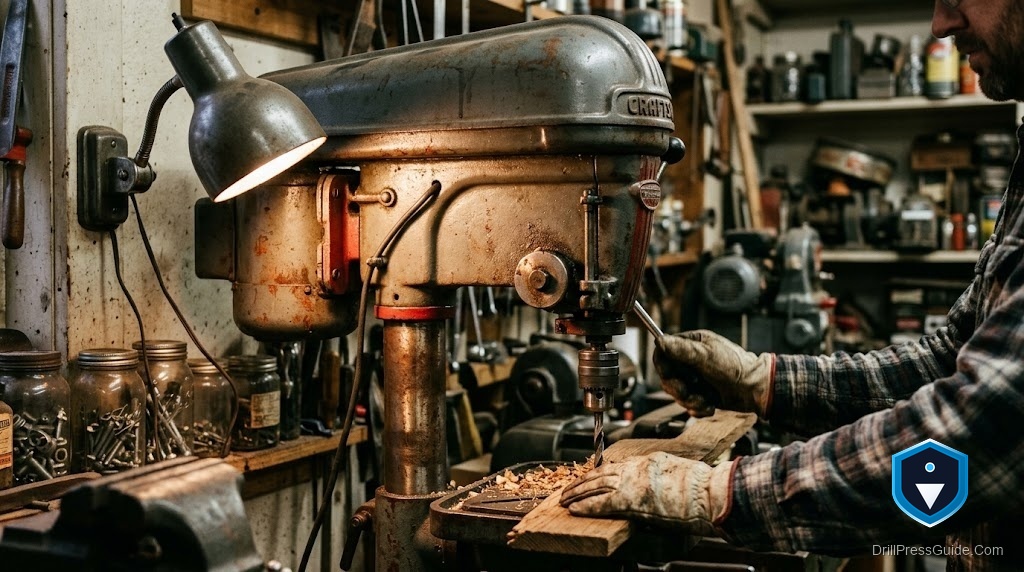
The appeal behind the search is worth naming, because it explains what buyers are really chasing. American made, especially the vintage machines, is associated with heavy cast-iron construction, simple and rugged mechanisms, and a build quality meant to last decades and be rebuilt rather than discarded. These machines were made when domestic industry equipped the nation’s factories and schools, and many are still working today, which is itself the proof of their durability. So the real goal is usually not the label for its own sake but the qualities behind it: mass, rigidity, longevity, and repairability. Keeping that in mind helps you judge whether a given machine actually delivers what you want.
Finding a vintage American made press
For most buyers, the vintage route is the realistic way to own a heavy American made drill press, and it means shopping the used market. Look for machines from the well-known American manufacturers of the twentieth century, and use the maker’s markings, name, model, and serial or casting numbers, to identify and date a machine. Free machine-tool history archives such as VintageMachinery.org hold manufacturer records, catalogs, and photographs that let you identify an American press, confirm its maker, and learn how it was built and meant to work. A sound vintage American press, heavy and rebuildable, is often the best value in this category, since its durability is proven and its parts are frequently standard or repairable.
Judging a vintage machine
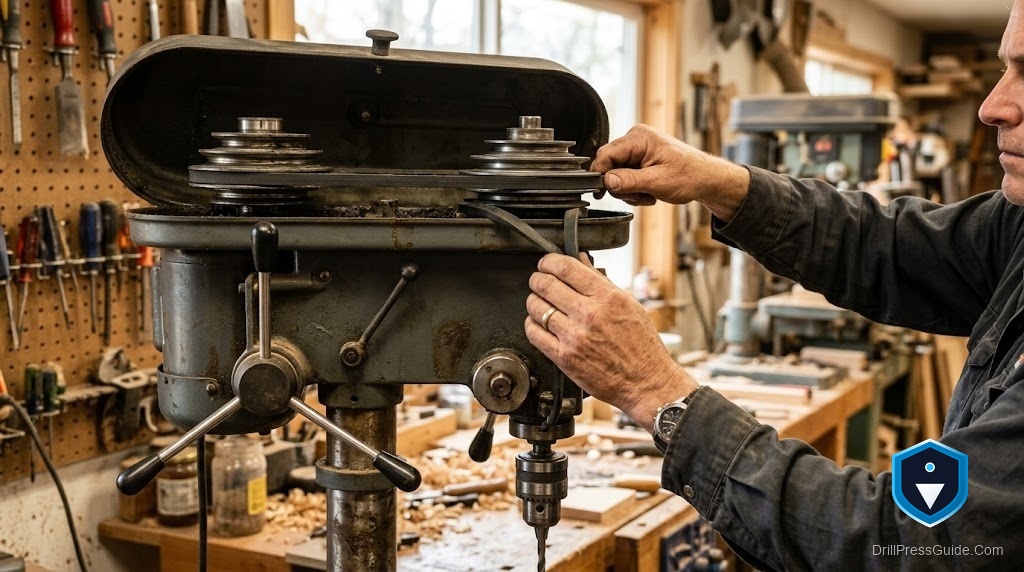
With any used machine, condition decides value, so inspect it the way its build invites. Spin the spindle and check for runout and rough bearings, feed the quill for smooth travel and a firm return, and inspect the chuck for wear and true running. Look over the table and column for damage, and confirm the table adjusts and locks solidly. Surface rust is expected on an old machine and cleans off; broken castings, a bent spindle, or missing model-specific parts are the serious faults. The reassurance with these machines is that their heavy build and simple mechanisms are exactly what makes them rebuildable, so a tired but sound American press is usually worth restoring.
The modern American made question
For a new machine, be realistic and precise about what American made means today. Most new drill presses are imported, and genuinely US-built machines are far fewer, so if buying new American made matters to you, verify the specific claim rather than assuming, since terms like assembled in the USA differ from fully made there. Decide what you actually value: if it is the heavy, rebuildable quality, a sound vintage American press often delivers it better than many new machines at any origin. If new-machine convenience, warranty, and available parts matter more, weigh a current press on its merits and support rather than on the badge, and judge the machine by the qualities you wanted the label to guarantee.
Setting up and using any drill press well
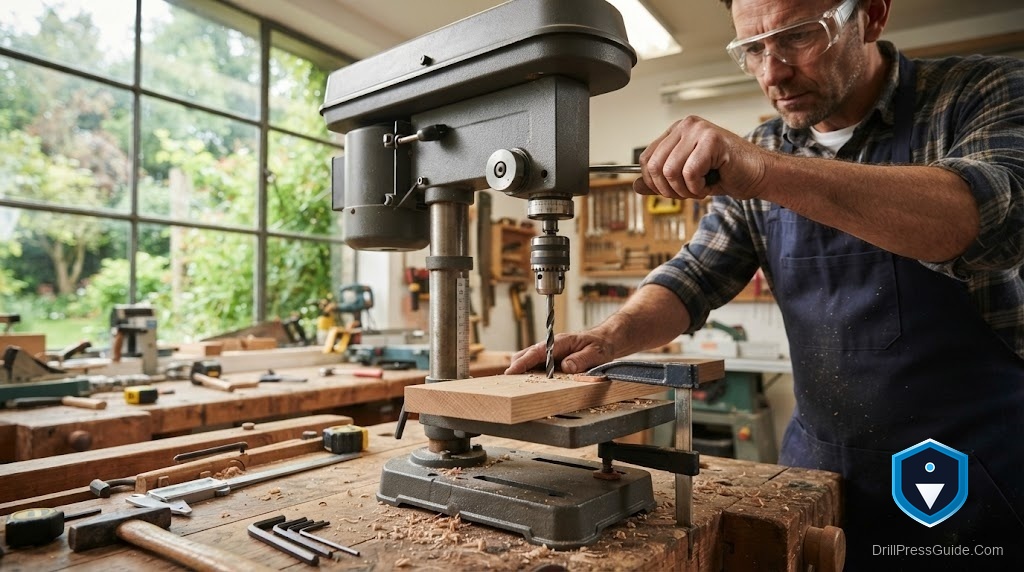
Whichever machine you land on, vintage American or modern, good practice is what turns it into accurate work. Square the table to the spindle, and level and secure the machine. Clamp metal work in a cast-iron drill press vise bolted to the table rather than holding it by hand, for safety and hole quality. Run the correct speed for the bit and material, use sharp bits and cutting fluid on metal, and set the depth stop for repeatable holes. If a vintage machine’s chuck is worn and its arbor is a standard JT33, a matching JT33 keyed chuck restores true holes once the old one is off. These fundamentals matter more to your results than where the machine was built.
Conclusion
An American made drill press means one built in the USA, a category that is largely vintage today, since most new machines are imported. Behind the search is usually a desire for heavy cast-iron, rebuildable, long-lasting quality, and for most buyers a sound vintage American press, identified through its markings and machine-history archives and judged on condition, is the realistic way to get it. For a new machine, verify American made claims precisely and decide whether the qualities you want are better served by a proven vintage press or a well-supported current one. Whatever you choose, set it up square and clamped, run correct speeds, and use sharp bits, and the machine delivers the durable, accurate drilling the label was always really about.
Three takeaways: American made drill press today mostly means vintage, since most new machines are imported, and the real goal is usually heavy, rebuildable, long-lasting quality; find and identify a sound vintage American press through its markings and machine-history archives and judge it on condition; and verify modern American made claims precisely, choosing by the qualities you actually want.
Frequently Asked Questions
What does American made drill press mean? A drill press manufactured in the United States. Historically that included many well-known names; today the category is much smaller since most new presses are imported, so the phrase mostly points buyers toward vintage American machines.
Why do people want an American made drill press? Usually for the qualities associated with the vintage machines: heavy cast-iron construction, simple rugged mechanisms, and build quality meant to last decades and be rebuilt rather than replaced. The real goal is durability and repairability, not just the label.
How do I find a vintage American made drill press? Shop the used market for machines from the well-known American makers, and identify them by their name, model, and casting or serial numbers using free machine-tool history archives that hold manufacturer records, catalogs, and photos.
How do I judge a vintage American press? Check spindle runout and bearings, quill travel and return, chuck wear, and the table and column. Surface rust cleans off; broken castings, a bent spindle, or missing model-specific parts are the serious faults. The heavy, simple build makes a sound one very rebuildable.
Are new drill presses still made in America? Far fewer than before, since most new machines are imported. If new American made matters to you, verify the specific claim rather than assuming, since assembled in the USA differs from fully made there. Often a sound vintage press better delivers the quality buyers want.
Does where the drill press is made affect how I use it? No. Good practice, a square table, clamped work, correct speed, sharp bits, and cutting fluid on metal, matters more to your results than origin. A well-set-up machine drills accurately regardless of the badge.
References
- VintageMachinery.org, manufacturer index and historical records for American machine tools. http://vintagemachinery.org
- Jacobs Chuck Manufacturing, Mounting and Removing Chucks. http://www.jacobschuck.com/uploads/ueditor/file/20200604/1591240204146153.pdf