
Can You Mill With a Drill Press? An Honest Answer
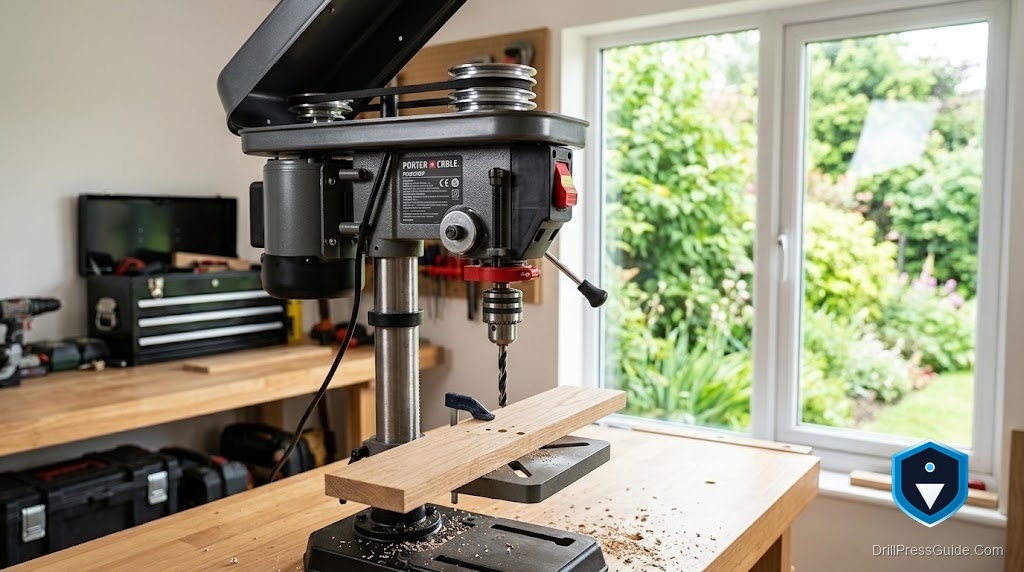
Type the question into any search bar and you will find the internet split down the middle: videos showing someone milling a slot on their drill press, and comment sections full of machinists warning it is a fast way to wreck the machine or get hurt. Both camps are looking at the same truth from different ends. The honest answer to whether you can mill with a drill press is a heavily qualified yes for the lightest work and a firm no for anything real, and the value is in understanding exactly why, so you can decide for your own shop without learning the hard way. This guide gives that answer straight.
Milling means cutting with a rotating cutter that removes material from the side of the tool, which puts sideways force on the spindle. Drilling, what a drill press is built for, cuts straight down along the bit’s axis, putting force downward. A drill press is engineered entirely around that downward thrust, and milling asks it to take a force it was never designed for. Every part of the honest answer flows from that one difference, so it is worth holding onto as you read.
Why the honest answer is mostly no
The reasons a drill press should not mill are built into the machine. Its spindle bearings are made to take downward thrust, not side load, so the sideways force of milling wears them fast and ruins the accuracy the press needs for drilling. Its chuck grips on a taper meant to resist downward pull, so the side load and vibration of milling can pull the chuck loose and throw the cutter, a real safety hazard. And the quill and column flex sideways under a milling cut, so the tool chatters and wanders, giving a poor, inaccurate finish. These are not problems you can overcome with skill; they are consequences of what the machine is.
The narrow yes
So where does the qualified yes come from? From the fact that very light cuts put much less side load on the machine. A shallow pass in soft aluminum, plastic, or wood, taking a tiny amount at a time, with the work held rigidly and often a cross-slide vise to move it, can be done carefully for a non-critical job. People do use a drill press this way for the occasional tiny milling task. But even this light work wears the bearings faster than drilling and never matches a real mill for accuracy or finish, so it is a careful compromise for a hobbyist without a mill, not a genuine capability.
Where the no becomes absolute
Past that narrow band, the answer is a flat no. Do not mill steel, take heavy cuts, or hog material on a drill press, because the side loads there can pull the chuck off, bend the quill, or destroy the bearings, and can send a cutter flying. Do not rely on a drill press for accurate flats, slots, keyways, or any work where precision matters, since the flex and chatter make that impossible. And do not treat a cross-slide vise as a conversion to a mill; it moves the work but does nothing about the spindle and chuck that make milling unsafe. When the work is real milling, the drill press is simply the wrong machine.
The better path
The honest answer usually points to a better decision. If you truly need to mill, put the money and effort toward an actual milling machine, even a small benchtop mill, which has the side-load bearings, secure spindle, and rigidity milling demands, none of which a drill press can be given. And keep the drill press for what it does better than any mill: fast, accurate drilling, reaming, countersinking, and tapping, with work clamped in a drill press vise bolted to the table. Using each machine for its purpose gives better results than forcing one to do both, and it protects the drill press’s accuracy for the many jobs it excels at.
Conclusion
Can you mill with a drill press? Only barely, and only for the lightest cuts in soft material, taken carefully and accepting worn bearings and a rough finish, because the machine’s spindle bearings, chuck, and rigidity are all built for downward drilling, not sideways milling. For anything real, milling steel, accurate slots, keyways, or heavy cuts, the answer is no, and pushing past the line risks the machine and your safety. If you need to mill, buy a mill; keep the drill press for the accurate drilling it does superbly. That is the honest answer, and following it saves both your machine and a lot of frustration.
Three takeaways: a drill press can take only the lightest cuts in soft material, and even those wear it and lack accuracy; its spindle, chuck, and rigidity are built for downward drilling, not sideways milling, so real milling is unsafe on it; and if you need to mill, use a mill and keep the press for accurate drilling.
Frequently Asked Questions
Can you mill with a drill press? Only for the lightest cuts in soft material like aluminum, plastic, or wood, taken carefully and accepting worn bearings and a poor finish. For real milling, the machine is not built for the side loads involved, so the answer is effectively no.
Why can’t a drill press handle real milling? Its spindle bearings take downward thrust, not the side loads of milling, so they wear and lose accuracy. The chuck can pull loose under side force and throw the cutter, and the quill and column flex, causing chatter and inaccurate cuts.
What light milling is actually possible? Very shallow passes in soft material, a tiny amount at a time, with the work held rigidly and often a cross-slide vise, for non-critical jobs. Even this wears the bearings faster than drilling and never matches a real mill’s accuracy.
Is milling on a drill press dangerous? It can be, especially with heavier cuts or steel. The side load and vibration can pull the chuck loose and throw the spinning cutter. That is why heavy or hard milling on a drill press is a firm no.
Does a cross-slide vise turn a drill press into a mill? No. It moves the work in two axes for positioning, but it does nothing about the spindle bearings and chuck that make milling unsafe and inaccurate. It is useful for precise drilling, not for milling.
What should I buy if I need to mill? A milling machine, even a small benchtop mill, which is built with side-load bearings, a secure spindle, and rigidity for milling. Keep the drill press for the accurate drilling, reaming, and tapping it does better than a mill.
References
- VintageMachinery.org, machine tool references and literature. http://vintagemachinery.org
- Jacobs Chuck Manufacturing, Mounting and Removing Chucks. http://www.jacobschuck.com/uploads/ueditor/file/20200604/1591240204146153.pdf


