
Understanding the Tapping Head for a Drill Press
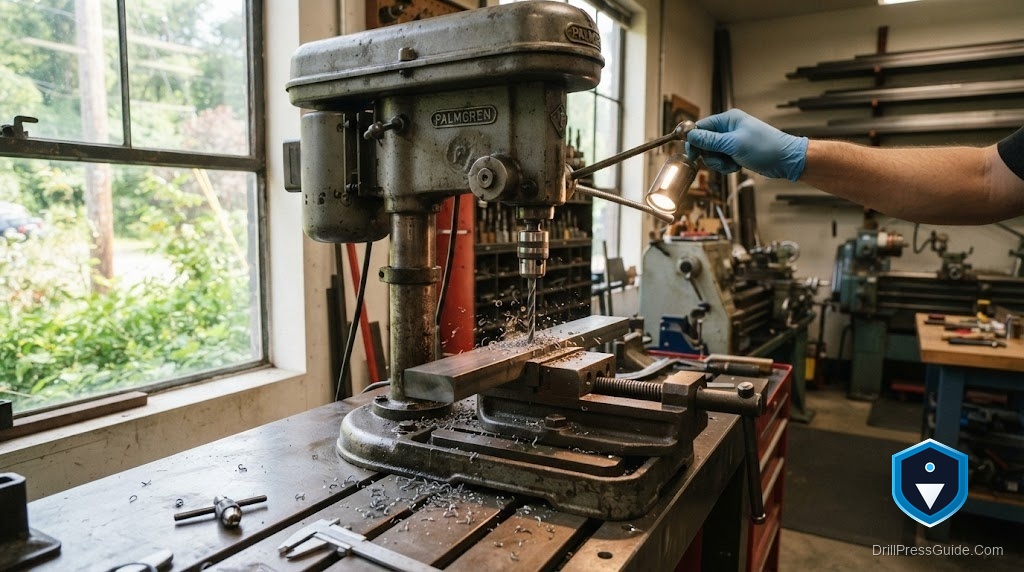
Tapping threads by hand is slow and unforgiving, and tapping under power on a bare drill press is how taps snap and threads go crooked. Between those two frustrations sits a clever piece of tooling that a lot of people have never heard of: the tapping head. It turns a drill press into a machine that can cut threads quickly, squarely, and without breaking taps, and once a shop starts tapping volume, it becomes one of the most valued accessories on the machine. Understanding what a tapping head is, how it works, and what it needs from your press is the key to deciding whether one belongs in your shop.
A tapping head is a self-contained attachment that mounts in a drill press and drives a tap into the work, then automatically reverses to back the tap out as the quill rises. Inside is a clutch that lets the head keep spinning while the tap is protected from over-torque, and a reversing mechanism that spins the tap backward faster than it went in when you raise the quill. The result is powered tapping with the depth control of the drill press and the tap protection the bare machine cannot provide.
How a tapping head works
The magic is in two mechanisms. The forward-and-reverse action means that as you feed the quill down, the head drives the tap into the hole; as you raise the quill, the head reverses and spins the tap out, so a single quill stroke taps and clears the hole. This is what makes tapping fast, no stopping to hand-reverse. The torque-limiting clutch protects the tap: if the tap bottoms or binds, the clutch slips rather than snapping the tap, which is what saves the expensive taps and the ruined holes that plague power tapping without one. Some heads also let you set the depth so threads reach a consistent point.
Because the drill press holds the tap square to the table and controls the feed, a tapping head produces threads that are straight and consistent in a way freehand tapping rarely matches.
What your drill press needs to run one
A tapping head asks a few things of the machine. It needs low spindle speed, because tapping happens far slower than drilling, so the press must reach a low enough speed for the tap and material. It needs a way to mount, matching the head’s arbor to your spindle taper, and often a torque arm or stop bar to react the head’s torque against, since the head tries to spin with the tap. And it needs enough quill travel for the thread depth plus the reverse. Confirm those before buying a head, because a machine that will not slow down enough or has no way to anchor the head’s reaction cannot use one well.
Whether a tapping head is worth it
Be honest about the volume. A shop tapping many threaded holes, production work, repeated assemblies, a lot of threaded fasteners, gains enormously from a tapping head in speed, consistency, and saved taps, and it pays for itself quickly. A shop tapping the occasional hole may do fine with careful hand tapping or slow, attentive power tapping, and can skip the accessory. The tapping head is a volume tool; the more threads you cut, the more it earns.
Setting up for tapping success
Whatever you tap, hold the work solidly, because tapping puts real torque into the piece and an unclamped part will spin. A cast-iron drill press vise bolted to the table holds the work square and secure so threads come out straight and hands stay clear. Use tapping fluid generously, since taps cut cold and clean only with lubrication and are far more likely to break when run dry. Set the press to a low speed, start the tap square, and let the head’s reverse clear it on the upstroke.
Conclusion
A tapping head turns a drill press into a fast, tap-saving threading machine by driving the tap in, protecting it with a torque-limiting clutch, and reversing it out on the upstroke, all with the squareness and depth control the press provides. It needs a machine that slows down enough, a way to mount and anchor it, and adequate quill travel, so confirm those first. For a shop tapping volume it is one of the best accessories going; for occasional threads it may be more than the work requires. Clamp the work, use plenty of tapping fluid, and run slow, and threaded holes stop being the frustrating part of the job.
Three takeaways: a tapping head drives the tap in and reverses it out with a clutch that protects the tap, the press must slow down enough and anchor the head’s torque to run one, and it is a volume tool that pays off when you tap many holes.
Frequently Asked Questions
What is a tapping head for a drill press? A self-contained attachment that drives a tap into the work and automatically reverses to back it out as the quill rises, with a torque-limiting clutch that protects the tap from breaking.
How does a tapping head keep taps from breaking? With a torque-limiting clutch that slips if the tap bottoms or binds, rather than transmitting full spindle torque to the tap. This is what saves taps that would snap under bare power tapping.
What does my drill press need to use a tapping head? A low enough spindle speed for tapping, a way to mount the head to your spindle taper, usually a torque arm to anchor the head’s reaction, and enough quill travel for the thread depth plus the reverse.
Is a tapping head worth it? For a shop tapping many holes, yes, it pays for itself in speed, consistency, and saved taps. For occasional tapping, careful hand or slow power tapping may be enough and you can skip the accessory.
Can I tap threads on a drill press without a tapping head? Carefully, at low speed with attention, or by hand using the chuck to start the tap square. But bare power tapping risks snapping taps, which is exactly what the head’s clutch prevents.
What speed should I use for tapping? Much slower than drilling. Set the press to its lowest practical speed for the tap and material, use tapping fluid generously, and start the tap square to the work.
References
- VintageMachinery.org, machine tool references and literature. http://vintagemachinery.org
- Jacobs Chuck Manufacturing, Mounting and Removing Chucks. http://www.jacobschuck.com/uploads/ueditor/file/20200604/1591240204146153.pdf


