
The Commercial Drill Press Hole Punch: Capacity, Setup, and Everyday Use
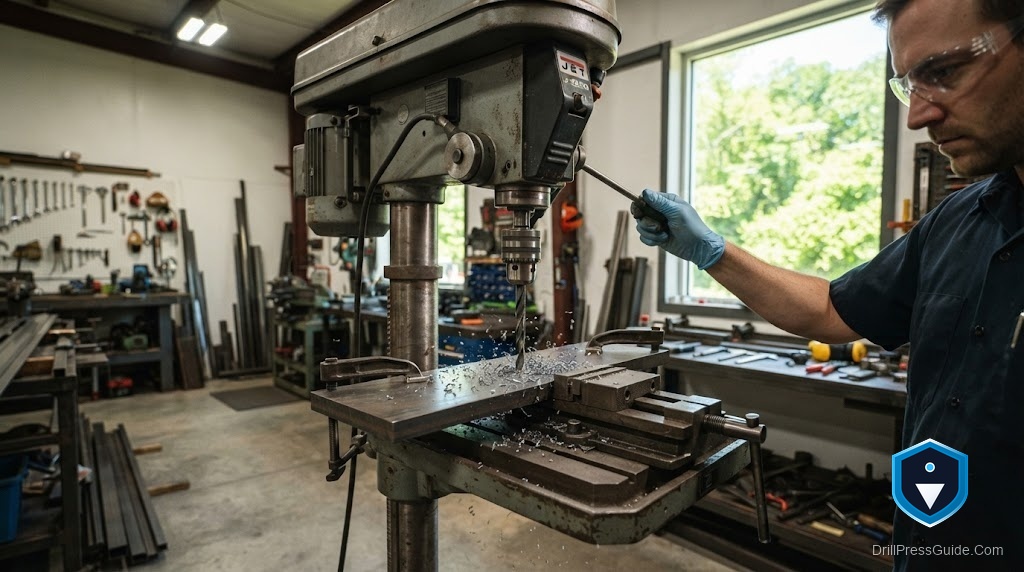
There is a moment in a lot of production shops and print rooms when the handheld punch and the desktop drill stop keeping up. The stack is too thick, the volume too high, and the holes need to land in the same place on every piece, hour after hour. That is where a commercial drill press hole punch earns its keep, a floor machine set up not for one-off holes but for punching or drilling clean, repeatable holes in quantity. Understanding what one is, what capacity it offers, and how to set it up and run it safely turns a demanding, repetitive job into a steady, reliable one. This guide covers it.
A commercial drill press hole punch is a heavy, single-spindle drill press set up for production hole making, typically a floor-mounted machine with a belt-driven spindle, variable speed, and a controlled feed rate, run to punch or drill holes accurately and repeatedly in stacks of material or many identical parts. The word commercial signals the intent: it is a production machine built for volume, durability, and consistent results, not the light, occasional work a home benchtop press handles. That distinction shapes how you choose, set up, and use it.
What capacity means on a commercial machine
Capacity on a commercial hole punch press is about more than the largest hole. It covers the material thickness or stack height the machine can punch through in one stroke, since production work often means drilling a whole stack of sheets or a thick workpiece at once. It covers the throat depth, how far from the edge you can place a hole, which decides what size sheet you can punch and where. And it covers the throughput the machine sustains, the speed and feed it holds without bogging or overheating across a long run. Match all three to your actual work: the thickest stack, the deepest reach, and the volume you run, rather than a single hole-size number.
Setting up for repeatable holes
Production work lives and dies by repeatability, so the setup is where the value is won. Register the work the same way every time, using a fence, stops, or a jig so each piece or stack sits in exactly the same position and the holes land identically. Set the correct speed and feed for the material, slower for thick stacks and metal, and set the depth so the punch or bit passes fully through the stack without driving into the table. Fixture the workpiece solidly, since a production machine turns bits with real torque and an unclamped stack will spin or shift; a heavy drill press vise bolted to the table, or purpose-made hold-downs, keep the work located and steady through every stroke. Then the operator simply loads, punches, and unloads.
Safety on a production machine
A commercial machine runs faster and harder than a home press, so the safety layers matter more. Guard the point of operation and the power transmission (the belt and pulleys), and keep hands clear of the spinning spindle and the punching zone. Provide an accessible emergency stop and a main disconnect for the machine, and use them for setup and clearing jams. Where a machine runs automatically or unattended for part of a cycle, barricade or enclose the area so no one reaches into a moving machine. And do not neglect the basics that prevent most incidents: proper operator training, no loose clothing, gloves, or jewelry near the spindle, eye protection, and good housekeeping so chips and offcuts do not pile up around a fast-moving machine.
Everyday running and upkeep
A commercial hole punch press keeps its accuracy and throughput with routine care. Keep the punches or bits sharp, since a dull tool on a production run tears holes, strains the motor, and ruins parts by the hundred before anyone notices. Clear chips and slugs frequently so they do not jam the stroke or mar the work. Keep the belt properly tensioned and the pulleys aligned so power transfers cleanly across long runs, and check the feed mechanism for smooth, consistent travel. Confirm the registration stops have not shifted at the start of each batch, since a moved stop means every part in the run is off. These small checks are what keep a production machine producing good parts instead of quietly making scrap.
Conclusion
A commercial drill press hole punch is a production tool, a heavy, floor-standing, single-spindle machine set up to punch or drill clean, repeatable holes in stacks and quantities that overwhelm lighter equipment. Choosing one means matching its real capacity, stack thickness, throat depth, and sustained throughput, to your work, and getting value from it means setting it up for repeatability with registration and solid work-holding. Run it with the safety layers a fast production machine demands, guarding, emergency stop, training, and housekeeping, and keep the punches sharp and the machine maintained. Set up and run this way, it turns a demanding repetitive job into steady, accurate output.
Three takeaways: a commercial drill press hole punch is a heavy production machine for repeatable holes in stacks and quantity; match its real capacity (stack thickness, throat depth, sustained throughput) to your work and set it up for repeatability with registration and solid work-holding; and run it with proper guarding, emergency stop, training, and sharp maintained tooling.
Frequently Asked Questions
What is a commercial drill press hole punch? A heavy, single-spindle drill press set up for production hole making, usually a floor machine with a belt-driven spindle, variable speed, and controlled feed, used to punch or drill clean, repeatable holes in stacks or many identical parts.
How is it different from a regular drill press? It is built and set up for volume, durability, and consistency rather than occasional work, with the capacity to punch thick stacks, the reach for larger sheets, and the ability to sustain throughput across long runs without bogging or overheating.
What capacity should I look for? Match three things to your work: the material thickness or stack height it punches in one stroke, the throat depth (how far from the edge a hole can go), and the throughput it sustains over a long run, not just the largest hole size.
How do I get holes to land in the same place every time? Register the work with a fence, stops, or a jig so each piece sits identically, fixture it solidly with a vise or hold-downs, set the correct speed, feed, and depth, and check the stops at the start of each batch so a shifted stop does not spoil the run.
What safety measures does a production hole punch need? Guarding on the point of operation and the belt and pulleys, an accessible emergency stop and main disconnect, barricades or enclosures where it runs automatically, plus operator training, no loose clothing near the spindle, eye protection, and good housekeeping.
How do I keep a commercial hole punch running well? Keep the punches or bits sharp, clear chips and slugs often, keep the belt tensioned and pulleys aligned, check the feed for smooth travel, and confirm the registration stops before each batch so the run stays accurate.
References
- VintageMachinery.org, machine tool references and literature. http://vintagemachinery.org
- Jacobs Chuck Manufacturing, safe drill press operation and setup. http://www.jacobschuck.com/uploads/ueditor/file/20200604/1591240204146153.pdf


