
Vintage Buffalo Forge Drill Press: What to Inspect Before You Buy
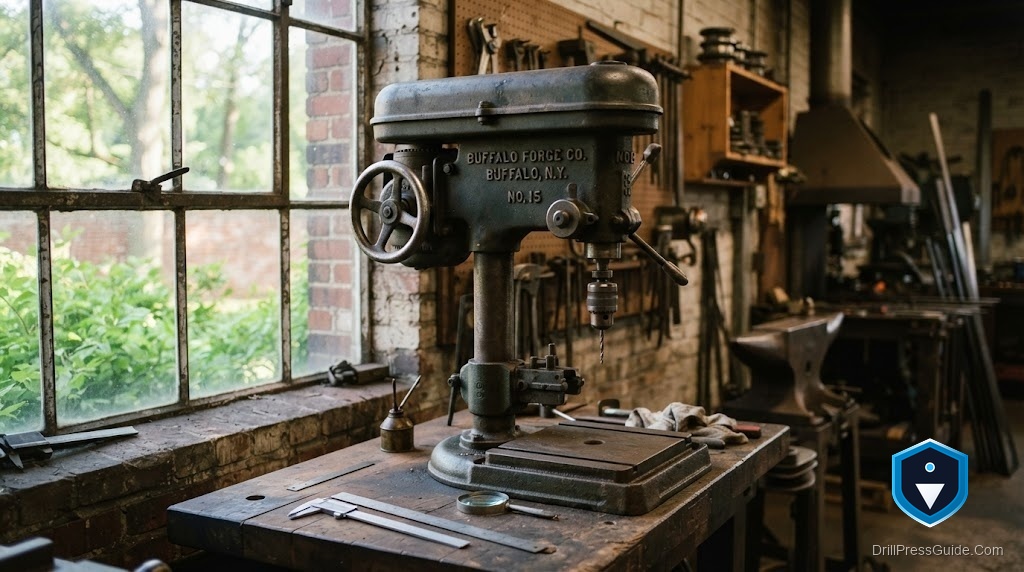
The Buffalo Forge name on a drill press means something, and that is exactly why it pays to slow down before buying one. Buffalo Forge Company of Buffalo, New York, built genuinely heavy, industrial-grade drilling machines, powered floor presses and hand-crank post drills alike, that are worth seeking out and restoring. But the name has also been borrowed over the years by unrelated importers, so the first job with any vintage Buffalo Forge drill press is to make sure you are looking at the real thing, and the second is to inspect the parts that decide whether this particular machine is worth your money.
A vintage Buffalo Forge drill press is a drilling machine built by Buffalo Forge in the late 1800s through the mid-1900s, ranging from substantial 15-inch and 17-inch industrial floor presses to hand-cranked post drills. They were built for blacksmith shops, foundries, and industry, which means heavy castings, stout gearing, and a durability that lets sound examples come back to full service. Knowing what to inspect turns the Buffalo name from a hopeful gamble into a confident buy.
First, confirm it is a genuine Buffalo Forge
Before inspecting anything else, confirm the maker, because this is the Buffalo name’s known trap. Genuine machines carry Buffalo Forge Co. and often Buffalo, N.Y. cast directly into the heavy iron, along with pattern and model numbers. The unrelated 1980s Taiwanese imports branded simply Buffalo have light castings and a stuck-on identification plate rather than cast-in lettering. If the markings are cast into thick iron, you have a genuine Buffalo Forge worth taking seriously; if it is a light machine with a riveted or glued plate, you are looking at a different and lesser tool. The VintageMachinery.org archives document Buffalo Forge and help confirm a genuine machine from its castings and numbers.
Inspect the machine that matters
With a genuine Buffalo Forge confirmed, inspect it in the order that protects you.
Castings. On a machine this heavy, the castings are the value. Check the frame, base, column, and table for cracks and old brazed repairs, common on hard-worked industrial iron. A cracked main casting drops even a genuine Buffalo Forge to parts value.
Gearing and drive. Buffalo Forge presses are geared, so turn the machine over slowly and inspect the gear teeth for chips, cracks, and heavy wear. On a post drill, engage and test the automatic feed. Broken gear teeth are the fault most likely to sink the machine.
Spindle and taper. Feed the quill or turn the spindle and feel for smooth motion. Note the spindle taper, since larger Buffalo machines often use a Morse taper rather than a small chuck arbor, which decides what tooling fits.
Flywheel, on post drills, checking for cracks at the hub and spokes, and completeness overall, confirming the drive, table, feed parts, and holder are present, since industrial-size Buffalo castings are hard to source.
What condition tells you about the buy
Rust, grime, and old paint are just work and should not scare you off a genuine machine. What should give you pause is a cracked casting, broken gear teeth, a stripped or missing automatic feed on a post drill, or missing industrial-specific castings. A genuine Buffalo Forge that is sound and complete is well worth buying and restoring; one with a hard failure in the castings or gearing is parts-machine money.
When you do restore a sound one, protect the heavy iron. Clean rust from the gears, spindle, and hardware with a chelating remover like Evapo-Rust, which lifts industrial rust without eating the parent metal, then guard the frame and table with a film of Boeshield T-9 that will not gum the exposed gearing. Preserve the original finish and markings where you can, since originality carries value on these machines.
Conclusion
Buying a vintage Buffalo Forge drill press starts with confirming a genuine Buffalo Forge, cast-in Buffalo, N.Y. markings on heavy iron, not a light import with a stuck-on plate. From there, inspect the castings, the gearing and feed, the spindle and taper, and completeness, letting a cracked casting or broken gear teeth stop the deal. A genuine, sound, complete machine is a heavy industrial tool worth every bit of the restoration; a compromised one is worth only its parts.
Three takeaways: confirm a genuine Buffalo Forge before anything else, judge the castings and gear teeth first, and note the spindle taper before planning tooling.
Frequently Asked Questions
How do I know my Buffalo drill press is a genuine Buffalo Forge? Look for Buffalo Forge Co. and Buffalo, N.Y. cast into heavy iron, with pattern and model numbers. Cast-in markings on thick castings mean genuine; a light machine with a stuck-on plate is a later import.
What is the most important thing to inspect? The castings and the gear teeth. A cracked main casting or broken gear teeth are the faults that drop even a genuine Buffalo Forge to parts value.
What spindle taper does a Buffalo Forge drill press use? It varies. Larger industrial models often use a Morse taper spindle, while some machines take a chuck arbor. Confirm the taper before buying tooling.
Did Buffalo Forge make hand-crank drill presses? Yes, along with powered floor presses. On a post drill, test the automatic feed and inspect the flywheel, since those are the defining and most failure-prone parts.
Is a rusty Buffalo Forge drill press worth buying? If it is genuine and the castings and gearing are sound, yes. Rust and grime clean off. A cracked casting, broken gear teeth, or missing industrial castings are what make one not worth it.
Where can I confirm my Buffalo Forge machine? The VintageMachinery.org archives document Buffalo Forge and hold its literature, which helps confirm a genuine machine and identify its model from the castings and numbers.
References
- VintageMachinery.org, Buffalo Forge Co. history and publication archive. http://vintagemachinery.org/mfgindex/detail.aspx?id=129
- CRC Industries, Evapo-Rust Rust Remover product information. https://www.crcindustries.com/evapo-rust/


