
Old Drill Press Value: Identification, Wear Points, and Parts Strategy
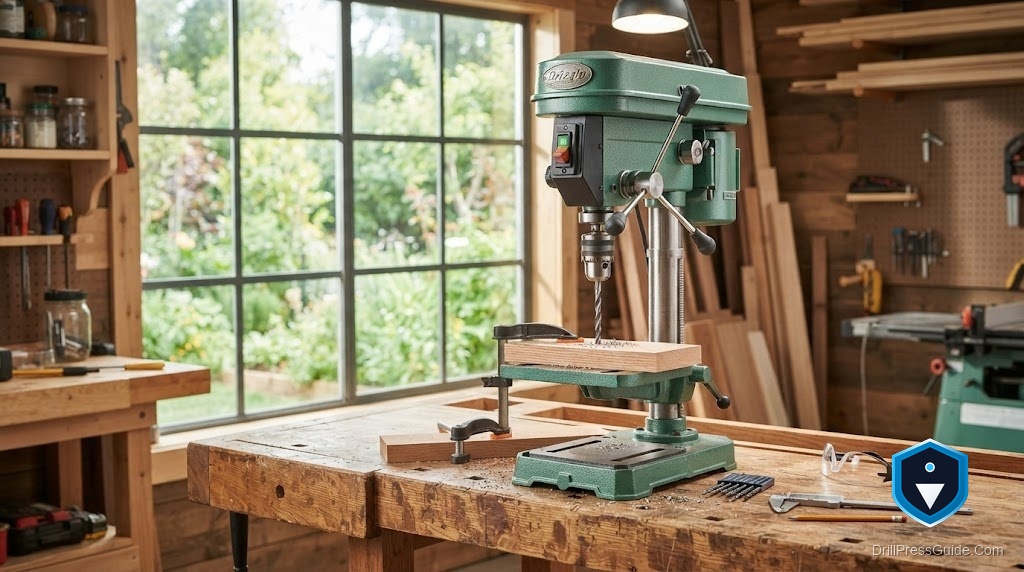
Every so often someone posts a photo in a tool group, an old drill press they just bought or inherited, and asks the inevitable question: what is it worth? The replies are usually all over the place, because value on an old machine cannot be read from a photo. It comes from identification, condition at a handful of wear points, and how easily the machine can be fed with parts. Learn to read those three things and you can value an old drill press yourself, and more importantly, decide whether it is worth your money and your bench space.
An old drill press is any pre-modern drilling machine, an electric bench or floor model from Delta, Craftsman, Rockwell, Walker-Turner, or Powermatic, or a hand-crank post drill from the pre-electric age. They earned their following with heavy castings and smooth, repairable mechanisms. That same heavy, simple construction is why value tracks condition so closely: the good ones are genuinely worth restoring, and the compromised ones are worth only their parts.
The path to a fair number runs through three questions. What is it? Where has it worn? And how hard is it to get parts?
Identification sets the ceiling
Value starts with knowing what you have, because identification sets the range. A well-regarded floor model from a respected maker in a desirable size sits higher than a small unbranded bench unit. Find the maker and model, and where possible the age: a Delta serial dates the machine through the registries, a Craftsman prefix names the builder, and heavy castings with no modern prefix suggest a prewar antique. Identification also tells you which parts are standard and which are model-specific, which feeds directly into the parts-strategy question below.
Wear points set the actual number
Within the range identification sets, the wear points decide where a specific machine lands.
Castings. Sound head, base, column, and table castings put a machine at the top of its range. A crack, especially in the head, drops it to parts value. Check every casting under the grime.
Spindle and quill. Smooth travel with minimal play is worth a premium. Grinding or heavy play signals a scored bore or bad bearings, which lowers the number.
Completeness. All model-specific parts present, table, lock handles, pulleys, spindle assembly, drive, means top value. Each missing model-specific part cuts it, because those are the hard ones to replace.
Function. A running machine with a good motor is worth more than a seized or dead one, though function is fixable and castings are not.
Parts strategy protects the investment
The last value factor is how easily you can feed the machine, and this is where a smart buyer gains an edge. Split the parts into standard and model-specific. Standard consumables, belts by profile, bearings by number, and chucks by taper, are cheap and universal, so a machine needing only these is close to full value. Most mid-size old presses take a JT33 arbor, so a standard JT33 keyed chuck restores the business end for little outlay once the old chuck is off. Model-specific parts, pulleys and castings, are the expensive and slow ones, so a machine missing those is discounted by whatever they will cost and however long they will take to find.
When you do restore, protect the value you bought. A chelating rust remover like Evapo-Rust cleans hardware and machined surfaces without harming the parent steel, and a film of Boeshield T-9 keeps the cleaned table and column from flash-rusting. Preserve the original castings and finish where you can, since careful preservation protects resale better than an aggressive repaint.
Conclusion
Old drill press value comes from three readable things: identification, which sets the range; wear points, which place a specific machine within it; and parts strategy, which tells you how much it will cost to make whole. A sound, complete machine from a good maker sits at the top; a cracked or incomplete one is worth its parts. Read those three, and you can value any old press, and decide with confidence whether to buy, restore, or pass.
Three takeaways: identification sets the ceiling, a cracked casting drops a machine to parts value, and a machine needing only standard consumables is near full value.
Frequently Asked Questions
How do I figure out what my old drill press is worth? Identify the maker, model, and size to set the range, then judge the castings, spindle, completeness, and function, and factor in how easily it can be fed with parts. Those three steps give a fair number.
What makes one old drill press worth more than another? Maker reputation and size set the range, but within it, sound castings, completeness, smooth function, and easy parts availability decide the actual value.
Does a missing part lower the value a lot? Model-specific missing parts, like a table or pulley, cut value sharply because they are hard to replace. Missing consumables like belts barely matter, since they are cheap and standard.
Is an old floor model worth more than a bench model? Usually, all else equal, because floor models are heavier and more capable. But a sound, complete bench model beats a cracked or incomplete floor model.
How does parts availability affect value? A machine needing only standard consumables is close to full value; one missing model-specific castings is discounted by the cost and difficulty of sourcing them.
Should I restore before selling to raise the value? Careful preservation of the original castings and finish protects value. An aggressive grind-and-repaint can lower it, so clean and preserve rather than over-restore.
References
- VintageMachinery.org, manufacturer histories and publication archive. http://vintagemachinery.org
- CRC Industries, Evapo-Rust Rust Remover product information. https://www.crcindustries.com/evapo-rust/


