
Antique Buffalo Drill Press: Dating, Inspecting, and Planning the Restoration
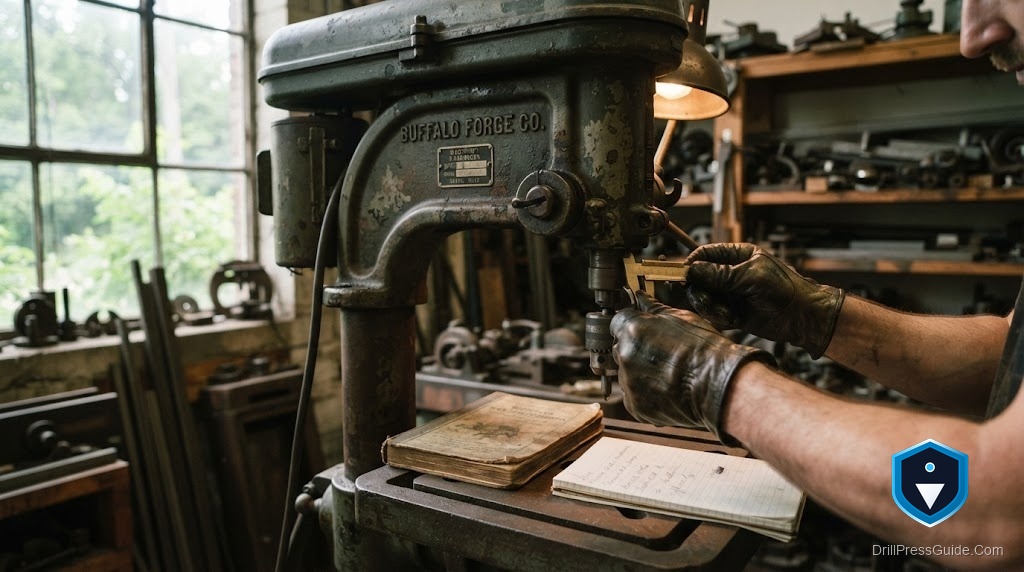
An antique Buffalo drill press carries a name that meant something in American industry. Buffalo Forge Company of Buffalo, New York, built blowers, forges, and heavy drilling machines that outfitted blacksmith shops, foundries, and farms for the better part of a century. When you find one of their drill presses under a layer of barn dust, you are looking at a serious industrial tool, provided it is a genuine Buffalo Forge and not one of the unrelated imports that borrowed the name decades later. Dating it, inspecting it, and planning the work in that order turns a heavy mystery into a machine you can trust.
An antique Buffalo drill press is a drilling machine made by Buffalo Forge in the late 1800s and early 1900s, ranging from the big belt-driven and geared floor presses to the hand-cranked post drills the company also produced. These were built to be maintained forever, with heavy castings and simple, repairable mechanisms, which is exactly why so many survive and why they respond so well to restoration.
Can you date and restore one confidently? Yes. Buffalo Forge is well documented, and once you confirm the machine is genuine, the wear points are the familiar ones and the plan almost writes itself.
Confirm it is a real Buffalo Forge, then date it
Start by confirming the maker, because the Buffalo name is a known trap. Genuine machines have Buffalo Forge Co. and often Buffalo, N.Y. cast directly into the iron, along with pattern and model numbers. The unrelated 1980s imports branded simply Buffalo have light castings and stuck-on plates rather than cast-in lettering. If the markings are cast into heavy iron, you have the real thing.
With a genuine machine confirmed, date it through the pattern and model numbers against the VintageMachinery.org registry, which documents Buffalo Forge history and archives its catalogs. The company’s long record lets you place most machines within a period and tell a powered press from a hand-crank post drill. Photograph the castings and any numbers, then match them against the archive before assuming an age or model.
Inspecting an antique-era machine
Antique Buffalos are heavy and simple, so inspection is quick, but a century of use leaves marks.
Castings. On a machine this old and heavy, the castings are the value. Check the frame, base, and column for cracks and old brazed repairs, common on hard-worked industrial iron.
Spindle, quill, and gearing. Feed the quill or turn the drive and feel for grinding past the dried grease. On geared and back-geared models, inspect the gear teeth for chips and wear. On a post drill, test the automatic feed.
Spindle taper. Larger Buffalo machines often use a Morse taper spindle rather than a small chuck arbor, which decides what chuck or tooling fits. Note it before planning any chuck purchase.
Bearings and drive. Record bearing numbers when you open it, and note whether the machine is flat-belt, V-belt, or geared.
Completeness. Missing industrial-size castings and gears are the real obstacle, so confirm the drive, table, and feed components are present before committing.
Planning the restoration
The plan mirrors any heavy antique restoration, tuned for stubborn age and irreplaceable parts.
Disassemble and document, bagging hardware and photographing each stage. Free seized parts with penetrating oil, patience, and gentle heat, never force, since a cracked antique casting is rarely worth repairing.
Remove rust with a method that spares the old metal. A chelating soak cleans the hardware, gears, and smaller machined parts without eating the parent steel. Evapo-Rust lifts heavy industrial rust from irreplaceable parts while leaving the base metal alone, though it grays some steel with a film that buffs off and the parts flash-rust if not dried right away.
Protect the cleaned iron with a film of Boeshield T-9 on the frame, table, and column, buffed before use so it will not transfer to your stock. Then reassemble with fresh grease on the gears and bearings, replace only genuinely worn consumables, and, if the machine takes a chuck arbor rather than a Morse taper spindle, fit a chuck matched to that taper.
Conclusion
An antique Buffalo drill press is a heavy, honest industrial machine when it is a genuine Buffalo Forge, so confirming the maker comes before anything: cast-in Buffalo Forge, N.Y. markings and heavy iron, not a light import with a stuck-on plate. Date it through the pattern numbers and the VintageMachinery archive, inspect the castings, gearing, spindle taper, and completeness, then plan a patient restoration that preserves the original iron and replaces only what is worn.
Three takeaways: confirm a genuine Buffalo Forge before you start, note the spindle taper before buying any chuck, and preserve the heavy original castings.
Frequently Asked Questions
How do I know my antique Buffalo drill press is genuine? Look for Buffalo Forge Co. and Buffalo, N.Y. cast into the iron, plus pattern and model numbers. Cast-in markings on heavy iron mean genuine; light castings with a stuck-on plate usually mean a later import.
How do I date an antique Buffalo Forge drill press? Use the pattern and model numbers against the VintageMachinery.org registry, which archives Buffalo Forge catalogs and history and places most machines within a period.
What spindle taper does a Buffalo Forge drill press use? It varies. Larger industrial models often use a Morse taper spindle, while smaller machines may take a chuck arbor. Confirm the taper before buying tooling or a chuck.
Are antique Buffalo drill presses worth restoring? Genuine ones usually are, given the heavy industrial castings. Cracked castings or missing model-specific gears are the main reasons one might not be.
Did Buffalo Forge make hand-crank drill presses? Yes. Along with powered floor presses, Buffalo Forge built hand-cranked post drills. The pattern number and the presence of a crank and flywheel identify which you have.
Where do parts for an antique Buffalo come from? Standard belts and bearings by measurement from any supplier; model-specific castings and gears from donor Buffalo Forge machines and the vintage tool community.
References
- VintageMachinery.org, Buffalo Forge Co. history and publication archive. http://vintagemachinery.org/mfgindex/detail.aspx?id=129
- CRC Industries, Evapo-Rust Rust Remover product information. https://www.crcindustries.com/evapo-rust/


