
Bringing a Vintage Drill Press Back to Reliable Shop Use
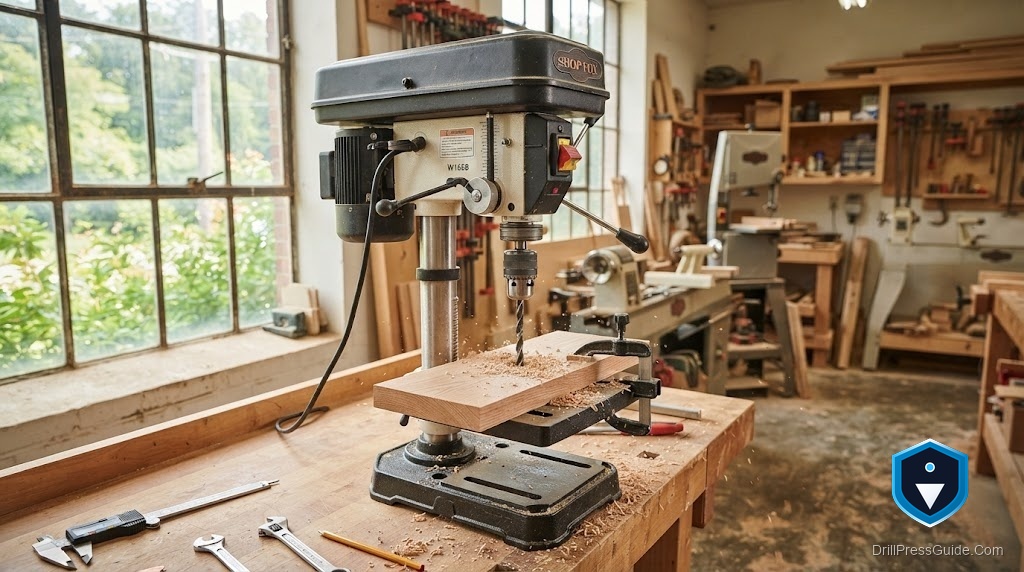
There is a reason woodworkers and machinists keep dragging home fifty-year-old drill presses when new ones sit on the shelf at every hardware store. The old iron is simply better in the ways that matter at the spindle: heavier castings that damp vibration, a quill that feeds like it rides on glass, and a table that locks and stays locked. A vintage drill press that has been brought back to life will out-drill a new benchtop machine and cost less to buy in the bargain. The only thing standing between a rusty find and that experience is a weekend of methodical work.
A vintage drill press is a mid-century or older drilling machine from a maker like Delta, Rockwell, Craftsman, Walker-Turner, Atlas, or Powermatic, built when these tools were meant to be repaired rather than replaced. That build philosophy is exactly why they respond so well to restoration: the mechanisms are simple, the fasteners are standard, and the wear parts are either off-the-shelf or easy to reproduce.
Will yours run reliably again? If the castings are sound and it is reasonably complete, almost certainly. The restoration is a sequence anyone can follow, not a black art.
First, know what you are working on
Before turning a wrench, identify the machine and confirm it is complete. Find the maker and model, and where a serial number exists, the age. A Delta serial plate dates the machine to 1941 or later through the collector registries; a Craftsman model prefix tells you whether it is a King Seeley or an Emerson build. Identification matters because it tells you which parts are standard and which are model-specific.
Then take a completeness inventory: spindle assembly, chuck, quill and its return spring, pulleys and belt, table and its lock, and the motor and switch. Missing model-specific castings are the one thing that can sink a project, so a filthy but complete machine beats a clean one missing its table.
The restoration sequence
Work in this order and you will not redo anything.
Disassemble and document. Separate the head, pull the spindle assembly, drive the chuck and arbor off, and free the table from the column. Bag hardware by area and photograph each stage.
Free what is seized. Decades of dried grease lock quills and set screws. Penetrating oil, time, and gentle heat free them. Never force a stuck part, because a cracked casting usually ends the project.
Remove rust without harming the metal. Degrease first, then soak hardware and machined parts in a chelating remover. Evapo-Rust strips rust while leaving the good steel and crisp threads alone, so an overnight soak will not round off a machined face. It leaves a gray film that buffs away, and bare parts flash-rust within the hour, so dry them straight out of the rinse.
Replace the consumables. Fit a fresh V-belt sized to the pulley path, swap any ball bearing that stays rough after cleaning, and renew a tired quill return spring. These few parts are what make the machine reliable again. If the chuck is worn, confirm the arbor taper, usually JT33, and fit a standard JT33 keyed drill chuck once the old one is driven off. Budget chucks can run a few thousandths out, so check runout before precision work.
Protect and reassemble. Wax or oil the bare table and column. A film of Boeshield T-9 keeps the cleaned iron from flash-rusting and lets stock slide, buffed before use so it does not transfer. Reassemble with fresh grease, tension the belt, set the spring preload, and test on scrap.
Make it safe before it earns its keep
A vintage press restored for daily use has to meet modern safety expectations. Rewire the motor with a proper grounded cord, replace a cracked switch, and add work-holding if the machine has none. Drilling metal freehand next to a spinning chuck is how people get hurt, so a cast-iron drill press vise that clamps the workpiece is worth fitting from the start. It is heavy and takes table space, its only real drawback, so size it to your machine rather than buying the largest one.
Conclusion
Bringing a vintage drill press back to reliable use comes down to a patient sequence: identify and inventory the machine, disassemble and document, free the seized parts, remove rust without harming the metal, replace the handful of consumables, protect the iron, and make it safe. The heavy castings that drew you to the machine are the same ones that will let it drill straight and quiet for decades more.
Three takeaways: a complete machine is worth more than a clean incomplete one, consumables are cheap and worth replacing outright, and safe wiring and work-holding come before the first real job.
Frequently Asked Questions
Is a vintage drill press better than a new one? Often, at the spindle. The heavier castings damp vibration and the quills feed more smoothly than budget new machines. A restored vintage press frequently out-drills a comparable new benchtop model.
How do I identify my vintage drill press? Find the maker and model, and any serial number. Delta serials date to 1941 or later through the registries, and Craftsman model prefixes reveal the builder. Identification tells you which parts are standard.
What parts will I need to replace? Usually just consumables: a V-belt, any rough ball bearings, a quill return spring, and possibly the chuck. Castings and pulleys are reused when sound.
How do I remove rust without ruining machined surfaces? Use a chelating rust remover rather than an acid or aggressive abrasive. It strips rust while leaving the parent steel and threads intact. Dry parts immediately to prevent flash rust.
Do I need to rewire an old drill press? If the cord is cracked or the motor is ungrounded, yes. Fit a proper grounded cord and a sound switch before putting the machine into regular use.
What chuck fits a vintage drill press? Match the arbor taper, commonly JT33 on mid-size machines. Confirm the taper before buying, since the taper, not the brand, decides fit.
References
- VintageMachinery.org, manufacturer histories and publication archive. http://vintagemachinery.org
- CRC Industries, Evapo-Rust Rust Remover product information. https://www.crcindustries.com/evapo-rust/
- Jacobs Chuck Manufacturing, Mounting and Removing Chucks. http://www.jacobschuck.com/uploads/ueditor/file/20200604/1591240204146153.pdf


