
Antique Delta Drill Press: Dating, Inspecting, and Planning the Restoration
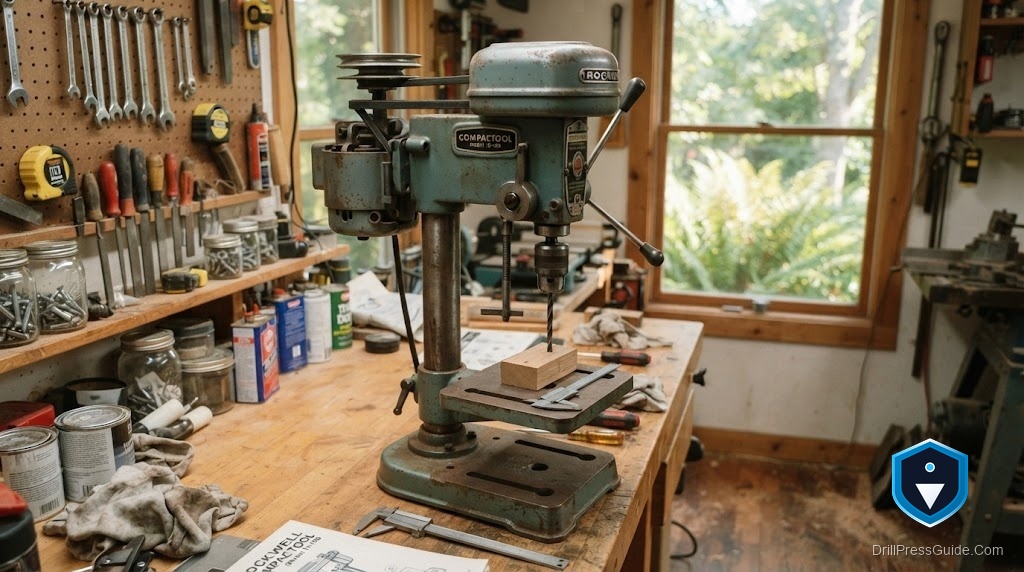
The word antique gets thrown around loosely at flea markets, but with a Delta drill press it means something specific and useful. Delta started stamping serial numbers on its machines in 1941. A Delta with no serial plate, and no holes where one belonged, is genuinely old, likely 1930s, and that changes how you date it, what parts exist, and how you plan the work. A 1937 Delta is a different proposition from a postwar Rockwell, even though both wear the same feed handle and drill the same straight hole.
An antique Delta drill press is one of the earliest presses from the Delta Manufacturing Company, built before and around the point where Delta began serializing in 1941. These are the machines with the heaviest early castings and the simplest, most repairable mechanisms. Model numbers like the early 11-inch bench presses and heads sometimes marked 49-3266 turn up in this range, and they were built to be maintained forever.
Can you restore one confidently? Yes, and in some ways an antique Delta is easier than a newer machine, because the mechanisms are simpler and there is less to go wrong. The trick is dating it correctly, because a pre-serial machine is dated by its features, not by a number.
Dating a machine that predates serial numbers
This is where an antique Delta differs from a merely vintage one. If your press has a serial plate, you date it the standard way, by matching the number against the VintageMachinery.org Delta registry, which sorts the plates into styles and date ranges. Delta began this system in 1941, so a plated machine is 1941 or later.
If there is no plate and no mounting holes for one, you are looking at an early machine, and you date it by its castings, its bearing style, and details documented in the wartime and prewar Delta catalogs that collectors have archived. Photograph everything, then compare against the publication reprints on VintageMachinery.org. Owners have dated prewar Delta and Rockwell machines this way for years, and the archives are deep enough to place most of them within a few years.
Inspecting an early machine
Antique Deltas are simple, which makes inspection quick, but the age means rust and seized parts are almost guaranteed.
Castings. On the oldest machines the castings are the whole value, so check the head, base, and column for cracks and for prior brazed repairs, which are common on machines this old.
Spindle and quill. Expect stiffness from decades of dried grease. Feed the quill and feel past the grime for the actual condition, roughness that stays after cleaning points to a scored bore or a rough ball bearing.
Spindle return spring. Early springs are often original and often tired. Confirm it returns the quill and note the design before disassembly.
Bearings and the drive. Some early presses used different bearing arrangements than later models, so record the bearing numbers when you open it. The belt and pulley setup on antique machines can be flat-belt or early V-belt depending on age.
Completeness. Missing early parts are the hardest to replace, so confirm the table, the clamps, and the drive components are present before committing.
Planning the restoration
The plan for an antique Delta follows the same arc as any restoration, adjusted for age and stubborn rust.
Begin with disassembly and rust removal, and give it more time than a newer machine. Decades of oxidation on bare early castings respond well to a chelating soak. Evapo-Rust removes even heavy rust without eating the parent metal, which is exactly what you want on irreplaceable early parts where an acid dip could do harm. It can darken steel with a gray film that buffs off, and parts flash-rust quickly, so dry them the moment they come out of the rinse.
Next, replace only what is worn: a fresh belt, any bearing that stays rough after cleaning, and a return spring if the original has lost its temper. Reuse the original castings and hardware wherever they are sound, because originality is part of what makes an antique worth the effort.
Then protect the bare iron before it can rust again. A wipe of Boeshield T-9 on the table and column holds off flash rust and keeps the surfaces sliding. Buff it before setting down finished work.
Finally, fit a sound chuck. If the original is worn, confirm the arbor taper, usually JT33 on these, and seat a fresh chuck on a clean dry taper by tapping the arbor home with the jaws retracted.
Conclusion
An antique Delta drill press is dated by whether it has a serial number at all, and that one fact drives the whole project. Plated machines date to 1941 or later through the registry; unplated ones are earlier and are dated by their features against the archived catalogs. Inspect the castings, spindle, spring, and drive, plan a patient rust removal, replace only the worn consumables, and protect the iron. These early machines were built to be kept, and they still can be.
Three takeaways: the presence of a serial number sets the era, originality is worth preserving on antiques, and heavy old rust needs a chelating soak that spares the parent metal.
Frequently Asked Questions
How do I tell if my Delta drill press is truly antique? Check for a serial number plate. Delta began serializing in 1941, so a machine with no plate and no mounting holes for one predates that and is genuinely antique.
How do I date an antique Delta with no serial number? Date it by its features, castings, bearing style, and drive, compared against the prewar and wartime Delta catalogs archived on VintageMachinery.org.
Are antique Delta drill presses harder to restore? Not usually. The mechanisms are simpler than later machines, though the age means more rust and seized parts, and any missing early castings are harder to replace.
What is a Delta 49-3266? It is an early Delta head casting number that turns up on antique machines. Use it with the VintageMachinery archives to confirm the model and era.
Should I repaint an antique Delta drill press? That is a judgment call. A careful clean and protect preserves originality and value; a full repaint suits a working restoration. Sound castings matter more than paint either way.
What chuck taper do antique Delta presses use? Many use JT33, but confirm on your machine before buying, since early presses vary. The taper, not the brand, decides which chuck fits.
References
- VintageMachinery.org, The Delta Vintage Project: Serial Numbers. http://wiki.vintagemachinery.org/DeltaSerialNumbers.ashx
- VintageMachinery.org, Delta / Rockwell publication reprints and registry. http://vintagemachinery.org/mfgindex/detail.aspx?id=1141
- CRC Industries, Evapo-Rust Rust Remover product information. https://www.crcindustries.com/evapo-rust/


