Understanding Small Drill Press Before You Buy or Set One Up
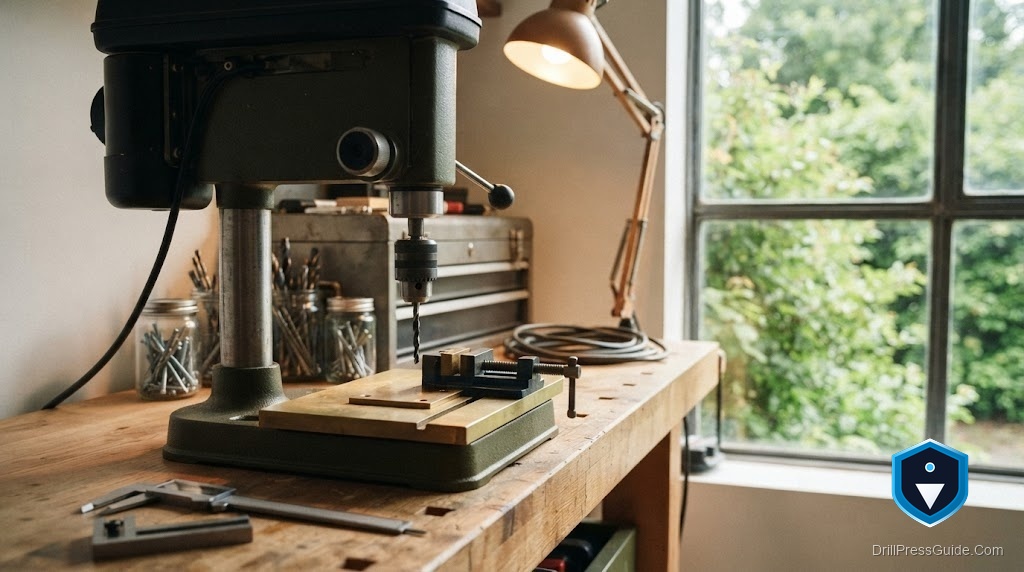
A small drill press is not a lesser version of a full-size machine. It is a different tool for a different job. It fits in small shops, handles light work, and drills accurate holes in materials that do not need the power or the capacity of a floor-standing press. But small does not mean simple. The same rules of rigidity, speed, and alignment apply. And the same mistakes, made on a smaller scale, still produce bad holes and broken bits.
I have used small presses in apartment workshops, basement corners, and shared maker spaces where the floor area is counted by the square foot. The good ones become the most reliable tool in the room. The bad ones wobble, squeal, and make you wish you had just used a hand drill. Here is what a small drill press actually is, how to choose one, and how to set it up for accurate work.
What Small Actually Means
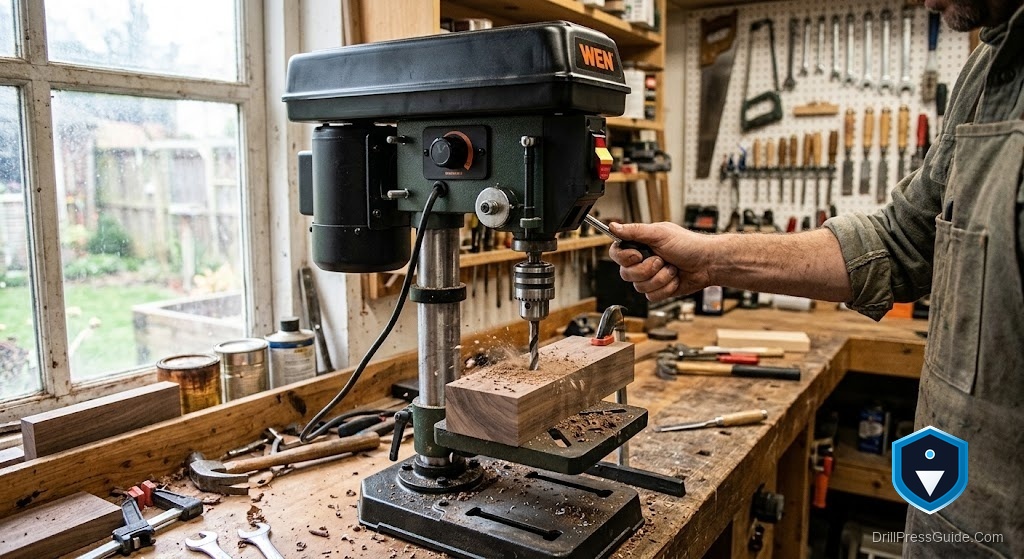
Small drill presses fall into two categories. Benchtop models are the larger of the two. They have a swing of eight to ten inches, a motor of one-third to two-thirds horsepower, and a height of roughly thirty to thirty-six inches. They sit on a workbench or stand and are small enough to move when you need to rearrange. They are the default choice for home shops, garages, and maker spaces.
The second category is micro or mini presses. These are truly compact machines with a swing of six inches or less, often with motors under one-quarter horsepower. They are designed for jewelry, model making, electronics, and light craft work. They are not for drilling half-inch holes in oak, but they excel at precise, small-scale work where a full-size press would be clumsy and dangerous.
For a general home shop, a benchtop press is the right default. A micro press is the right choice only if your work is consistently small and delicate.
The Motor: Quiet and Steady
Small presses often use induction motors, which run quietly and deliver steady torque. That is the right choice. Universal motors are cheaper and louder, and they do not last as long. A two-amp to three-amp induction motor is enough for wood, plastic, and light metal work. It will not stall on small to medium bits, and it will not rattle the windows.
A five-amp motor is a nice upgrade if you plan to use larger bits or drill light metal regularly. It gives you the torque to push a two-inch Forstner bit into hardwood without slowing down. But for most home projects, a two-amp or three-amp motor is adequate. The key is not the horsepower number. It is how the motor handles load. A cheap motor with a high rating will still bog down when you push a large bit. A well-built motor with a lower rating will keep turning because the torque is there.
Speed and Simplicity
A five-speed stepped pulley is the standard for small benchtop presses. It is simple, reliable, and hard to break. The range should span from roughly seven hundred RPM to three thousand RPM. That covers wood, plastic, and light metal. If you drill mostly metal, you want a press that can reach five hundred RPM or lower. If you only drill wood, the high end is more important.
Variable speed is a luxury on a small press. It is nice to have, but it adds cost and complexity. For a home shop where you set a speed and run a batch of similar work, the stepped pulley is fine. If you switch between bit sizes constantly, variable speed saves time and encourages you to use the right speed instead of settling for close enough.
The Table and Base
A small press needs a stable base more than a large one does, because it has less mass to absorb vibration. Cast iron is the best material. Steel is acceptable if it is thick. A lightweight base will walk across the table under load, and the vibration will make every hole slightly oversized.
The table should be at least six inches square, cast iron, and able to tilt forty-five degrees. A table that is too small limits the workpieces you can support. A table that does not tilt limits the angles you can drill. Both are common frustrations with the cheapest presses. A table with slots or tracks for hold-downs and clamps is a major plus. Without them, you are clamping from the edges, which is awkward and slow.
Setting Up for Accurate Work
The first step is to square the table to the spindle. Loosen the table tilt mechanism, set it to zero degrees, and lock it. Then check with a square or a dial indicator. If the table is not square, the hole will be drilled at an angle. Most tables can be adjusted by loosening the clamp bolts and tapping the table into alignment. Take the time to get it right. It is a five-minute adjustment that affects every hole you drill.
Next, set the belt tension. The motor sits on a sliding plate that lets you adjust the distance between the motor and spindle pulleys. Loosen the bolts, push the motor away from the spindle until the belt is snug, and tighten the bolts. The belt should deflect about a half inch when pressed firmly between the pulleys. If it is too tight, the bearings will wear prematurely. If it is too loose, the belt will slip under load and burn.
Check the chuck runout by installing a bit and lowering it close to the table. Rotate the chuck by hand and watch the bit. If it wobbles, the chuck is not seated correctly on the taper, or the chuck itself is poor quality. Remove the chuck, clean the taper, and reinstall it with a firm tap. If the wobble persists, the chuck may need replacement. Runout is more noticeable with small bits, where a few thousandths of an inch makes the hole slightly oversized.
Using the Press Safely
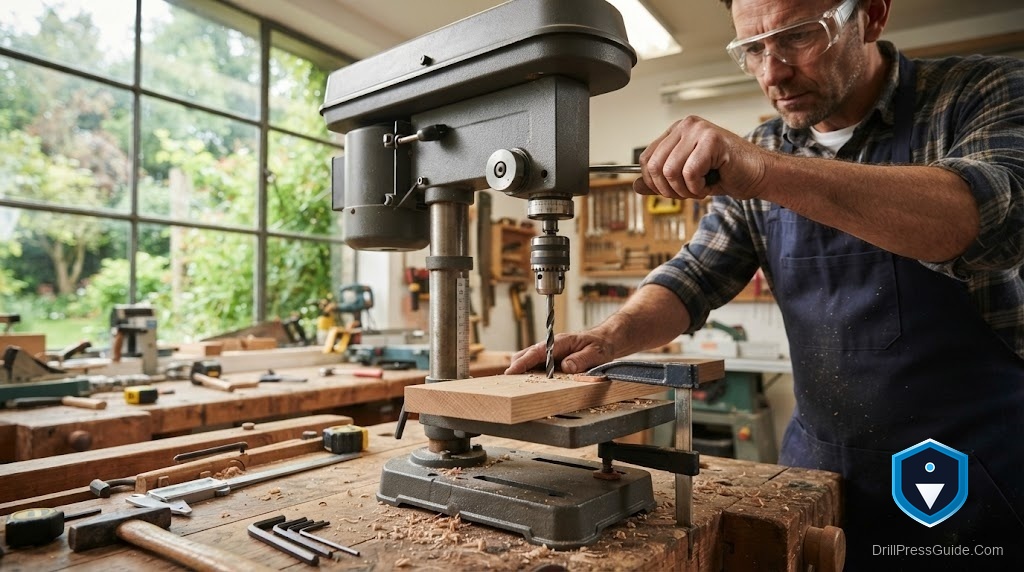
Always clamp the workpiece. A small press does not have the mass to resist the torque of a large bit grabbing in the work. If the workpiece is not clamped, it will spin. That is dangerous and ruins the work. Use clamps, hold-downs, or a vise. Never hold the workpiece by hand.
Use the right speed for the bit and material. Small bits in wood can run at high speed. Large bits in any material need slow speed. Metal needs slow speed and cutting fluid. When in doubt, start slower and speed up if the cutting is clean. A burning smell means the bit is dull, the speed is too high, or you are feeding too slowly. Stop and figure out which.
Let the bit do the work. Do not force the feed handle. The bit will cut at its own pace. Forcing it causes overheating, dulling, and wandering. A steady, moderate pressure produces the cleanest hole and the longest bit life.
Who Should Skip a Small Press
If you drill large holes in thick hardwood, work with steel regularly, or need to handle workpieces wider than twenty inches, a small press will feel like a constraint. A floor-standing press or a larger benchtop model with a twelve-inch swing is the better investment. A small press