What Is a Drill Press Good For? A Practical Guide to Real Uses
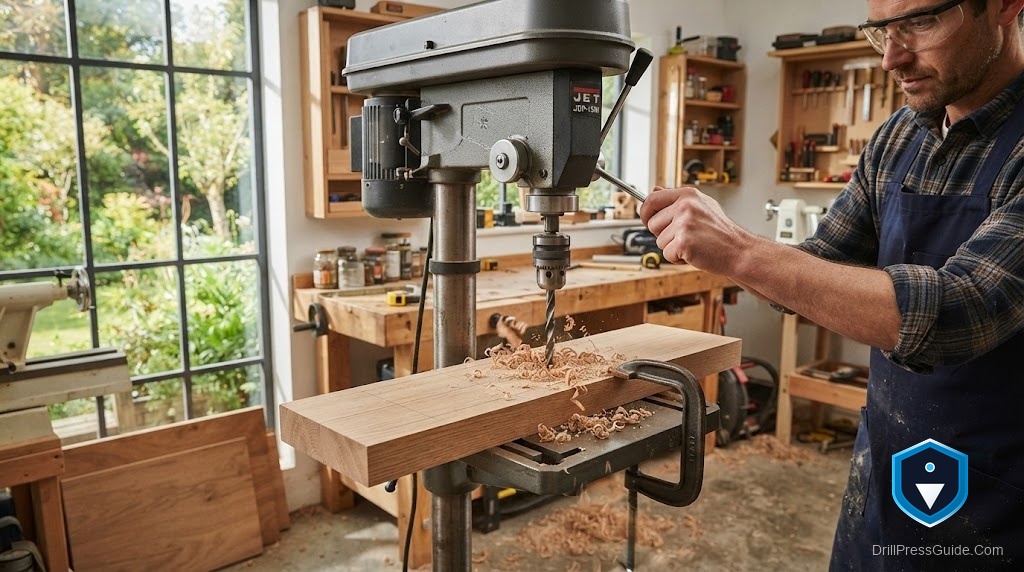
A drill press is one of the most common machines in a home workshop, but it is also one of the most misunderstood. Many buyers treat it as a glorified hand drill with a stand, or they buy one because they think they should, then let it gather dust in the corner. That is a waste of money and space. A drill press does specific jobs better than a hand drill, and it does other jobs that a hand drill simply cannot do at all. The key is knowing which tasks actually benefit from the machine, and which ones do not.
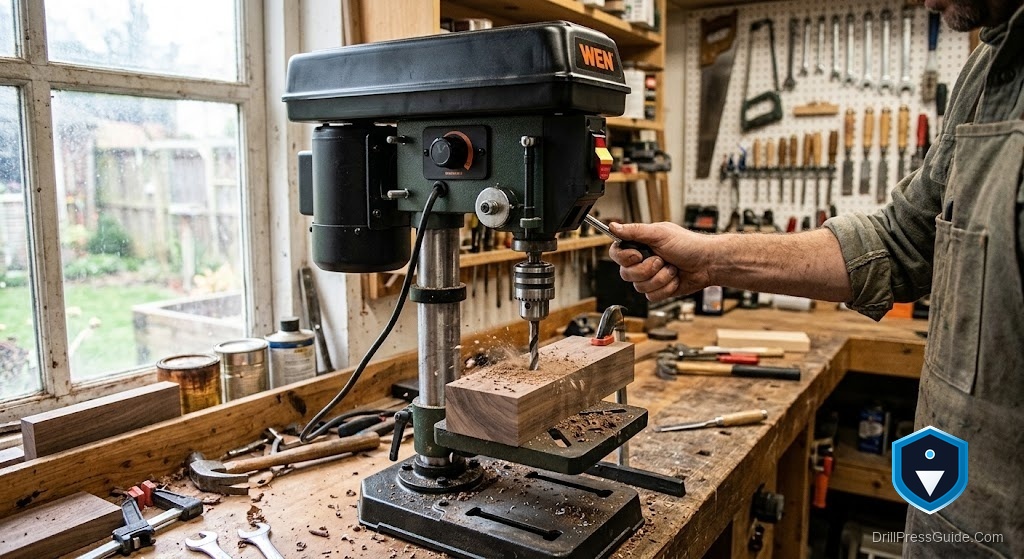
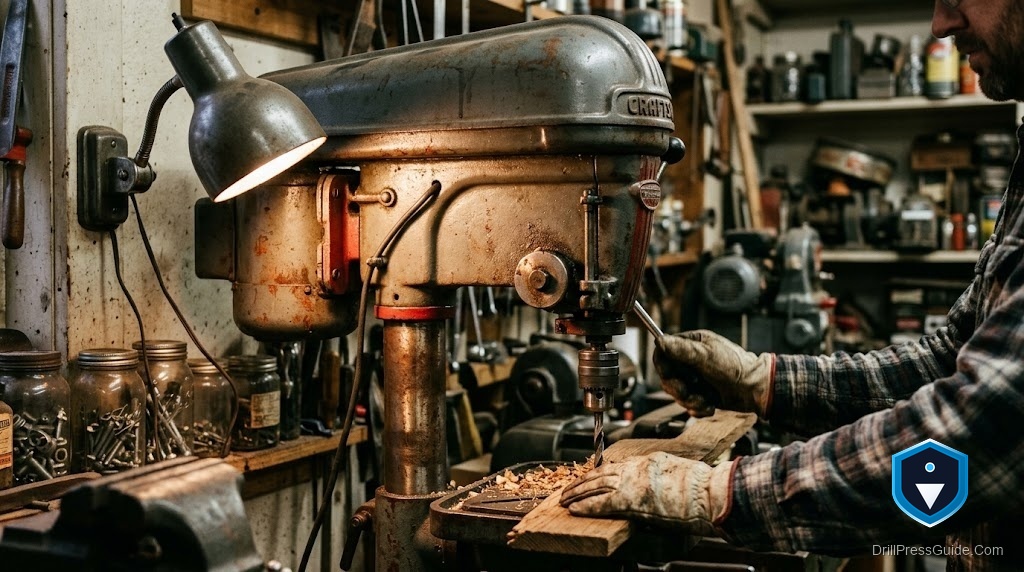
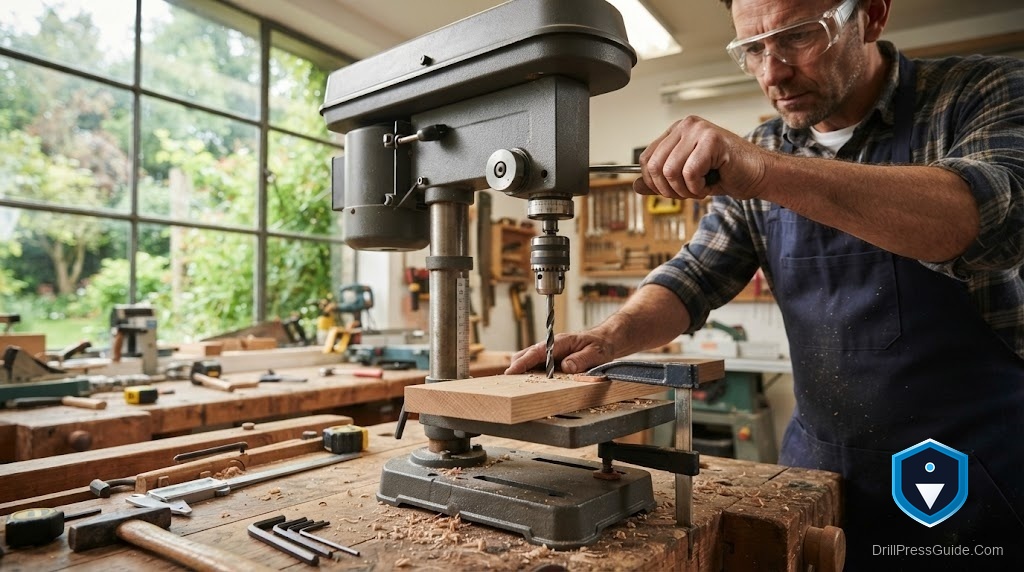
A drill press is a stationary machine that holds a rotating drill bit vertically above a flat table. The bit is lowered by a hand-operated lever that engages a rack-and-pinion or quill mechanism. The table supports the workpiece and can be raised, lowered, or tilted. The motor runs at a fixed or adjustable speed. The machine is designed for vertical drilling, but with accessories, it can do much more. The critical advantage is that the bit is held perfectly perpendicular to the table, and the feed is controlled by a lever rather than by the pressure of your hand and arm.
A drill press is good for any task that requires a straight, perpendicular hole at a controlled depth, or any task that requires repetitive holes at the same depth and angle. It is essential for woodworking joinery like dowels and shelf pins, for metalwork where perpendicularity matters, for drilling large holes with hole saws and Forstner bits, and for any repetitive production work. It is not a replacement for a hand drill for mobile work, angled holes in tight spaces, or driving screws. The value is in precision, repeatability, and power.
What a Drill Press Does Better Than a Hand Drill
Perpendicular Holes in Wood and Metal
The most basic advantage is perpendicularity. When you drill freehand, the bit wanders. The hole is slightly off-angle, the bit breaks through the back side at a skew, and the joint is weak or misaligned. A drill press holds the bit at 90 degrees to the table. If the table is flat and the workpiece is flat against it, the hole is perpendicular. This matters for dowel joints, where a slightly angled hole means the joint does not close. It matters for metal brackets, where an angled hole means the bolt does not seat and the part rocks. It matters for any project where the back side of the hole is visible and a clean exit is needed.
Controlled Depth and Repetitive Holes
The depth stop on a drill press is a mechanical collar that limits how far the quill descends. This is essential for counterbores, where the head of a bolt must sit flush with the surface. It is essential for shelf pin holes, where all holes must be the same depth to hold the pins securely. It is essential for dowel holes, where the dowel must bottom out at the correct depth for the joint to close. A hand drill cannot do this repeatably. You can mark the bit with tape, but the tape shifts, your arm pressure varies, and the depth changes. The drill press depth stop is mechanical and repeatable.
Large Bits and Hole Saws
Hand drills struggle with large Forstner bits, hole saws, and spade bits. The torque is high, the bit grabs, and the hand drill twists in your grip. A drill press has a larger motor, more torque, and the workpiece is clamped to the table. The machine handles the torque, not your wrist. A 2-inch Forstner bit in hardwood is a routine task for a drill press and a dangerous one for a hand drill. A hole saw in steel plate is possible in a drill press with the right speed and cutting fluid, and nearly impossible freehand.
Mortising with a Drill Press Attachment
A drill press can be converted into a mortising machine with a mortising attachment. The attachment is a square hollow chisel that fits over a drill bit. The drill bit removes the bulk of the wood, and the chisel squares the corners. This is slower than a dedicated mortiser, but it is accurate and produces clean mortises for tenon joints. A hand drill cannot do this at all. The mortising attachment requires the perpendicularity and controlled feed of the drill press.
What a Drill Press Is Not Good For
Mobile or Remote Work
A drill press is stationary. It needs a bench or floor, a power outlet, and a level surface. If you are building a deck, installing a fence, or working on a car, you cannot take the drill press to the job site. A hand drill or impact driver is the right tool for that. The drill press lives in the shop, and the work comes to it.
Angled Holes in Tight Spaces
Some drill presses have tilting tables that allow angled drilling. But the machine is still bulky. If you need to drill an angled hole in a cabinet that is already assembled, in a corner of a room, or in a piece of machinery that is too large to fit on the table, a hand drill with an angled guide or a flexible shaft is more practical. The drill press is best for work that fits on the table and can be clamped securely.
Driving Screws and Fasteners
A drill press is not a screwdriver. The chuck holds drill bits, not driver bits. Even if you could fit a driver bit, the drill press is designed for vertical downward pressure, not for the horizontal torque and push-pull of driving screws. An impact driver or drill driver is the right tool for that. Do not try to use a drill press as a power screwdriver.
Grinding, Polishing, or Sanding
Some woodworkers mount sanding drums, grinding wheels, or polishing attachments in the drill press chuck. This is possible, but it is not what the machine is designed for. The drill press is not balanced for side loads like a grinder. The bearings are not rated for the lateral pressure of sanding. The table is not designed for the sparks and debris of grinding. You can do it in a pinch, but you are shortening the life of the bearings and risking damage. Use the right tool for the job.
Accessories That Expand the Drill Press
A drill press can do more than drill holes with the right accessories. A mortising attachment converts it into a mortising machine. A drum sander attachment turns it into a spindle sander. A rotary table converts it into a simple milling machine for small parts. A circle cutter allows you to cut large circles in wood or metal. A pen turning mandrel lets you turn pens on the drill press. These accessories are useful, but they are secondary. The core value is still straight, repeatable, controlled holes.
Final Verdict
A drill press is good for any work that needs a straight hole at a controlled depth, especially in wood and metal. It is essential for joinery, repetitive production, and large bits. It is not a replacement for a hand drill for mobile work, tight spaces, or driving screws. Buy a drill press if you build furniture, work with metal, or need to drill repetitive holes. Do not buy one if you only need a tool for occasional household repairs or remote work. Match the machine to the tasks you actually do, not the ones you imagine doing.
FAQ
Can a drill press be used for metal? Yes, with the correct speed and cutting fluid. Benchtop presses handle thin metal. Floor presses handle thicker stock.
What is the advantage of a drill press over a hand drill? Perpendicularity, controlled depth, repeatability, and the ability to handle large bits and high torque without strain.
Can I drill angled holes with a drill press? Yes, if the table tilts. But the machine is bulky, so angled work in tight spaces is often better done with a hand drill.
What is a depth stop? A mechanical collar that limits how far the quill descends, allowing repeatable holes at a controlled depth.