
A Closer Look at the Klutch Drill Press Before You Commit
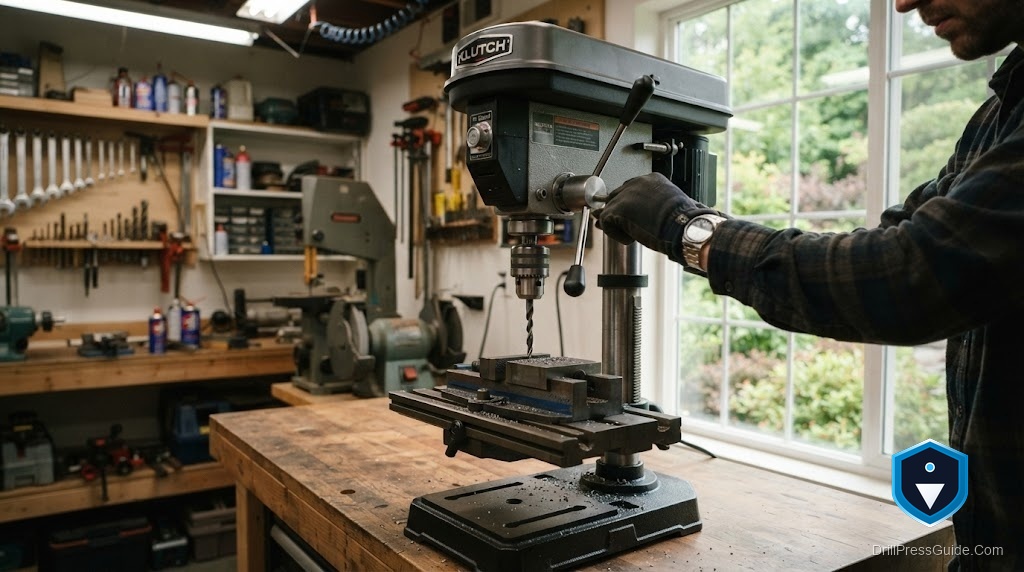
Northern Tool and Equipment built a reputation selling machines that work harder than their price suggests. The Klutch line of drill presses is no exception. These are not the lightest benchtop machines on the market, but they are among the most solid in the mid-range class. Before you commit to one, though, you need to know what you are getting into. A Klutch press is not a beginner’s toy, and it is not a cheap placeholder. It is a machine for someone who wants serious capacity without stepping up to industrial prices.
I have used Klutch presses in farm shops, metal fabrication garages, and shared workspaces where the machine gets passed from one person to another. They hold up. The castings are thick, the motors run cool, and the tables do not flex under load. But they are not perfect, and they are not for everyone.
The Two Models You Are Most Likely to See
Klutch sells a thirteen-inch benchtop press and a thirteen-inch floor model. Both use a three-quarter horsepower motor with sixteen speeds ranging from two hundred twenty to three thousand three hundred RPM. The benchtop version has a five-eighths-inch chuck and a table that tilts forty-five degrees. The floor model adds height, a larger base, and the same core mechanics in a taller package.
The sixteen-speed range is a standout feature. Most benchtop presses offer five speeds. Some offer variable speed. Klutch uses a traditional stepped pulley with enough steps to cover nearly every material and bit size you will encounter. That is a lot of belt changes, but it means you can always find the right speed. For metalwork, the low speeds are critical. For woodwork, the high speeds are there when you need them.
Motor and Torque: Where It Counts
The three-quarter horsepower motor is induction style, which means it runs quietly and delivers steady torque. That is important because a half-horse motor will bog down when you push a large Forstner bit or a metal hole saw. The Klutch motor keeps turning. It is not industrial-grade, but it is a noticeable step up from the two-amp motors on entry-level benchtop presses.
Variable speed would be a nice addition, but the stepped pulley system is reliable and easy to service. If you change speeds often, you will get tired of opening the belt cover. If you set a speed and run a batch of similar work, it is a non-issue. The digital readout on some models shows the current RPM, which is helpful for keeping track of where you are in the range.
The Chuck and Spindle
The five-eighths-inch chuck is larger than the half-inch chuck on most benchtop presses. That means you can run larger shank bits and hole saws without adapters. The spindle taper is a standard Morse taper, which opens the door to mortising attachments, sanding drums, and other accessories that fit a standard press. That is a big deal if you want to expand the machine’s capabilities beyond drilling.
Runout is reasonable for the price. It is not watchmaker precision, but it is good enough for woodworking, general metalwork, and most home shop tasks. If you need tighter tolerance, you can upgrade the chuck later. The stock chuck is acceptable for most work.
The Table and Column
The table is cast iron, which is what you want. It does not flex when you lean into the feed handle. It tilts and rotates, which is standard but useful. The rack-and-pinion table height adjustment is smooth on a new machine and stays smooth if you keep it clean. The column is thick steel, which gives the headstock the rigidity it needs for accurate drilling.
The floor model is the better choice if you have the space and the height. A floor press lets you work with larger workpieces without the bench getting in the way. It also puts the controls at a comfortable height for long sessions. The benchtop model is fine if you are space-limited, but the floor model is the one that feels like a real machine.
The Flaw: Weight and Setup
These presses are heavy. The benchtop model weighs close to one hundred pounds, and the floor model is more. That is good for stability and bad for moving. You will need help getting it onto the bench or standing the floor model upright. Once it is in place, you will not want to move it again. Plan the location before you unbox it.
Assembly is straightforward but not fast. The headstock, column, table, and base come in separate pieces. You bolt them together, align the table, and set the belt tension. The manual is adequate but not generous. If you have assembled a drill press before, you will be fine. If this is your first press, budget an extra hour for setup and adjustment.
Who Should Buy a Klutch Drill Press
A Klutch press is for the home shop owner who is past the beginner stage and wants a machine that will not need replacing in two years. It is for the metalworker who needs low speeds and enough torque to drill steel without stalling. It is for the woodworker who uses large bits and wants a table that does not flex.
Skip it if you


