Harbor Freight Drill Press Review: What to Check Before You Buy
You walk into Harbor Freight and the orange signs promise power tools at prices that make you pause. The drill press section is no exception. A ten-inch benchtop press with a laser guide and five speeds for less than the cost of a good router? It sounds like a steal. But anyone who has spent time in a shop knows that the sticker price is only part of the story. What matters is whether the machine stays accurate after six months of use, and whether the motor still turns smoothly after a hundred projects.
I have used Harbor Freight drill presses in home shops, shared workspaces, and as temporary setups on job sites. Some of them performed well beyond their price class. Others needed immediate attention out of the box. Here is what you need to know before you wheel one out of the store.
The Two Lines: Bauer and Central Machinery
Harbor Freight currently sells drill presses under the Bauer brand and the Central Machinery name. Bauer is the newer house brand, positioned as a step up from the older Central Machinery line. In practice, the build quality is similar, but Bauer models often include features like LED lights, laser guides, and slightly better motor housings. Central Machinery presses are the classic bare-bones budget machines. They work, but they do not apologize for their simplicity.
The Bauer ten-inch five-speed benchtop press is the most common choice for home users. It has a two-thirds horsepower motor, five speeds from six hundred thirty to three thousand three hundred RPM, and a cast-iron base. The Central Machinery ten-inch twelve-speed press is the older design, with a simpler motor and more speed steps achieved through a wider range of pulley combinations. Both are benchtop machines, meaning they sit on a workbench rather than standing on the floor.
What Works Out of the Box
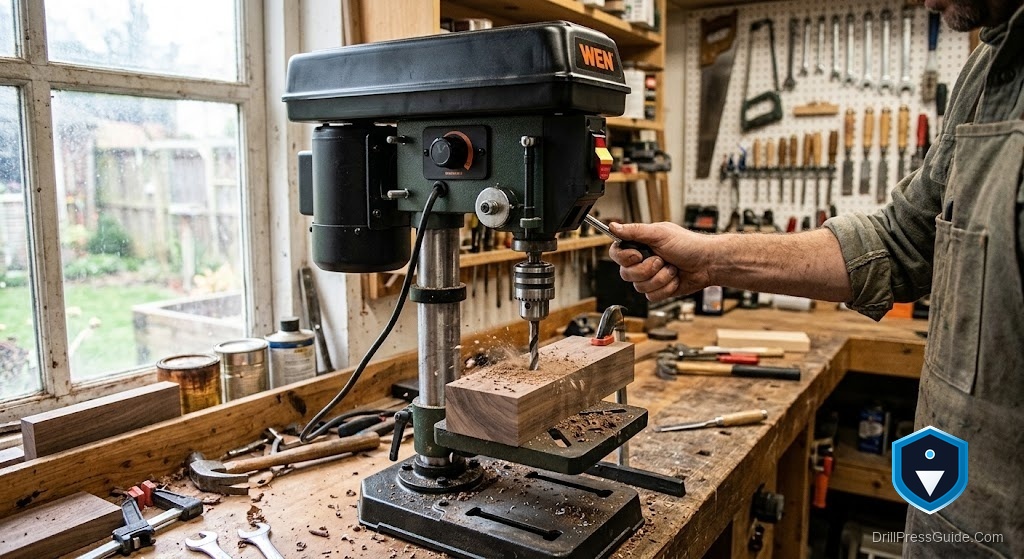
The cast-iron base on both lines is the real backbone. It is heavy enough to resist walking during use, and it absorbs vibration better than the stamped steel bases on some competing budget presses. The table is cast iron as well, which is a nice touch at this price point. It tilts forty-five degrees left and right for angled drilling, and the size is adequate for most home projects.
The motor starts reliably and runs without the grinding noise you sometimes hear on the cheapest imports. The five-speed pulley system on the Bauer is straightforward. You open the belt cover, shift the belt to a different step, and close it up. It takes about thirty seconds. The twelve-speed Central Machinery uses a similar arrangement but with more steps, giving you finer control over speed selection.
The Flaws You Will Notice First
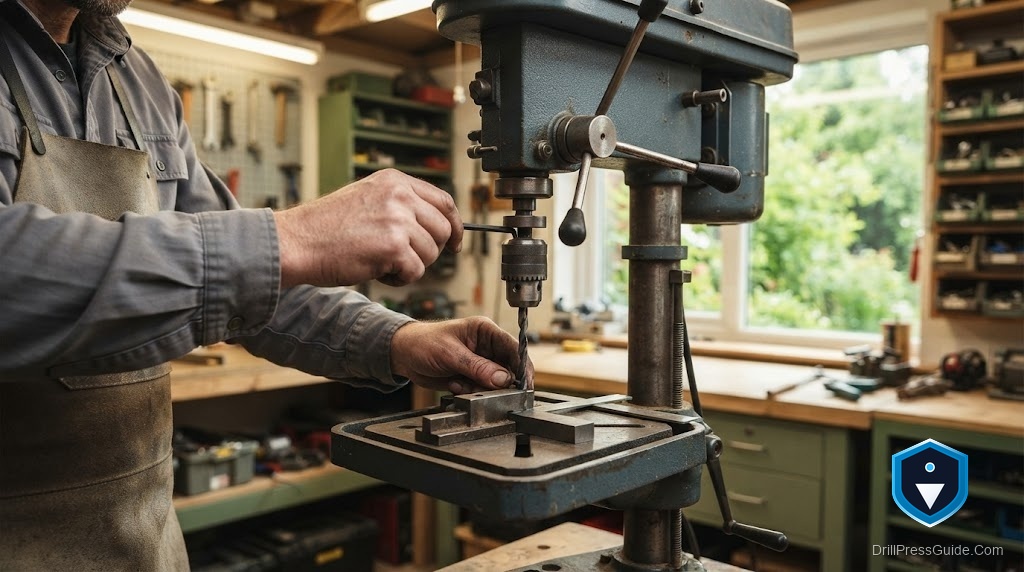
The chuck is usually the weakest link. The keyed chuck that ships with these presses is functional, but the runout (the amount the bit wobbles off center) is often higher than on a premium machine. You will notice it most with small-diameter bits, where a few thousandths of an inch of wobble makes the hole slightly oversized. For rough construction work, it does not matter. For precision joinery or metalworking, it matters a lot. A better chuck is the first upgrade I would make.
The laser guide is a mixed blessing. On some units, it aligns perfectly out of the box. On others, it is off by an eighth of an inch or more, and the adjustment mechanism is finicky. If you rely on it, check it against a test hole before trusting it on a finished piece. The LED work light is more reliable. It is genuinely useful in a dim garage, and it draws almost no power.
Belt tension can be an issue on the first setup. The motor mount plate is thin, and if you overtighten the bolts to stop the belt from slipping, you can distort the plate. Set the tension by feel. The belt should deflect about a half inch when pressed firmly. If it slips under load, check the alignment of the pulleys first. A misaligned belt will slip even at the correct tension.
Long-Term Durability
After a year of regular use, the bearings in the spindle head are the most likely wear point. If the press starts to hum or rattle, the bearings are probably developing play. They are standard sizes and replaceable, but the process requires disassembling the headstock. For a machine at this price, some owners just replace the whole press rather than repair it. That is a valid choice, but if you are handy, a bearing replacement costs less than twenty dollars and takes an afternoon.
The table rack-and-pinion mechanism can also wear. The table should raise and lower smoothly with the crank handle. If it starts to bind, clean the rack and apply a light grease. The pinion gear is usually a softer metal, and aggressive cranking can flatten the teeth over time. Raise and lower the table with steady pressure, not force.
Who Should Buy One
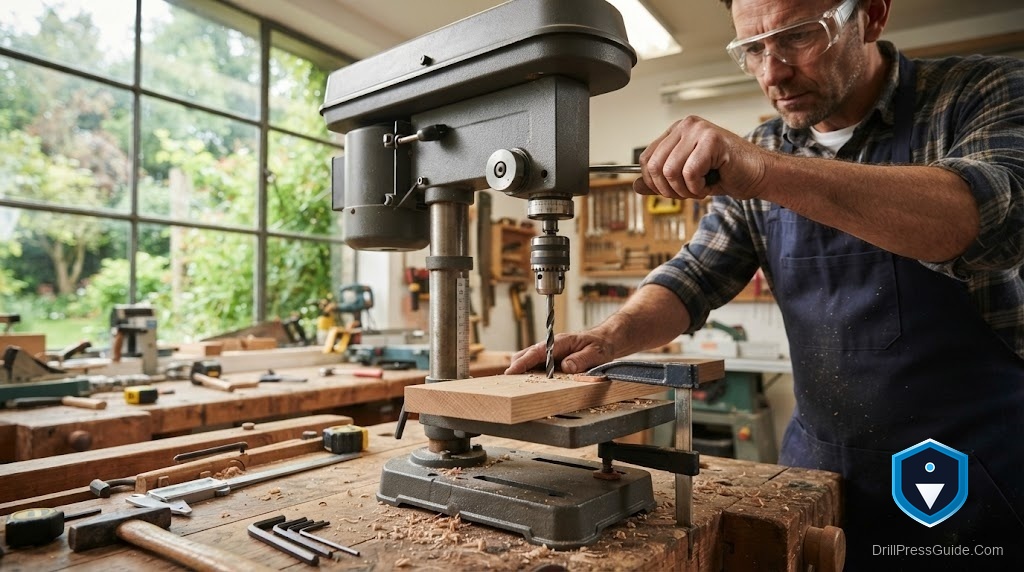
If you are a homeowner who needs to drill accurate holes in wood, plastic, and occasional metal, a Harbor Freight drill press is a sensible choice. It is accurate enough for furniture projects, cabinet hardware, and general DIY work. If you are starting a shop and want to see how much you use a drill press before investing in a premium machine, it is a low-risk way to find out.
Skip it if you need high precision for metalworking, if you drill large-diameter holes in hardwood daily, or if you need a floor-standing press with a long column and large table. The Harbor Freight line is a benchtop tool, not a production machine. It will not keep up with a professional metal shop or a busy woodworking business.
The Verdict
A Harbor Freight drill press is a honest tool for honest money. It does not pretend to be a JET or a WEN at the top of their lines. It gives you a stable platform, a decent motor, and enough accuracy for most home work. The weaknesses are the chuck, the laser alignment, and the long-term bearing life. All three are fixable or tolerable if you know what you are getting into. Check current Harbor Freight drill press options on Amazon
If you buy one, plan to spend an extra hour on setup. Check the table for square, align the laser, and set the belt tension by feel. Do that, and the machine will serve you well for years. Skip the setup, and you will fight it every time you turn it on.
FAQ
Can a Harbor Freight drill press handle steel? Yes, at low speeds with sharp bits and cutting oil. The motor is not high-torque, so feed slowly and let the bit do the work. Do not force it, or you will stall the motor and burn the belt.
Is the Bauer line better than Central Machinery? Slightly. The Bauer presses have better motors and more features like lights and lasers. The underlying castings and mechanisms are similar. If the price difference is small, go Bauer. If the Central Machinery model is on sale, it is still a capable machine.
What is the first upgrade I should make? Replace the chuck. A quality keyed chuck with half-inch capacity and good runout will improve your accuracy immediately. It is the single biggest improvement you can make for under thirty dollars.
Does the laser guide actually help? Sometimes. If yours aligns correctly, it is a quick way to position the bit over a mark. If it is off, it is worse than useless. Always verify with a test hole before drilling a finished piece.
How long will it last? In a home shop with weekly use, five to seven years is typical. In a daily-use environment, two to three years before bearings or the table mechanism needs attention. With good care and occasional maintenance, it can last longer.
Can I mount it on a folding table? You can, but you should not. The press needs a stable, flat surface. A wobbly table multiplies vibration and makes the press feel cheaper than it is. A solid workbench or a dedicated stand is the minimum.
What speed should I use for wood? For small bits, two thousand to three thousand RPM. For larger Forstner or spade bits, five hundred to one thousand RPM. Let the bit diameter and the wood density guide you. When in doubt, start slower and speed up if the cutting is clean.
Is the table height easy to adjust? It uses a rack-and-pinion crank. It is smooth when new but can develop play. Keep the rack clean and lightly greased. Do not use the crank to clamp the table in place. That is not its job.
Can I use mortising attachments with it? If the spindle has a standard Morse taper, yes. Check the specs before buying attachments. A non-standard taper limits your options.
Should I buy the extended warranty? For a benchtop tool at this price, the standard return policy is usually enough. If you use the press heavily, the warranty might pay for itself. Read the terms carefully. Some cover parts but not labor.