What Should a Drill Press Cost? A Shopper's Guide to Value Tiers
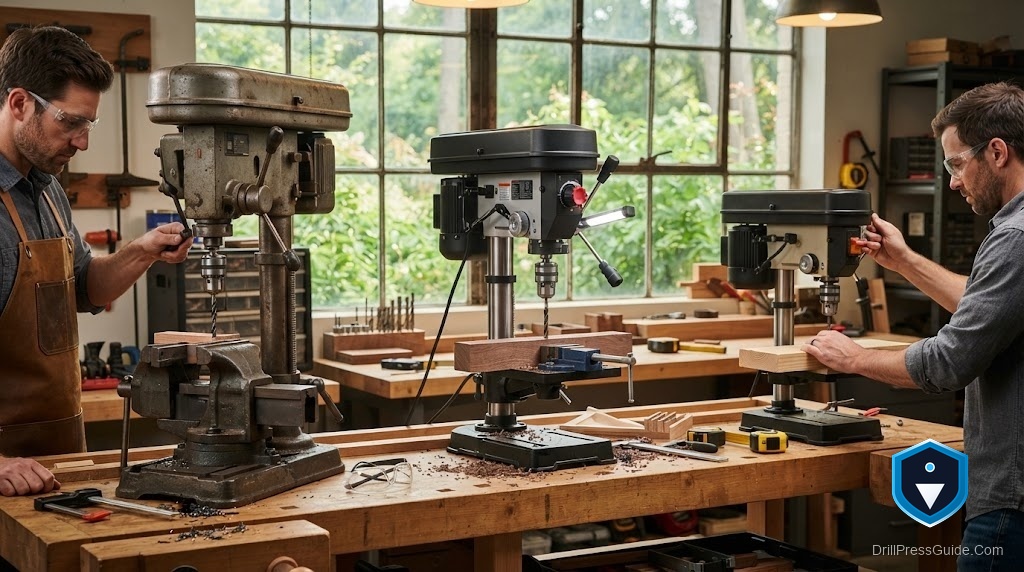
You stand in your garage with a project board in one hand and a phone in the other, trying to figure out why drill presses seem to span from compact benchtop units to machines that weigh more than your car. The range is wide, and the specs all start to blur together. We have spent time with machines at every practical tier for home shops, and the answer is not a single number. It is a question of what you are actually buying: motor capacity, swing, speed control, and build quality.
What a Drill Press Actually Does
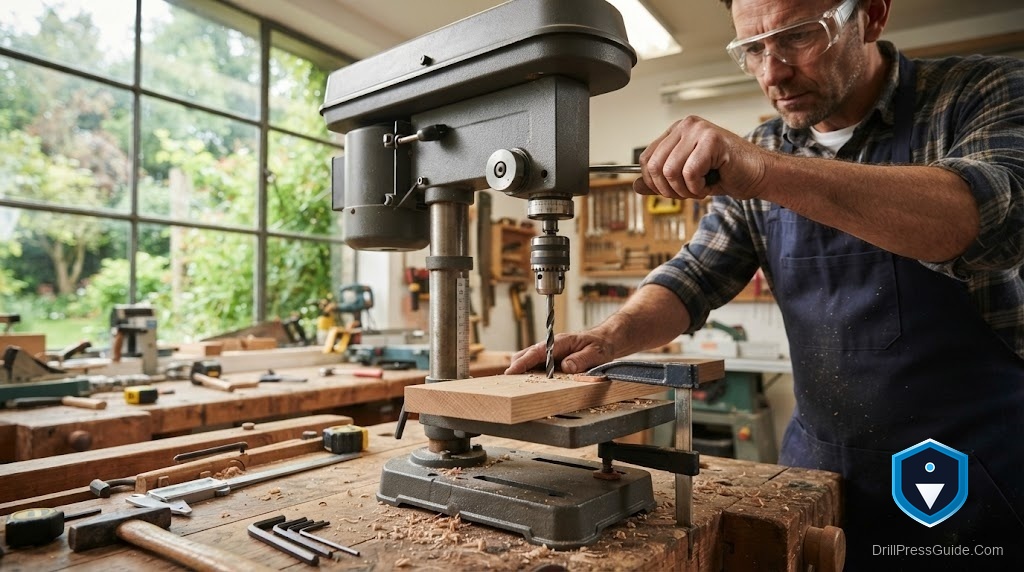
A drill press is a fixed drilling machine where the workpiece rests on a table while a motor drives a spindle downward through a chuck. The column keeps the bit vertical, the table supports the material, and the quill controls depth. Because the bit travels on a fixed axis, you get repeatable holes, square shoulders, and consistent depth that a handheld driver cannot match. The cost tiers reflect how much metal, motor, and precision engineering the manufacturer puts into those three parts.
Entry Tier: Small Benchtop Models for Light Work
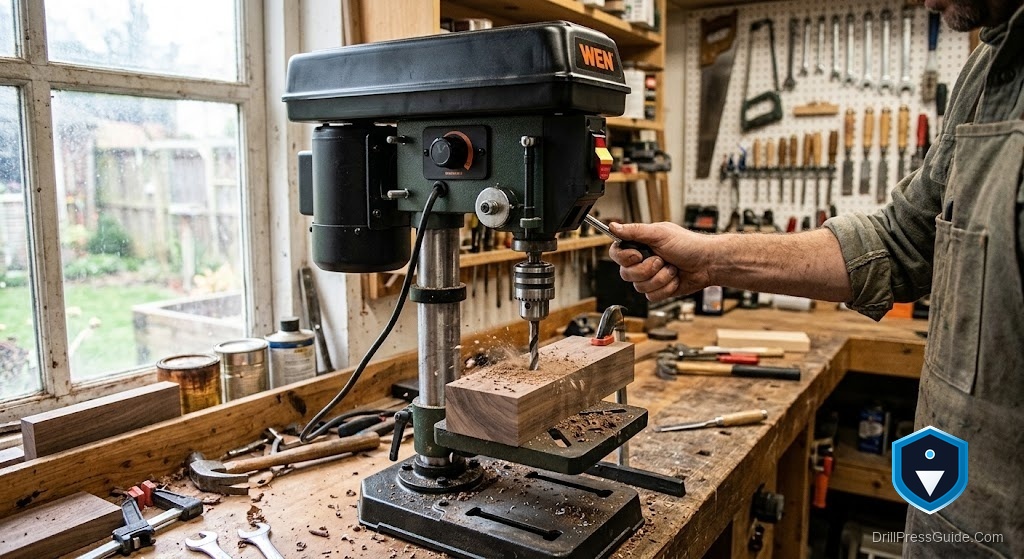
At the entry tier, you get a compact benchtop machine with a fractional motor, belt-driven speed changes, and a cast iron base that is just heavy enough to stay put. These machines typically offer an 8-inch or 10-inch swing, a 2-inch spindle travel, and five preset speeds. They are honest tools for hobbyists, model builders, and small hardware installation. You will feel the motor limits when you load a large Forstner bit or try to push through thick aluminum, but for standard twist bits and brad points in wood, they perform fine.
Examples we have tested include the WEN 4208T and WEN 4210T. Both use 2.3-amp induction motors and belt-drive systems. The cast iron bases are solid, the tables tilt, and the chucks hold standard bits. The real tradeoff is speed convenience and power. You change speeds by moving the belt on stepped pulleys, which takes a minute. If you mostly drill holes in pine and poplar, this tier serves you well.
The honest flaw is limited capacity. Small tables, short quill travel, and modest motors mean you will outgrow the machine if you start building furniture or working with metal. If you plan to expand your shop, consider stepping up now rather than replacing later.
Mid Tier: Variable-Speed Benchtop Models for General Shops
The mid tier is where the most versatile machines live. These are 10-inch and 12-inch benchtop presses with variable-speed motors, digital readouts, and stronger induction motors. The key upgrade is convenience and capacity. Instead of changing belts, you turn a dial or lever to adjust speed. The tables are larger, the spindle travel is longer, and the motors handle hardwood and light metal without complaint.
The WEN 4212T and WEN 4214T represent this tier. The 4212T is a 10-inch variable-speed press with a 5-amp motor, digital readout, and laser guide. The 4214T is a 12-inch press with the same motor and features plus a longer 3-1/8-inch spindle travel. Both machines let you adjust speed on the fly, which matters when you switch from a small pilot bit to a large Forstner bit. The 12-inch swing on the 4214T lets you center larger panels, and the extra qu