
1/2 HP Drill Press: What It Is, Where It Fits, and What to Check
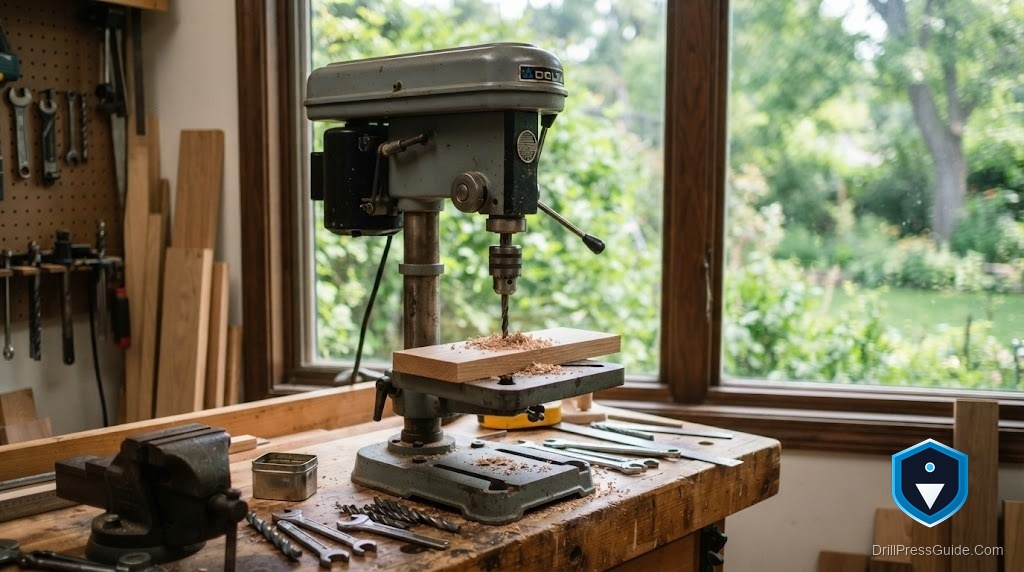
Horsepower is the number people fixate on when they shop for a drill press, and the 1/2 HP class is where most of the confusion lives. It sits above the little 1/3 HP benchtop machines and below the 3/4 HP and 1 HP floor presses, and that middle position is exactly why it suits so many home shops. But the number alone tells you less than you think. Here is what 1/2 HP actually buys you, where it fits, and what to check so you are not fooled by a spec sheet.
What 1/2 HP really means on a drill press
Motor horsepower on a drill press is a rough measure of how hard the machine can push a bit before it bogs down. Roughly speaking, the classes break down like this: 1/3 HP suits small 8- and 10-inch benchtop presses for light drilling, 1/2 HP fits mid-size 12- and 15-inch machines that handle most woodworking and light metal, and 3/4 HP and up belongs to heavy floor presses built for large bits and steel. A 1/2 HP press is the honest middle: enough muscle to drive Forstner bits and hole saws in wood and to drill light metal, without the size and power demands of a shop machine.
One caution: horsepower ratings are not standardized across brands, and a real, continuous-duty 1/2 HP induction motor is stronger than a peak-rated number on a bargain machine. Check the amperage on the motor plate, since a genuine 1/2 HP motor typically draws a believable current rather than an inflated one.
Where a 1/2 HP press fits
This class is the sweet spot for a serious home woodworker. It has the power to run larger bits than a 1/3 HP machine can manage, the range to drill wood and light metal, and it is common on the 12- and 15-inch presses that most shops settle on. If your work is cabinetry, furniture, general repairs, and the occasional metal bracket, a 1/2 HP press will rarely leave you wanting. It is only when you regularly drill large holes in thick steel that you should step up to 3/4 HP or more.
What to check beyond the horsepower number
Horsepower is one number among several that decide whether a press is any good. Before you buy, check these:
- Motor type and amperage. A continuous-duty induction motor with a believable amp draw beats an inflated peak rating. Read the plate.
- Swing. The distance from the spindle centerline to the column, doubled, tells you the widest workpiece you can reach the center of.
- Spindle travel. More quill travel lets you drill deeper in one stroke. Short travel frustrates deep holes.
- Speed range and change. A wide range with low speeds helps large bits and metal. A variable-speed dial beats moving a belt if you change speed often.
- Rigidity. A heavy head, a thick column, and a tight quill matter more than a big horsepower figure for straight, accurate holes.
- Chuck and taper. Note the chuck capacity and spindle taper (often MT2) so tooling fits.
Tooling that gets the most from a 1/2 HP press
A mid-power press rewards good tooling. A quality keyed drill chuck with the matching arbor keeps runout low so the motor’s power is not wasted, a set of Forstner bits takes advantage of the extra muscle in wood, and a drill press vise makes light metal work safe. Keep a spare drill press chuck key and a fresh drill press V-belt on hand. Confirm the taper before ordering an arbor.
The verdict
A 1/2 HP drill press is the right power class for most home woodworkers, because it drives larger bits than a light 1/3 HP machine while avoiding the size and power demands of a floor press. Just do not treat horsepower as the whole story: a believable induction motor, a wide low-reaching speed range, real spindle travel, and a rigid build matter just as much. Read the motor plate rather than the marketing, match the swing and travel to your work, and back the machine with a good chuck and vise. Do that, and a 1/2 HP press will handle the vast majority of what a home shop throws at it. Step up only if you truly drill heavy steel.
Takeaways:
- 1/2 HP is the mid power class, above light 1/3 HP benchtop presses and below 3/4 HP floor machines.
- It suits 12- and 15-inch presses for most woodworking and light metal.
- Horsepower ratings are not standardized; check motor type and amperage rather than trusting the number.
- Swing, spindle travel, speed range, and rigidity matter as much as horsepower.
FAQ
Is a 1/2 HP drill press powerful enough? For most home woodworking and light metal, yes. It drives Forstner bits and hole saws in wood and drills light metal. Step up to 3/4 HP or more only for large holes in thick steel.
What is the difference between 1/3 HP and 1/2 HP? 1/3 HP suits small 8- and 10-inch benchtop presses for light work; 1/2 HP fits mid-size 12- and 15-inch machines with the muscle for larger bits and light metal.
How do I know a 1/2 HP rating is honest? Read the motor plate. A continuous-duty induction motor with a believable amp draw is stronger than an inflated peak rating on a bargain machine.
Do I need more than 1/2 HP? Only if you regularly drill large-diameter holes in thick steel. For wood, furniture, and light metal, 1/2 HP is ample.
Does horsepower affect hole accuracy? Not directly. Accuracy comes from rigidity (a heavy head, a thick column, a tight quill) and a good chuck. Horsepower affects how hard you can push, not how straight the hole is.
What spindle taper do 1/2 HP presses use? Often MT2 on mid-size machines. Confirm the taper by removing the chuck before buying an arbor.
Which brands offer 1/2 HP presses? Many, including Craftsman, Delta, and JET mid-size machines. Judge each on motor type, swing, travel, and rigidity rather than the badge.
References
- Fine Woodworking, drill press motor power and buying guidance: https://www.finewoodworking.com/
- WEN Products, drill press specifications across power classes: https://wenproducts.com/collections/drill-presses
- Delta Machinery, drill press motor and specification references: https://www.deltamachinery.com/products/


