
Bauer Drill Press Reviews: Capacity, Controls, and Owner Support
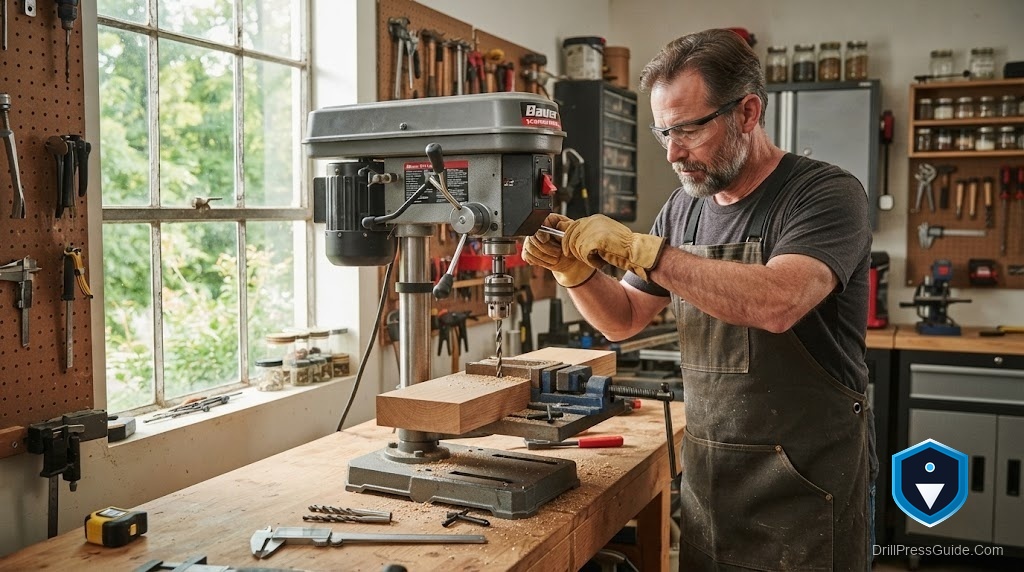
Buying a Harbor Freight tool always comes with the same unspoken question: not just whether it works out of the box, but whether you can live with it, and get it fixed, three years from now. For the Bauer drill press, the specs are easy to find and mostly reassuring. The harder question, and the one that decides whether owners stay happy, is what the machine is like to own: how its controls hold up, whether parts and support are there when you need them, and how its capacity wears in over time. Here is a review focused on living with a Bauer, not just unboxing one.
The Bauer drill press is Harbor Freight’s value line of benchtop and floor machines, from the 8-inch bench model to the 17-inch floor-class press, built around cast-iron construction, variable or stepped speed, and integrated lights and lasers. Ownership hinges on Harbor Freight’s parts and support as much as on the specs.
The short answer: Bauer’s capacity and controls are competitive with the value-brand field, and the real variables in long-term satisfaction are quality-control consistency and Harbor Freight’s parts and return support. The 12-inch and 17-inch reward owners well; the 8-inch is too light to grow with.
Capacity: what each model gives you to grow into
Capacity is where the line spreads out, and buying too small is the most common ownership regret. The 8-inch bench model, with its light 1/3 HP motor and 2-inch quill travel, drills small holes fine but leaves nothing to grow into, and owners who push it report bogging under larger bits. The 12-inch variable-speed model steps up to a 2/3 HP motor, a 9-1/2 inch cast-iron table, and a stepless 580 to 3200 RPM range, which covers a real home shop’s work with headroom. The 17-inch, with a 1.2 HP motor, a 13-inch table, and 4-3/4 inches of quill travel, adds floor-class depth for larger and deeper work. For an owner planning to keep the machine, the capacity of the 12-inch or 17-inch is what avoids the quick outgrow that sends the 8-inch back to the store.
Controls: how they hold up in use
Bauer’s controls are a genuine strength on the mid and upper models. The variable-speed dial with a digital readout on the 12-inch and 17-inch lets you match speed to material without moving a belt, a convenience that used to cost far more, and the threaded depth stop makes repeat holes easy to set. The rack-and-pinion table lift on the larger machines raises and locks the table smoothly. What owners watch over time is the same as with any value press: whether the depth stop holds its setting, whether the table lock stays tight, and whether the variable-speed mechanism stays smooth. Reports are largely positive, with the usual caveat that consistency varies unit to unit, so checking the controls work cleanly on setup is the sensible first step.
The ownership question: parts and support
This is where a Bauer review has to be honest about the trade. Because Bauer is a Harbor Freight house brand, both the machine and its parts and support run through Harbor Freight, which cuts two ways. On the plus side, a nearby store means in-person returns during the warranty window and easy exchange if a unit arrives with a fault, which is the main quality-control safeguard. On the minus side, long-term parts availability for a specific model depends on Harbor Freight continuing to stock them, and the support network is narrower than for a brand carried by many retailers. An owner who values a broad parts and support ecosystem might prefer the near-identical WEN 4214T 12-inch, which offers comparable capacity and controls with wider online availability and its own support. The WEN’s honest flaw is the same basic stock table Bauer owners upgrade too. Who should skip the WEN and stay with Bauer: someone who wants to inspect and return the exact unit in person at a local store.
How the models compare for an owner
Set side by side, the line sorts by how well each grows with an owner. The 8-inch is the one most likely to be outgrown, best only for someone certain their work stays small. The 10-inch is a sound light-duty owner’s machine with enough motor for general drilling. The 12-inch variable-speed is the one that rewards long ownership, with the capacity, controls, and cast-iron build to stay useful for years. The 17-inch is the choice for an owner whose work needs floor-class depth and a bigger motor. The pattern that matters for satisfaction is simple: buy enough capacity to grow into, and the controls and build hold up well across the mid and upper line.
Living with one
Bauer drill press reviews land on a consistent verdict once you look past the unboxing: the 12-inch and 17-inch offer capacity and controls that compete with the value-brand field, and the real ownership variables are quality-control consistency and Harbor Freight’s parts and support. Buy enough capacity to grow into, check the controls on setup, and use the return window if a unit disappoints. If a broad parts and support network matters more to you than a local store, the near-identical WEN 4214T is the equivalent buy. Either way, the mid-to-upper machines are ones an owner can live with for the long haul.
- Buy enough capacity to grow into; the 8-inch is the model owners most often outgrow.
- The variable-speed controls and rack-and-pinion table on the 12-inch and 17-inch hold up well.
- Bauer’s parts and support run through Harbor Freight, a plus for local returns, a limit on ecosystem breadth.
- The near-identical WEN 4214T is the pick for owners who want wider online support.
Owning a Bauer is less about the spec sheet than about buying enough machine and knowing where support comes from. Get both right and the mid-to-upper line serves for years.
Frequently asked questions
Are Bauer drill presses reliable long-term? The mid and upper models hold up well, with cast-iron construction and controls that owners report staying smooth. The main long-term variables are quality-control consistency unit to unit and Harbor Freight parts availability, so buy enough capacity and check the machine on setup.
Where do I get parts for a Bauer drill press? Through Harbor Freight, since Bauer is their house brand. That means local returns and exchanges during the warranty window, but long-term parts depend on Harbor Freight continuing to stock a given model, a narrower ecosystem than brands carried by many retailers.
Which Bauer drill press should I buy to keep long-term? The 12-inch variable-speed for most home shops, or the 17-inch for floor-class depth. Both have the capacity, controls, and build to stay useful for years. The 8-inch is light enough that many owners outgrow it quickly.
How do Bauer’s controls compare to other brands? Well on the mid and upper models. The variable-speed dial with a digital readout, threaded depth stop, and rack-and-pinion table lift match or beat much of the value-brand field, offering convenience that used to cost more. Consistency varies by unit, so check them on setup.
Is the Bauer or the WEN a better long-term buy? They are near-identical machines, so it comes down to support. Choose Bauer if a local Harbor Freight for in-person returns matters most, or the WEN 4214T if you value wider online availability and a broader parts and support network.
Does the Bauer 8-inch hold up for regular use? Only for light, small work. Its 1/3 HP motor and short travel leave little to grow into, and owners who push it report bogging. For regular or varied use, the 10-inch or 12-inch is the machine that holds up.
References
- Fine Woodworking, Bauer 12-inch variable-speed drill press review: https://www.finewoodworking.com/2026/05/21/review-bauer-12-in-variable-speed-drill-press
- Harbor Freight, Bauer 17-inch variable-speed drill press specifications: https://www.harborfreight.com/17-in-variable-speed-drill-press-with-light-58783.html
- OSHA, machine guarding and point-of-operation safety: https://www.osha.gov/machine-guarding


