
The Best Drill Press for Metal: How to Find One Without Paying for the Wrong Features
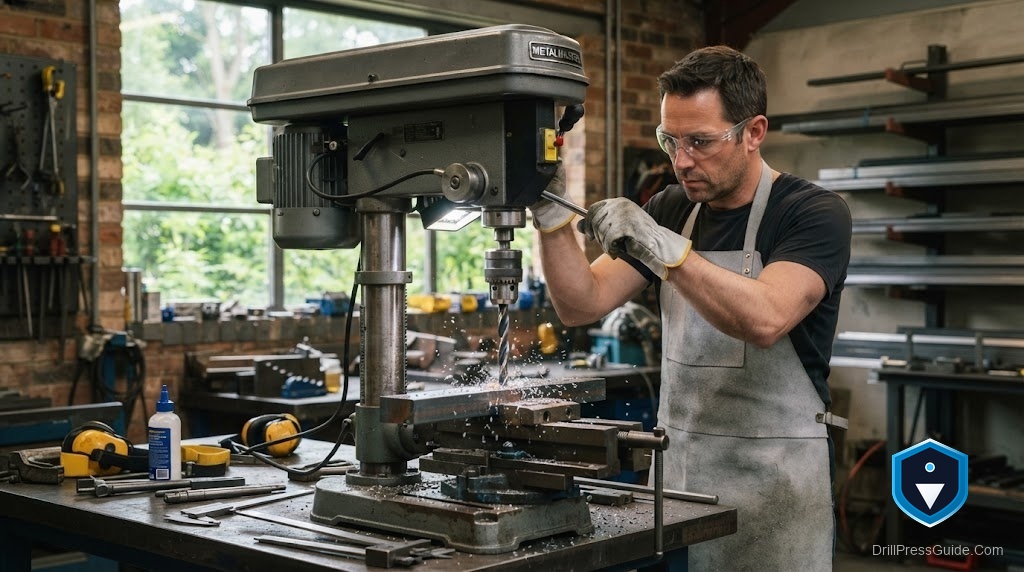
Walk into any metalworking forum argument about the best drill press for metal and you will find the same split: half the advice is about horsepower, and almost none of it is about the number that actually decides whether a press drills steel well. That number is the lowest speed the machine can reach, and it is where most buyers, dazzled by motor size and laser gimmicks, spend on the wrong things. A drill press for metal lives or dies by low-speed torque and rigidity, and this guide sorts what matters from what does not.
The best drill press for metal is a rigid, heavy machine that reaches a genuinely low spindle speed and holds it under load, so large bits can cut hard steel without overheating. Cast-iron mass, a low bottom speed, and enough spindle travel matter far more than headline horsepower or accessories.
The short answer: for metal, choose the machine with the lowest usable speed and the most rigidity you can fit and afford, then spend the rest on good bits and a solid vise. A floor press with real cast-iron mass beats a light benchtop machine with a bigger motor for serious steel work every time.
Why low speed is the whole game
Steel is drilled slowly. A large bit in steel needs a low spindle speed, because too much surface speed overheats the cutting edge and kills the bit in seconds. This is the opposite of wood, where high speed rules, and it is why a press built for metal is judged first by how low it goes.
Many benchtop presses bottom out around 500 to 600 RPM, which is fine for small bits but too fast for a large bit in steel. A metal-focused machine reaches much lower. The WEN 4227T 17-inch variable-speed floor drill press drops to around 150 RPM and carries the cast-iron mass to stay steady in thick plate, with generous spindle travel for deep holes. Its honest limits are the ones every belt machine shares: under a very large bit in hard steel the belt can slip where a gear head would not, and changing speed means moving a belt. Skip it if your daily work is inch-wide holes in structural steel, where a gear-driven machine truly earns its cost. For the sizes a home metal shop drills, its low speed and mass make it a strong pick.
Rigidity and mass beat horsepower
The second thing metal demands is rigidity. A heavy cast-iron press does not flex or chatter when a big bit bites, which keeps the hole round and the bit alive. A light press flexes, chatters, and wanders no matter how big its motor is, which is why mass, not horsepower, is the honest measure.
For a heavy benchtop option, the JET JDP-15 floor drill press brings a rigid column and a strong induction motor with real spindle travel. Its honest drawback is that it costs well more than value-brand machines, so you are paying for fit, finish, and support as much as raw capability, and it still uses a belt to change speeds. Skip it if a value-brand press meets your needs and you would rather put the difference toward tooling. What you should not do is buy a light machine for its motor rating; the motor is rarely the limit in a home shop, and mass is what you will wish you had.
Tooling and workholding finish the job
The best press underperforms with poor bits and no workholding. For steel and stainless, a cobalt drill bit set holds its edge where cheaper bits glaze and rub; its honest drawback is that cobalt is brittle and chips if the work chatters, which is an argument for clamping hard. Skip cobalt if you only drill mild steel and aluminum, where tough HSS is enough.
Clamping is not optional in metal, because a spinning workpiece is the top serious injury on a press. A cross-slide compound vise holds parts firmly and lets you position them precisely, and its honest limit is that its cross-slide is for positioning, not for milling loads. Skip the cross-slide feature if you only need to clamp; a plain heavy drill press vise grips just as well for straight drilling.
How the picks compare
Set them side by side. The WEN 4227T is the value-forward metal press: lowest-in-class speed, real mass, generous travel, at the cost of belt-change speed adjustment and possible belt slip under the very biggest bits. The JET JDP-15 trades more money for better fit, finish, and support with similar core capability. Both are belt-driven floor machines that reach the low speeds steel needs, and both beat any light benchtop press bought for horsepower. Choose the WEN to put more of your money into tooling, and the JET if long-term fit and dealer support matter to you. Neither wins by motor size, which is exactly the point.
Where this leaves you
The best drill press for metal is the one that reaches a low speed and holds it with cast-iron rigidity, not the one with the biggest motor or the flashiest laser. Buy for low-end speed and mass, add cobalt bits and a solid vise, and you will out-drill someone who spent the same money chasing horsepower. A rigid floor press with a genuinely low bottom speed is the machine that drills steel cleanly, year after year.
- Judge a metal press first by its lowest speed; large bits in steel need it low.
- Cast-iron mass and rigidity beat headline horsepower for clean, round holes.
- Add cobalt bits for steel and stainless and a solid vise for safe clamping.
- Do not buy a light machine for its motor rating; mass is what you will wish you had.
Horsepower sells presses. Low speed and mass drill steel. Buy for the second and ignore the first.
Frequently asked questions
What makes a drill press good for metal? A low lowest speed and cast-iron rigidity. Large bits in steel need low RPM to avoid overheating, and a heavy, rigid machine stays steady under load so the hole comes out round and the bit survives. These matter more than horsepower.
Do I need a floor drill press for metal? For serious steel work, usually yes, because floor presses carry more mass and reach lower speeds than most benchtop machines. A heavy benchtop press can serve for smaller work, but mass and low speed are what metal rewards.
How low should the speed go for drilling steel? The lower the better for large bits; presses aimed at metal reach down toward 150 RPM. Small bits tolerate higher speeds, but a big bit in steel overheats quickly above the right low speed, so a low bottom end is key.
Are cobalt bits worth it for a metal drill press? For stainless and tool steel, yes; they hold an edge where standard HSS glazes and rubs. For mild steel and aluminum only, tough HSS is enough and cheaper. Cobalt is more brittle, so clamp firmly to avoid chatter that chips it.
Is horsepower important for a metal drill press? Less than most buyers think. In a home shop the motor is rarely the limit; rigidity and low speed are. A light press with a big motor still flexes and chatters, so mass matters more than the horsepower rating.
Do I need a cross-slide vise or a regular vise? A plain heavy drill press vise grips fine for straight drilling. A cross-slide vise adds precise two-axis positioning, useful for repeated or located holes, but its slide is not for milling loads. Buy the cross-slide only if you need the positioning.
References
- Norseman Drill and Tool, drilling feeds and speeds chart: http://www.norsemandrill.com/feeds-speeds-drill.php
- Carbide Depot, drill speeds and feeds formulas: https://www.carbidedepot.com/formulas-drills-speeds.htm
- OSHA, machine guarding and point-of-operation safety: https://www.osha.gov/machine-guarding


