
Metal Gear Driven Drill Press: The Setup Details That Change the Result
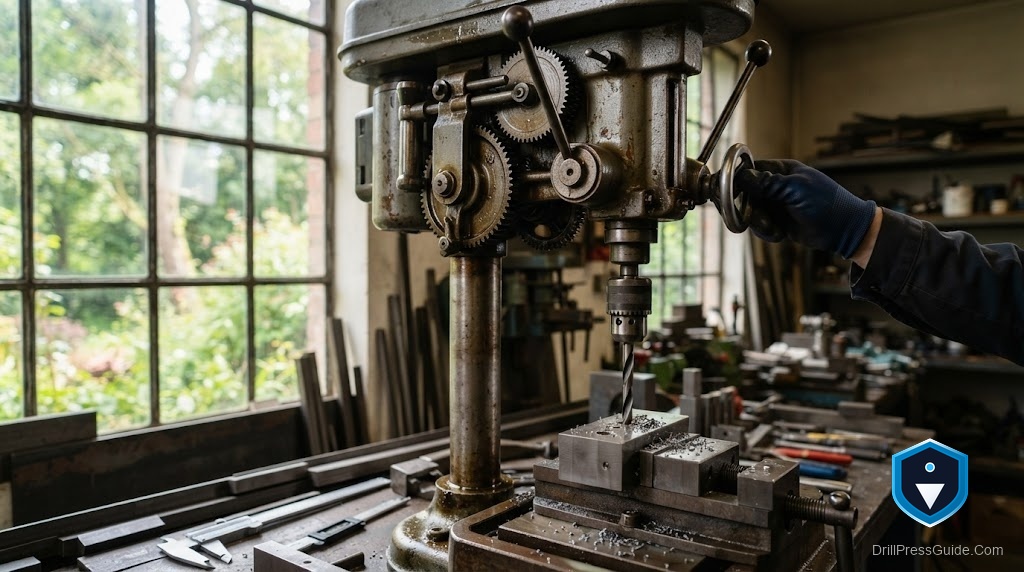
Stand next to a gear-head drill press cutting a one-inch hole through steel plate and you feel why serious shops buy them. There is no belt slipping, no bogging down, just a steady grind as the geared spindle delivers torque the way a car’s low gear delivers pull. A metal gear driven drill press trades the quiet convenience of a belt for raw, unstoppable turning force, and for heavy drilling in thick steel that trade is exactly right. It is also more machine, and more money, than most home shops need, so the real question is whether your work justifies it.
A gear-driven (gear-head) drill press transmits power from the motor to the spindle through a gearbox rather than a belt and pulleys. That geared drive delivers high, consistent torque without slipping, which is what large-diameter drilling in metal demands, and it is the defining feature of industrial-class presses.
The short answer on whether you need one: if you regularly drill large holes in thick steel, a gear-driven press is worth it because a belt drive slips and bogs where gears keep pulling. If your holes are modest and occasional, a good belt-drive press does the job for far less money and less weight. Buy the gears for the torque, not for the badge.
What the gear drive actually buys you
A belt drive works by friction, and friction has a limit. Push a big bit into hard steel and a belt can slip, robbing the spindle of the turning force right when it needs it most, and the machine bogs down. A gear drive has no slip. The gearbox delivers the motor’s torque to the spindle positively, so a large bit keeps cutting under load instead of stalling.
That matters most exactly where home presses struggle: big diameters in thick, hard metal. A one-inch bit in steel plate needs both low speed and high torque, and the gear-head machine provides both without complaint. Many gear-driven presses also use an industrial R8 or Morse taper spindle and a heavy cast-iron body, which adds the mass and rigidity that keep a big hole round and on-center.
Where a gear drive earns its keep, and where it does not
The honest limits matter. A gear-driven press is heavier, more expensive, and often louder than a belt machine, and the gearbox is more to eventually service. For drilling 1/4-inch holes in mild steel, none of its advantages show up, and you have paid for torque you never use. This is a tool for shops doing repeated large-hole work in heavy stock: fabrication, machine building, structural steel.
Brands like Baileigh and Palmgren build gear-driven metal presses for that market, and they are genuinely industrial machines, not hobby gear. They are rarely sold through general consumer channels, so buying one usually means a machinery dealer rather than a quick online order. If your work does not clearly demand that class of machine, it is more press than the job needs.
The accessible alternative for most shops
Most home metalworkers are better served by a heavy belt-drive floor press than by chasing a gear-head machine. The WEN 4227T 17-inch variable-speed floor drill press reaches down to 150 RPM and carries enough cast-iron mass to stay steady in thick plate, with generous spindle travel for deep holes. Its honest limits are the ones every belt machine shares: under a very large bit in hard steel the belt can slip where gears would not, and changing speed means moving a belt rather than shifting a gear. Skip it if your daily work is one-inch holes in structural steel, where a gear drive truly pays. For the sizes a home shop actually drills, it does the job a gear-head machine would, at a fraction of the cost and weight.
Whatever the drive, pair it with the right cutting tools. A cobalt M35 drill bit set holds its edge in stainless and tool steel where cheaper bits glaze, and for large holes a step drill or an annular cutter removes far less material than a solid bit, easing the load on any press.
Gear drive versus belt drive, side by side
Lay them out plainly. Gear drive: no slip, high steady torque, heavy and rigid, ideal for large holes in thick metal, but expensive, loud, and heavy. Belt drive: lighter, quieter, cheaper, easy to live with, perfect for the modest holes most shops drill, but it can slip under a very large bit and needs a belt move to change speed. The gear machine wins decisively on heavy production drilling and loses on cost, weight, and everyday practicality. For most people, the belt press is the right tool, and the gear-head is a specialist bought for a specific heavy workload.
The bottom line
A metal gear driven drill press is the correct machine for shops that regularly bore large holes in thick steel, because its geared drive delivers torque a belt cannot without slipping. For the modest, occasional metal drilling most home shops do, a heavy belt-drive floor press paired with good cobalt bits and step or annular cutters does the same work for far less. Match the drive to the load, not to the impression the machine makes.
- Gear drives shine on large-diameter holes in thick steel, where belts slip and bog.
- They are heavier, pricier, and louder, and rarely justified for modest hole work.
- A heavy belt-drive floor press covers most home metal drilling for far less.
- Ease the load on any press with cobalt bits and step or annular cutters for big holes.
Torque you never use is money spent on nothing. Buy the drive your work actually loads.
Frequently asked questions
What is a gear-driven drill press? One that transmits power from the motor to the spindle through a gearbox instead of a belt and pulleys. The geared drive delivers high, consistent torque without slipping, which suits large-diameter drilling in heavy metal.
Is a gear-head drill press better than a belt drive? Better for heavy, large-hole drilling in thick steel, because gears do not slip under load. For the modest holes most shops drill, a belt drive is lighter, quieter, cheaper, and perfectly capable.
Do I need a gear-driven press for home metalwork? Usually not. Unless you regularly bore large holes in thick structural steel, a heavy belt-drive floor press with good bits handles home metal drilling at a fraction of the cost and weight.
Why does my belt-drive press bog down in thick steel? Under a large bit the belt can slip, robbing the spindle of torque. Use a smaller pilot hole, a step drill or annular cutter, the correct low speed, and cutting fluid to reduce the load.
Which brands make gear-driven metal presses? Baileigh and Palmgren, among others, build industrial gear-driven presses. They are machinery-dealer tools rather than general consumer products, and they are built heavier and more expensive than hobby presses.
How do I drill big holes without a gear-head machine? Use a step drill or an annular cutter, which remove far less material than a solid bit, plus a pilot hole, low speed, and fluid. That eases the load enough for a belt-drive press to manage larger holes.
References
- Norseman Drill and Tool, drilling feeds and speeds chart: http://www.norsemandrill.com/feeds-speeds-drill.php
- Carbide Depot, drill speeds and feeds formulas: https://www.carbidedepot.com/formulas-drills-speeds.htm
- OSHA, machine guarding and point-of-operation safety: https://www.osha.gov/machine-guarding


