Using a Drill Press as a Wood Lathe Without Sacrificing Finish or Accuracy
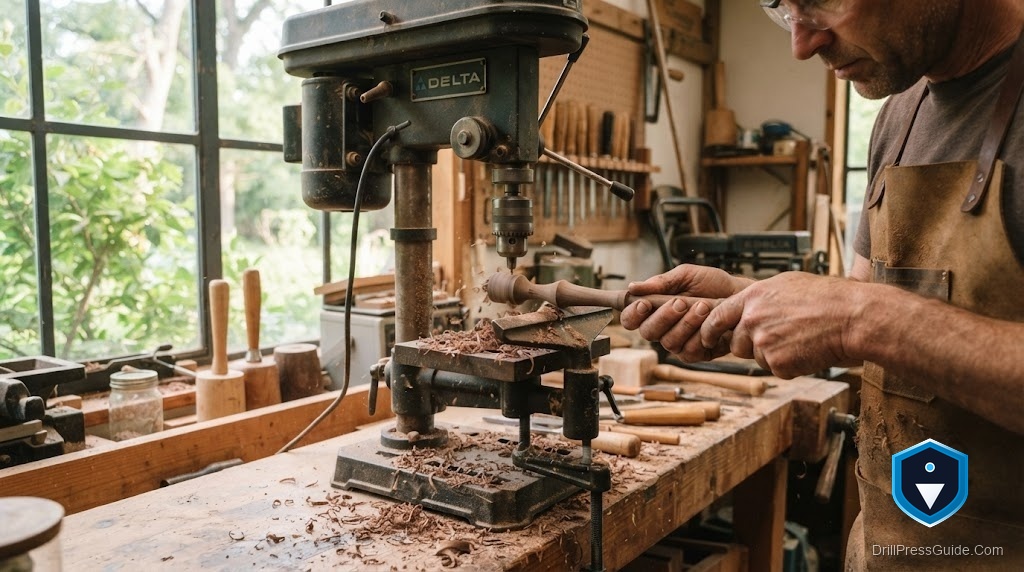
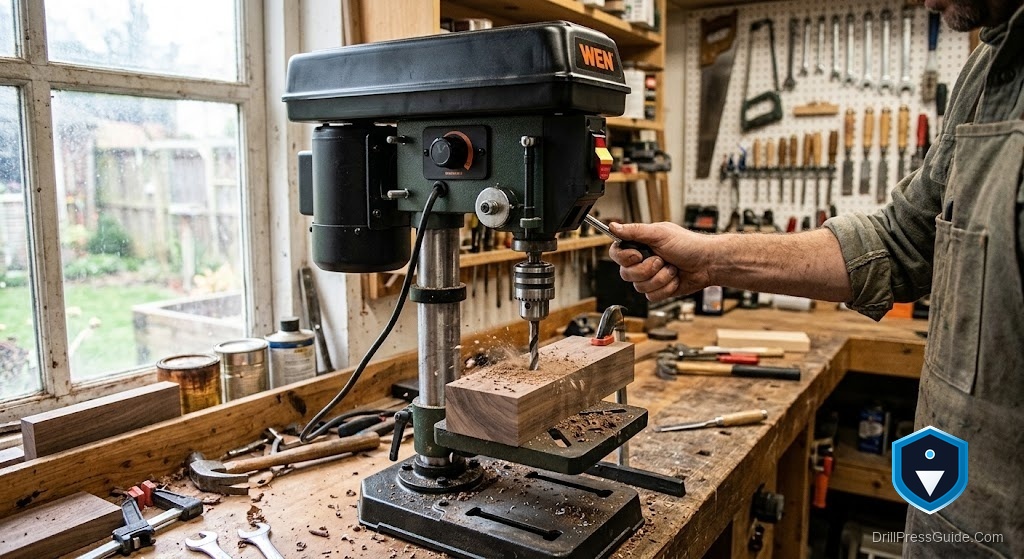
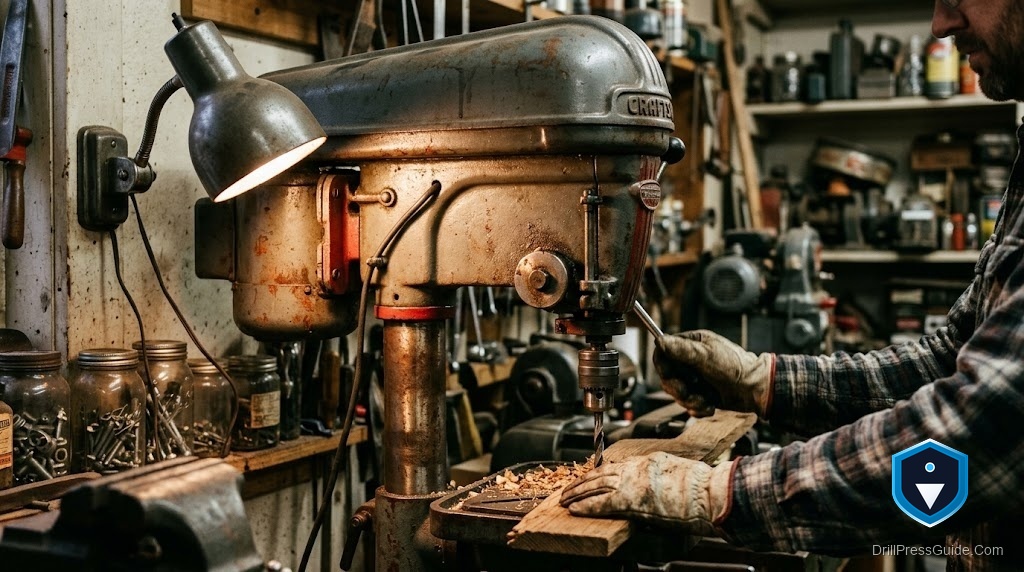
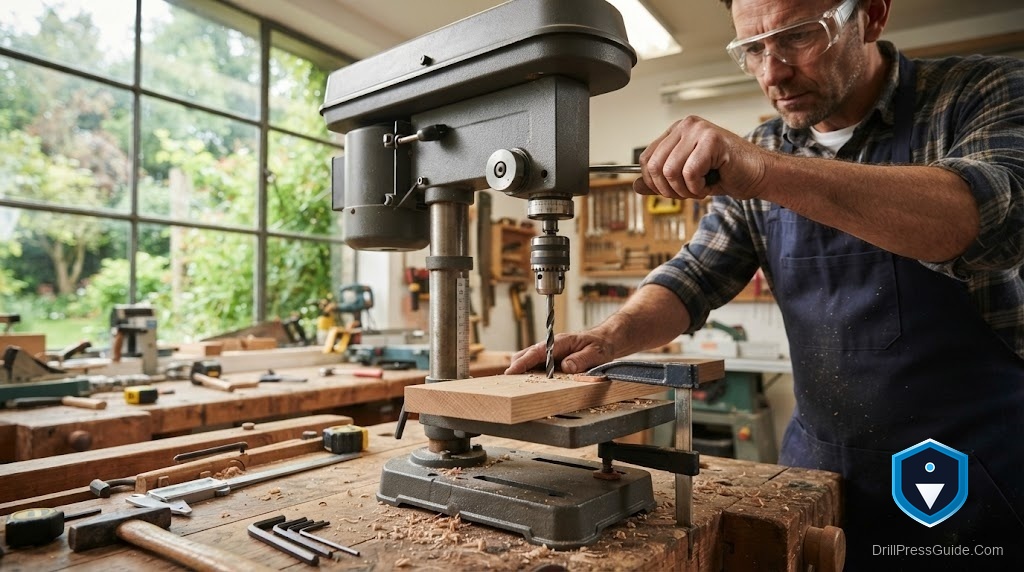
Before you bolt anything together, know this: a drill press spins its work vertically and pushes down, while a wood lathe spins it horizontally and lets you present a tool along its length. That difference is why a drill press makes, at best, a crude vertical wood-turning setup for small, light pieces, and why the results depend entirely on keeping the work small and the tools gentle. It can be done. It just cannot be done the way a real lathe does it.
A drill press wood lathe is an attempt to turn wood using a drill press, spinning a small blank held in the chuck vertically and shaping it with hand tools or abrasives. It suits tiny, light work like pens, small knobs, and finials, not spindle or bowl turning.
The short answer: a drill press can spin a small wood blank for sanding, shaping finials, or light detail with a gouge or file, but it lacks a tailstock, a tool rest, and horizontal support, so keep pieces short and cuts light. For real turning, a wood lathe is the right and safer tool.
Why the orientation matters
A wood lathe holds the blank between a headstock and a tailstock and gives you a tool rest to brace against, so you can present a gouge along the whole length with control. A drill press has none of that. The blank hangs from the chuck with nothing supporting the free end, and there is no rest to steady a tool.
That means long spindle work, where the piece would whip and flex, is out. Only short blanks that stay rigid close to the chuck are realistic, which is why pens, small knobs, and short finials are the honest ceiling for this setup.
What works: small, short, light
The practical version spins a short blank and shapes it with sandpaper, a file, or a light touch of a gouge or chisel braced on a shop-made rest. Pen blanks, drawer knobs, small finials, and tool handles are all doable because they are short and the loads stay tiny. Finishing and sanding a small turned piece is where a press genuinely shines, since it holds the work steady and vertical.
Build a simple rest clamped to the table to brace tools against, and keep the blank short enough that it does not flex. The moment a piece is long enough to whip, it is too long for this method.
What does not work, and why
Bowl turning, long spindles, and heavy roughing cuts are off the table. They put side loads on a spindle built for downward thrust, they flex an unsupported blank dangerously, and they can work the chuck loose from its tapered mount. A blank that comes loose while spinning is a real hazard, not a minor annoyance.
If your projects involve anything beyond small, short pieces, the drill press is the wrong machine. A benchtop wood lathe is inexpensive, safer, and vastly more capable, and it frees the press to do what it does best.
Speed, holding, and safety
Run a moderate speed suited to the blank’s size, slower for larger diameters, and make sure the blank is gripped firmly and running true before you touch a tool to it. Watch the chuck for any loosening. Wear eye protection and, because turning throws chips and dust, a face shield and dust mask are wise. Keep the shop-made rest close to the work so a tool cannot dig in and grab.
Stop immediately if the blank whips, the chuck loosens, or the tool chatters hard. Those are signs the piece is too long or the cut too heavy for a press.
The verdict
A drill press works as a light vertical wood lathe for small, short pieces like pens, knobs, and finials, and it is genuinely good at sanding and finishing them, but it cannot replace a real lathe for spindle or bowl work. The missing tailstock, tool rest, and horizontal support cap it at tiny jobs. Use it for those, build a simple rest, keep blanks short, and buy a wood lathe the moment your projects outgrow a finial. Safety, not stubbornness, sets that line.
Keep these in mind:
- A press turns vertically with no tailstock or rest, so only short, light work is safe.
- Pens, knobs, and finials are realistic; bowls and long spindles are not.
- Build a clamped tool rest and keep blanks short enough not to flex.
- Stop at whip, chatter, or a loosening chuck, and move up to a lathe.
Frequently asked questions
Can you use a drill press as a wood lathe? Only for small, short pieces like pens, knobs, and finials, spun vertically and shaped with light hand tools or abrasives. It cannot do spindle or bowl turning.
Why can’t a drill press do real wood turning? It has no tailstock, tool rest, or horizontal support, and its spindle is built for downward thrust, not the side loads turning creates. Long blanks flex and the chuck can loosen.
What small projects can I turn on a drill press? Pen blanks, drawer knobs, short finials, and tool handles. It is also excellent for sanding and finishing small turned parts.
Is it safe to turn wood on a drill press? Only with short blanks, light cuts, a firm grip, and a shop-made tool rest. Stop if the blank whips or the chuck loosens, and use a lathe for anything larger.
Do I need a tool rest? Yes, a simple rest clamped to the table to brace tools against. Without one, a hand tool can dig in and grab dangerously.
When should I buy a real wood lathe? As soon as you want to turn bowls, long spindles, or anything that flexes. A benchtop lathe is inexpensive, safer, and far more capable.
References
- American Association of Woodturners, safety guidelines: https://www.woodturner.org/
- Occupational Safety and Health Administration, machine guarding: https://www.osha.gov/machine-guarding