Using a Glass Drill Press Without Sacrificing Finish or Accuracy
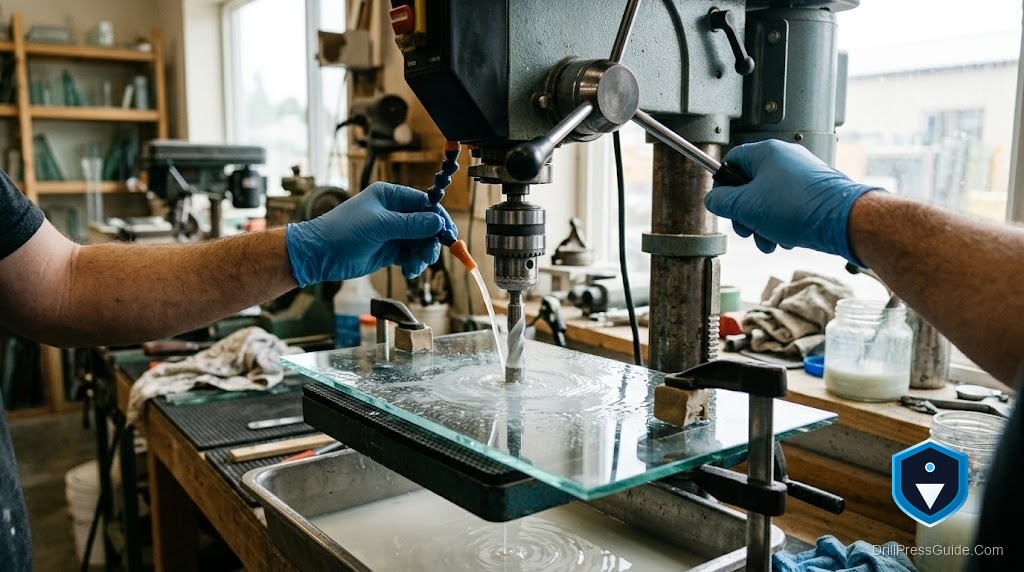
Glass gives you exactly one warning before it cracks, and by then it is too late. The chip usually blooms on the back side, right as the bit breaks through, and it turns a finished piece into scrap in an instant. Drilling glass on a drill press is absolutely doable, and the machine’s steady, square plunge is a real advantage over a shaky hand drill, but glass rewrites the rules: no twist bits, no dry drilling, and no speed.
A glass drill press is an ordinary drill press used to bore glass with diamond-coated bits, run slowly and kept wet, so the abrasive grinds a clean hole instead of cracking the sheet. The press itself is standard; the bits and the water are what make it a glass tool.
The short answer: use a diamond bit, run slow, keep the glass wet the entire time, and ease off pressure at breakthrough. Glass is not cut, it is ground away by diamond grit, and heat is the enemy that cracks it.
Glass needs diamonds, not steel
A standard twist bit cannot cut glass; it will only crack it. Glass drilling uses diamond bits, either solid-tipped points for small holes or hollow diamond core bits that grind a ring for larger ones. A diamond bit set for glass, ceramic, and tile covers the small sizes for craft and bottle work, while a diamond hole saw kit for glass and tile handles larger openings up to a couple of inches.
Core bits cut cooler than solid points because water circulates through the center, so for anything past a small hole, a core bit is the better choice. Solid diamond points are fine for tiny holes in sea glass and pendants, and a 1/8-inch diamond hollow core set splits the difference for jewelry-scale work.
Water is not optional
The single rule that saves glass is keeping the bit wet. Diamond bits must stay wet while drilling, because the water carries away the heat that cracks glass and flushes the ground glass powder out of the cut. Drill dry for even a few seconds and the tip overheats, the diamonds shed, and the glass fractures.
The simplest method is a shallow dam of plumber’s putty around the hole filled with water, or a sponge kept soaked against the glass. Some setups drill with the piece sitting in a tray of water deep enough to cover the surface. However you do it, the cut must never run dry.
Speed, support, and a light touch
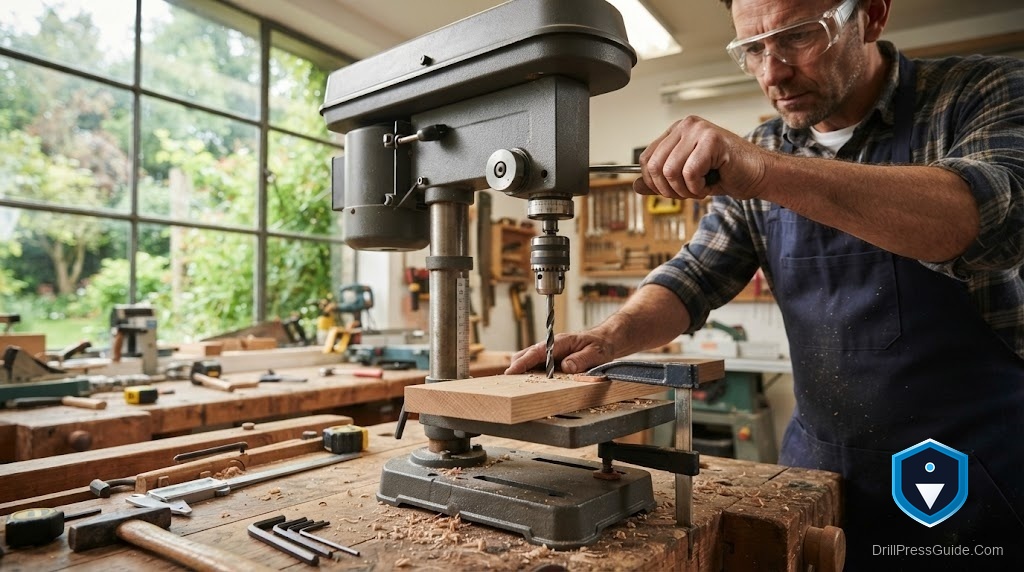
Run the press slow. High RPM builds the heat glass cannot survive, so set a low speed and let the diamonds grind at their own pace. Back the glass with a scrap of wood or a rubber pad so it is fully supported and cannot flex, since flex is what cracks a sheet as much as heat does.
Use light, steady feed pressure, and let the bit do the grinding rather than forcing it. As the bit nears the far side, ease off almost completely; breakthrough is where the back face chips. Drilling halfway from each side, flipping the glass, is the trick that gives a clean exit on both faces.
The verdict
Drilling glass on a drill press is easy once you accept that it is grinding, not cutting. Use diamond bits, keep the cut wet without exception, run slow, support the glass, and lighten your touch at breakthrough. The press’s square, controlled plunge then becomes a genuine advantage over freehand drilling. The one habit to build above all is water, because a dry diamond bit and cracked glass go together every time.
Keep these in mind:
- Only diamond bits drill glass; twist bits crack it.
- Keep the bit wet the whole time; heat is what cracks glass.
- Run slow and support the glass so it cannot flex.
- Ease off at breakthrough, or drill halfway from each side, for a clean exit.
Frequently asked questions
Can you drill glass with a drill press? Yes. A drill press drills glass well with diamond bits, a slow speed, and constant water. Its steady plunge is an advantage over a handheld drill.
What bit do I need to drill glass? A diamond bit, either a solid diamond point for small holes or a hollow diamond core bit for larger ones. Standard twist bits will only crack the glass.
What speed should I drill glass at? Slow. High speed builds heat that cracks glass, so use a low RPM and let the diamond grit grind at its own pace.
Why does my glass keep cracking when I drill it? Usually heat from drilling dry or too fast, or flex from unsupported glass. Keep the bit wet, slow down, and back the glass with a firm support.
Do I really need to keep the bit wet? Yes. Water carries away heat and flushes glass powder from the cut. A dry diamond bit overheats, sheds its diamonds, and cracks the glass.
How do I stop the back from chipping? Ease off pressure as the bit nears the far side, or drill halfway through, flip the glass, and finish from the other side for a clean exit.
References
- Corning Museum of Glass, working and drilling glass safety guidance: https://www.cmog.org/
- Bullseye Glass Co., tips for drilling holes in glass: https://www.bullseyeglass.com/