Used Bowling Ball Drill Press: Speed, Tooling, and Workholding Choices
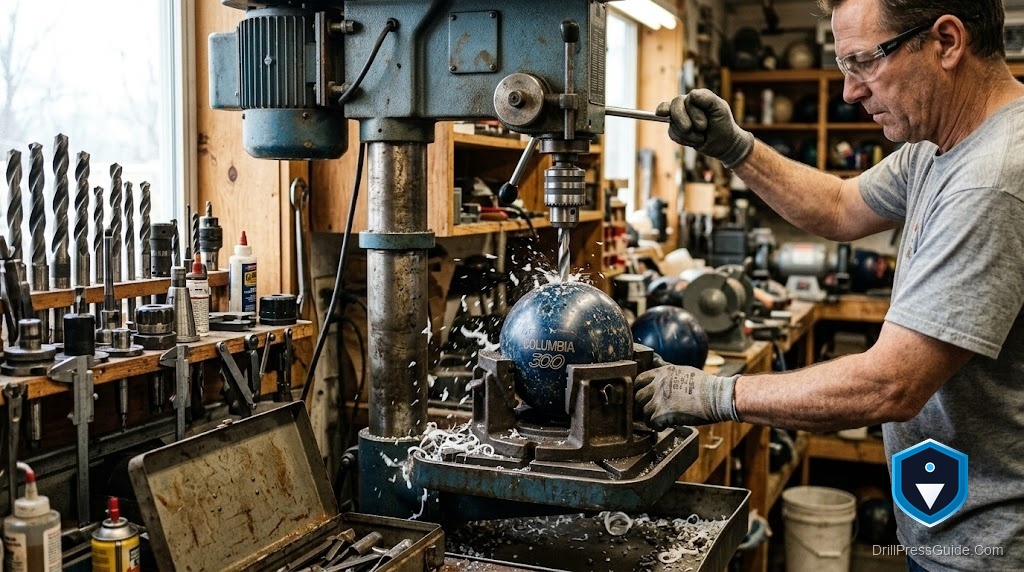
A used bowling ball drilling setup can be a shrewd buy or an expensive headache, and the deciding factor is rarely the price tag. It is whether the jig is complete and the press underneath is still rigid and true. I have watched shops score a decades-old Jayhawk jig that still drills perfectly, and I have watched others inherit a wobbly press with a worn spindle that no amount of jig can fix. Knowing what to inspect is the whole game.
A used bowling ball drill press is a pre-owned drilling station, typically a rigid drill press paired with a bowling-specific jig from a maker like Jayhawk or Innovative, bought secondhand from a closing shop or an upgrading operator. The value lives in the jig’s completeness and the press’s condition.
The short answer: buy the jig for its brand and completeness, buy the press for its rigidity and spindle travel, and check both before money changes hands. A complete Jayhawk Pro Jig on a solid press is worth far more than a bare press with a mystery jig.
What you are actually buying
Remember that the press and the jig are two separate things. The press is a standard machine the jig maker retrofitted; the jig is the bowling-specific part. On the used market you might find the two together, or a jig alone looking for a host press. Price and inspect each on its own merits.
Brand matters here because parts and support outlive the sale. Jayhawk and Innovative jigs have long track records and available parts, so a used one can be brought back to spec. An unbranded or shop-built jig may work but leaves you on your own for spares.
Inspect the press first
Start with spindle travel, since bowling holes are deep and a press needs around five inches to drill a thumb hole in one plunge. Then check the spindle for play: with the machine off, grab the chuck and try to rock it. Noticeable side-to-side movement means worn bearings, which drill oval holes no jig can correct.
Run it and listen. A smooth press hums; a tired one rattles or vibrates. Check that the table is flat and trams square to the spindle, and that the quill returns smoothly. A press failing these basics is a project, not a bargain, whatever the sticker says.
Inspect the jig and its tooling
A jig’s value is in being complete. Confirm the clamp ring or vacuum seal holds a ball dead still, since that is both the accuracy and the safety feature. Check that the pitch gauges or digital display read correctly and that the adjustment screws move without slop.
Tooling is the quiet cost. A used set of carbide bits may be dull or incomplete, and dull bits tear the coverstock and change the fit. Budget for fresh bits, a plug-trimming blade, and any missing carousel or adapter. A cheap jig that needs a full tooling refresh may cost more than a dearer complete one.
Speed and use once it is home
Set the press to a slow cutting speed, around 450 to 500 RPM, because heat from a fast bit dulls tooling and can mar the ball. Keep the bits sharp, clamp every ball with the jig, and never freehand a ball against the bit. If the used press has a stepped-pulley belt drive, learn its slow settings before the first ball, since running too fast is the most common secondhand mistake.
The verdict
A used bowling ball drill press rewards the buyer who inspects, not the one who chases the lowest price. Check the press for spindle play, travel, and rigidity; check the jig for completeness and a firm clamp; and plan to refresh the bits. A complete, respected-brand jig on a sound press is a genuine value, while a bare or worn setup is a money pit dressed as a deal. Walk away from spindle play, always.
Worth remembering:
- Price and inspect the press and the jig as two separate purchases.
- Spindle play means worn bearings and oval holes; it is a deal-breaker.
- Confirm about five inches of spindle travel for full-depth holes.
- Budget for fresh carbide bits; dull tooling ruins the fit.
Frequently asked questions
Is a used bowling ball drill press worth buying? Yes, if the jig is complete and a respected brand and the press is rigid with no spindle play. A worn press or an incomplete jig usually is not.
How do I check a used drill press for a bowling jig? Test for spindle play by rocking the chuck with the power off, confirm about five inches of travel, and make sure it runs smoothly and the table trams square.
What brands should I look for used? Jayhawk and Innovative have long histories and available parts, so a used jig from either can be restored to spec more easily than an unbranded one.
Why does spindle travel matter so much? Finger and thumb holes are deep. Without around five inches of travel, the bit cannot reach full depth in one plunge while the ball stays clamped.
Do used bits need replacing? Often yes. Dull carbide bits tear the coverstock and change the hole fit, so budget for fresh tooling when you buy a used setup.
What speed should I run a used ball press at? Around 450 to 500 RPM. Faster speeds build heat that dulls bits and can damage the ball surface.
References
- Jayhawk Bowling Supply, Pro Shop Drilling Equipment: https://www.jayhawkbowling.com/Products/Drilling_Equipment.html
- Innovative Bowling Products, official product catalog: https://innovativebowling.com/