
Using a Drill Press for Metal and Wood Without Sacrificing Finish or Accuracy
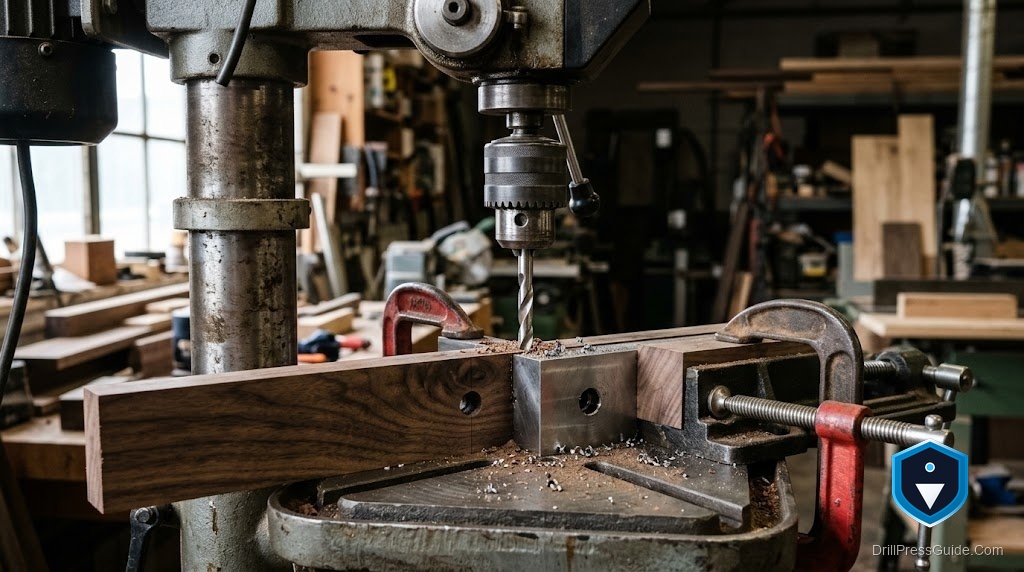
Most home shops do not have room for one machine per material, so a single drill press has to handle both metal and wood. The good news is that one machine does both well, as long as you understand that the two materials want almost opposite settings. The friction people feel comes from leaving the machine set for one material and reaching for the other without changing anything.
Quick answer: a drill press does metal and wood cleanly if it has a wide speed range and you actually change the speed between materials. Metal wants slow speeds and cutting fluid; wood wants faster speeds and no fluid. The machine is capable; the habit of resetting is what protects your results.
Speed is where the two materials diverge
Wood tolerates and often wants high speeds. Metal needs low speeds that drop fast as bits grow. A half-inch bit that runs happily at 1900 RPM in wood will cook in steel at anything above about 750 RPM. This single difference causes most of the trouble people have with a dual-purpose press. The machine handles both; you just cannot leave it on one setting and switch materials.
Choose a machine with real range
Because the two materials sit at opposite ends of the speed scale, the key feature for a dual-purpose press is a wide speed range that reaches genuinely low. A variable-speed machine makes switching trivial. A machine like the TREEYX 12-speed benchtop drill press offers a broad spread of speeds, so you can drop low for steel and climb high for wood without a machine that only does one well. Range is what makes a single press genuinely dual-purpose.
Fluid for metal, dry for wood
Metal needs cutting fluid to cool the edge and flush chips. Wood needs none, and oil on wood just stains it and gums the bit with dust. So the rule is simple: fluid on metal, nothing on wood. Keep a small bottle of cutting oil by the machine for metal jobs and wipe the table before switching back to wood so you do not mark the next workpiece.
Bits are not always interchangeable
Brad-point and Forstner bits are made for wood and will not cut metal. Metal bits will drill wood but leave a rougher hole than a brad-point. For a dual-purpose shop, keep a set of metal bits and a set of wood bits rather than trying to make one do both. Using a wood bit on metal ruins the bit; using a metal bit on wood just gives a less clean hole.
Workholding for both
Both materials grab at breakthrough and both need clamping, but the fixtures differ. Metal holds well in a drill press vise. Wood often registers better against a fence on an auxiliary wood table with a backer board to stop tear-out. Keep both setups handy, and swap them with the speed change. Clamping is the one habit that carries across both materials without exception.
The verdict
One press covers metal and wood if you treat the switch as a small routine:
- Change the speed every time you change material, low for metal and high for wood.
- Use cutting fluid on metal and keep wood dry.
- Keep separate metal and wood bits and swap the right workholding.
Who struggles with a dual-purpose press? People who leave it set for the last job. Build the habit of resetting speed, fluid, bit, and clamp, and one machine serves both materials cleanly.
Frequently asked questions
Can one drill press really do both metal and wood? Yes. The machine is the same; the settings are not. With a wide speed range and the habit of resetting, one press covers both.
What speed setting is the biggest risk? Leaving it on the fast wood speed and drilling metal. Metal cooks at wood speeds, so always slow down before drilling steel.
Do I need separate bits? Yes for best results. Wood bits like brad-points will not cut metal, and metal bits leave rougher holes in wood. Keep both sets.
Should I use cutting fluid on wood? No. Fluid stains wood and gums the bit with dust. Save it for metal, and wipe the table before switching back.
What machine feature matters most for both? A wide, low-reaching speed range, ideally variable, so you can serve wood’s high speeds and metal’s low speeds on one press.
How do I avoid marking wood after a metal job? Wipe the table and vise clean of oil and chips before clamping wood. A film of cutting oil will stain the next wooden workpiece.
References
- Dynabrade HSS Drill Speed Recommendation Chart: https://www.dynabrade.com/pdf/lit/D1201_Singles/D12.01_pg134.pdf
- OSHA Woodworking eTool, Drill Press: https://www.osha.gov/etools/woodworking/production/machines-tools/drill-press
- WEN Drill Press FAQs: https://wenproducts.com/pages/drill-press-faqs


