
Drill Press Aluminum: The Setup Details That Change the Result
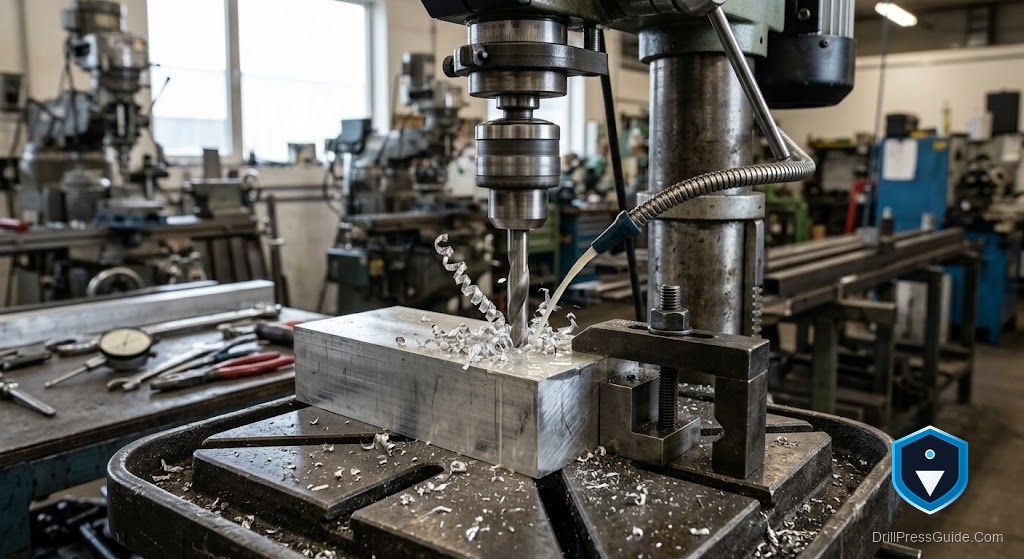
Aluminum looks like the easy metal. It is soft, it cuts fast, and a sharp bit sails through it. That reputation is exactly why it trips people up. Aluminum is gummy, it grabs bits, and it welds itself to a cutting edge if you get the setup wrong. The difference between a torn, chattering hole and a clean one is a handful of details that have nothing to do with how hard you push.
Quick answer: run aluminum fast, keep the bit sharp, clear the stringy chips often, and use a little lubricant to stop the metal from sticking to the edge. Aluminum does not need the slow speeds steel does, but it punishes a dull or clogged bit more than most people expect.
Run it fast, but not blind
Aluminum tolerates high spindle speeds because it is soft and does not build heat the way steel does. As starting points for sharp high-speed steel bits: around 3000 RPM at 1/8 and 1/4 inch, near 2500 at 3/8, about 1900 at 1/2, and around 1250 at 3/4. The speeds stay high across the range compared with steel. The risk at high speed is not burning the bit; it is the bit grabbing as it breaks through, so speed and workholding go together here.
The gummy-chip problem
Aluminum produces long, stringy chips that wrap around the bit and pack the flutes. Packed flutes stop cutting, build heat, and let the metal weld to the edge, which then tears the hole. The fixes are simple: peck the hole by retracting often to break and clear the chips, and keep the bit sharp so it shears cleanly. A sharp bit set matters here; a general-purpose option like this high-speed steel twist bit set covers the common sizes with the split points that start cleanly in soft metal.
A little lubricant goes a long way
Aluminum has a habit of sticking to the cutting edge, a problem called built-up edge. A light lubricant stops it. You do not need heavy dark cutting oil like steel wants; a bit of general lubricant, even a wax-based one, keeps the chips from welding to the bit and leaves a cleaner hole. Dry drilling aluminum is where most of the tearing and squealing comes from.
Clamp it, because it grabs
Soft as it is, aluminum grabs hard at breakthrough, and a thin sheet or bracket will spin up the bit and slice your hand. Clamp the work to the table or hold it in a vise. Thin aluminum sheet also wants a backer board underneath so the bit does not snatch and distort the metal as it exits. The high speeds that make aluminum easy also make an unclamped part more dangerous, not less.
Sharp bit, clean start
A center punch still helps aluminum, since a smooth surface lets even a good bit skate. Punch the mark, start at your chosen speed, and let the bit pull itself in with steady feed. If the hole chatters or the edges tear, the usual culprits are a dull bit, packed flutes, or no lubricant, in that order. Fix those before changing speed.
The verdict
Aluminum rewards a setup that respects its gummy nature:
- Run high speeds, but pair them with a solid clamp because the bit grabs at breakthrough.
- Peck to clear stringy chips and keep the flutes open.
- Use a light lubricant and a sharp bit to stop the metal welding to the edge.
Who gets in trouble? People who treat aluminum as effortless, drill it dry with a dull bit, and then fight torn, chattering holes. A little lubricant and chip clearing solves most of it.
Frequently asked questions
Why does aluminum grab the bit so hard? It is soft and gummy, so the bit can bite deep and self-feed at breakthrough. Steady feed, a clamp, and a slightly less aggressive point angle tame it.
Do I need cutting oil for aluminum? Not the heavy oil steel uses, but a light lubricant helps a lot by stopping the metal from welding to the edge and leaving a cleaner hole.
Why are my aluminum holes tearing? Usually built-up edge from no lubricant, or packed flutes from not clearing chips. Add lubricant, peck to clear, and use a sharp bit.
Can I run aluminum as fast as the chart says? Yes, aluminum likes high speed. The limit is chip clearing and workholding, not heat, so keep the flutes clear and the part clamped.
What bit works best for aluminum? Sharp high-speed steel with a split point starts clean and cuts well. Very sharp bits sometimes grab; a slightly dulled or split-point tip feeds more smoothly.
How do I stop thin sheet from distorting? Back it with a scrap board, clamp firmly, and let the bit exit into the backer so it cannot snatch and bend the sheet.
References
- Dynabrade HSS Drill Speed Recommendation Chart: https://www.dynabrade.com/pdf/lit/D1201_Singles/D12.01_pg134.pdf
- CCOHS, Metalworking Machines - Drill Presses: https://www.ccohs.ca/oshanswers/safety_haz/metalworking/drillpresses.html
- Delta 17-900 Instruction Manual: https://powertool.manualsonline.com/manuals/mfg/delta/17900.html


