Drill Press for Stainless Steel: The Setup Details That Change the Result
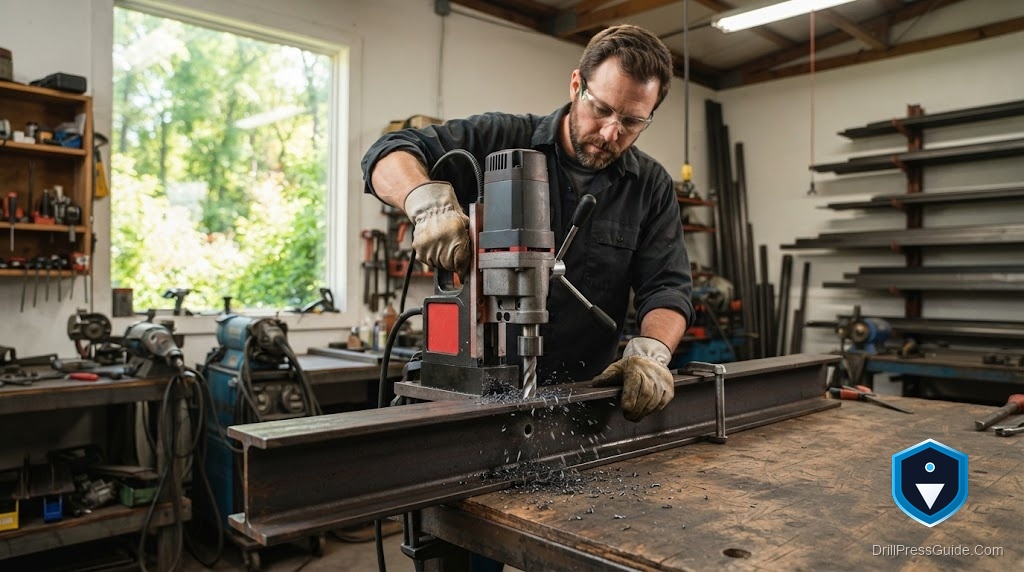
Stainless steel breaks more bits than any other common material, and almost always for the same reason: too much speed. Stainless work-hardens the instant a bit rubs instead of cutting, and once the surface glazes, an ordinary bit spins uselessly and cooks itself. A drill press is the right machine because it holds the low, steady speed stainless needs, but only if you set it up for the metal. Here are the setup details, speed, bit, feed, and fluid, that separate a clean hole in stainless from a ruined bit.
Drilling stainless steel on a drill press works when you run a very slow speed, use a sharp cobalt bit, clamp the work solidly, apply cutting fluid, and feed firmly and continuously so the bit always cuts and never rubs. Stainless work-hardens when it is rubbed, so slow speed plus constant feed is the whole secret. Never let a bit spin without cutting.
Speed: the number one factor
Stainless runs at roughly half the speed of mild steel, or less. The goal is a low surface speed so the edge shears metal instead of glazing it. Practical drill press starting points for stainless:
| Bit diameter | Stainless RPM |
|---|---|
| 1/8 in | 1200 |
| 1/4 in | 600 |
| 3/8 in | 400 |
| 1/2 in | 300 |
| 3/4 in | 200 |
These sit well below the mild-steel figures in the Dynabrade chart. Set the slowest belt position your press allows, most benchtop presses are only just slow enough for larger holes in stainless.
Cobalt bits and cutting fluid
Stainless demands the right consumables. Use cobalt bits, which keep their hardness and edge at the heat stainless generates, ordinary high-speed steel dulls quickly. And use cutting fluid generously: it cools the edge, reduces the heat that causes work-hardening, and clears chips. A dark cutting oil made for steel does this well, applied at the start and reapplied as the hole deepens. Keep the bit sharp, because the moment a dull bit rubs, stainless hardens and the job gets much harder.
Feed, clamping, and the golden rule
The golden rule with stainless is: always be cutting. Feed firmly and continuously so the bit takes a real bite and makes chips, if you let it spin without advancing, it glazes and hardens the surface. Clamp the workpiece solidly in a vise or to the table, since stainless generates high torque and a spinning part is dangerous, as CCOHS and OSHA stress, and wear eye protection against hot chips. If a spot hardens anyway, stop, because drilling a work-hardened patch just destroys the bit; reposition or grind through it slowly with a fresh cobalt edge. The Delta manual echoes the slow-speed, firm-feed approach for metals.
The verdict
A drill press handles stainless steel when the setup fits the metal: very slow speed, a sharp cobalt bit, solid clamping, generous cutting fluid, and a firm continuous feed that keeps the bit cutting. Three takeaways: too much speed is the number one cause of failure, cobalt bits and cutting fluid are not optional in stainless, and the golden rule is always be cutting, never let the bit rub. Who should be most careful? Anyone drilling larger holes in stainless, where reaching a slow enough speed and keeping constant feed is hardest.
Frequently asked questions
What speed should a drill press run for stainless steel? Very slow, roughly half the mild-steel figure or less: about 1200 RPM for a 1/8 inch bit, 600 at 1/4 inch, 300 at 1/2 inch, and 200 at 3/4 inch. Use the slowest belt position your press offers for larger holes.
Why does stainless steel dull my drill bits so fast? Stainless work-hardens when a bit rubs instead of cutting, usually from too high a speed or too light a feed. Once the surface glazes, the bit overheats and dulls quickly. Slow down, feed firmly, and use cobalt bits with cutting fluid.
What bit should I use for stainless steel? Cobalt bits. They keep their hardness and edge at the heat stainless produces, where ordinary high-speed steel bits dull fast. Keep them sharp, and use cutting fluid to reduce the heat that causes work-hardening.
Do I have to use cutting fluid on stainless? Effectively yes. Cutting fluid cools the edge, cuts the heat that hardens stainless, and clears chips, so it makes the difference between a clean hole and a ruined bit. Apply it at the start and reapply as you drill.
What is the golden rule for drilling stainless? Always be cutting. Feed firmly and continuously so the bit takes a real bite and makes chips. If you let the bit spin without advancing, it glazes and work-hardens the surface, which quickly destroys the edge.
What do I do if the stainless work-hardens? Stop drilling that spot, since a hardened patch will just wreck the bit. Reposition if you can, or work through the hardened area very slowly with a sharp cobalt bit and plenty of cutting fluid, keeping firm, continuous feed.
Can a benchtop drill press drill stainless steel? Small to medium holes, yes, if it reaches a low enough speed and you use cobalt bits, cutting fluid, and firm feed. Larger holes in stainless push many benchtop presses to their slowest speed, so plan around that limit.
References
- Dynabrade, HSS Drill Speed Recommendation Chart. https://www.dynabrade.com/pdf/lit/D1201_Singles/D12.01_pg134.pdf
- Delta 17-900 Drill Press Instruction Manual. https://powertool.manualsonline.com/manuals/mfg/delta/17900.html
- CCOHS, Metalworking Machines: Drill Presses. https://www.ccohs.ca/oshanswers/safety_haz/metalworking/drillpresses.html
- OSHA, Woodworking eTool: Drill Press. https://www.osha.gov/etools/woodworking/production/machines-tools/drill-press