Wood Drill Press: Speed, Tooling, and Workholding Choices
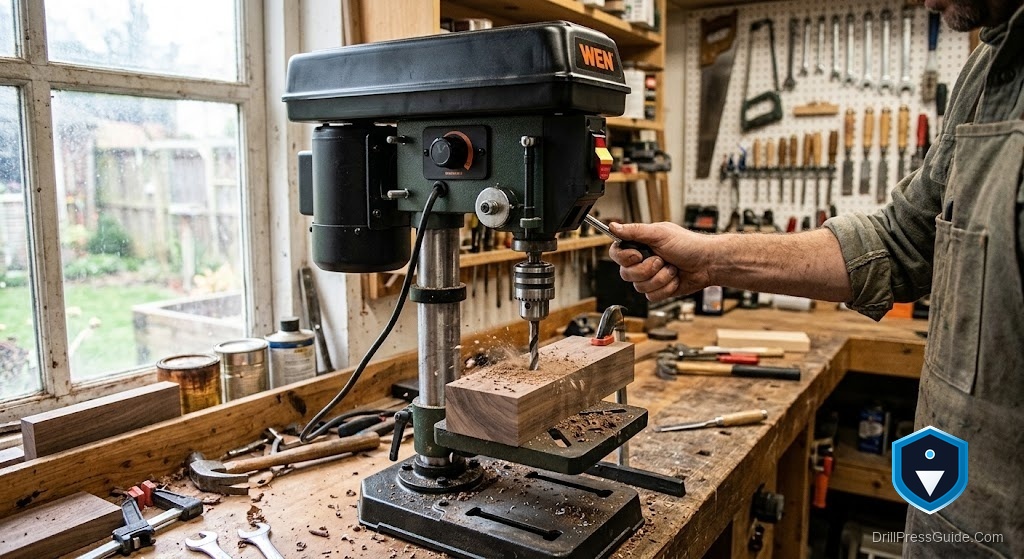
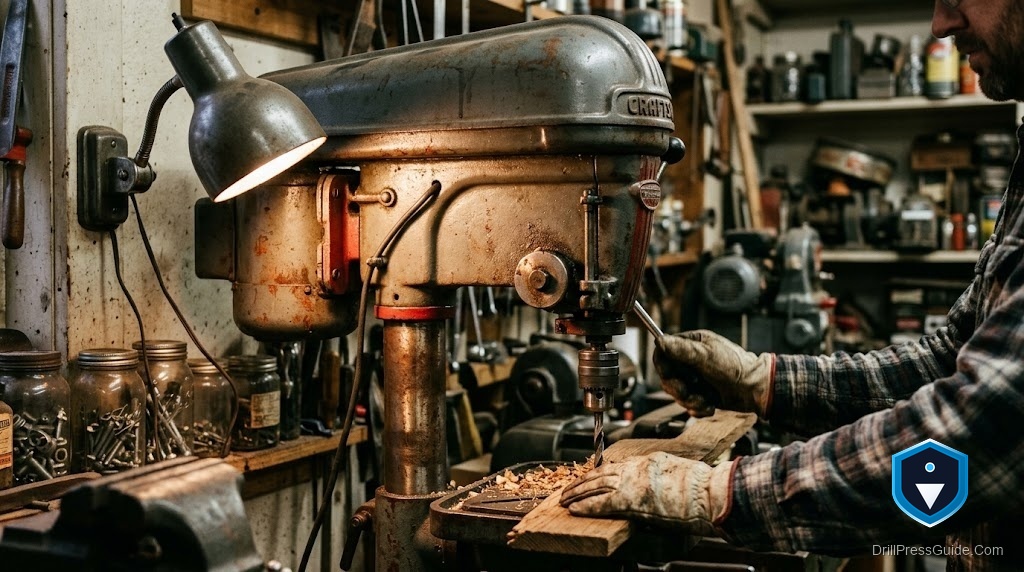
Wood is forgiving compared to metal, which is exactly why a drill press for wood is easy to use badly. It will drill almost anything at almost any speed, so people rarely stop to match the speed to the bit or think about tear-out until a hole blows out the back of a nice board. Getting clean, professional results in wood is not hard, but it does come down to three choices: the speed, the tooling, and how you hold and back up the work. Here is how to make all three well.
A wood drill press gives the cleanest holes when you match speed to the bit (faster for small bits, slower for large Forstner bits and hole saws), choose brad-point or Forstner bits for clean-walled holes, back the workpiece with a sacrificial board to stop tear-out, and hold the piece to a fence or clamp. Wood is forgiving, so tooling and backing matter more than power.
Speed for wood tooling
Wood tolerates a wide range, but large bits still need to slow down to avoid burning and grabbing:
| Tooling | Speed | Notes |
|---|---|---|
| Twist and brad-point, small | 1800 to 3000 RPM | Fast is fine |
| Brad-point, 1/2 in and up | 1500 to 1800 RPM | Ease down as diameter grows |
| Forstner up to 1 in | 1800 to 2000 RPM | Clear chips often |
| Forstner 1 to 2 in | 700 to 1200 RPM | Slower stops burning |
| Spade bit | 1500 to 2000 RPM | Rougher finish |
| Hole saw | 300 to 700 RPM | Slowest for large diameters |
These follow the same diameter logic as the Dynabrade chart: bigger tooling, slower speed.
Tooling that leaves clean holes
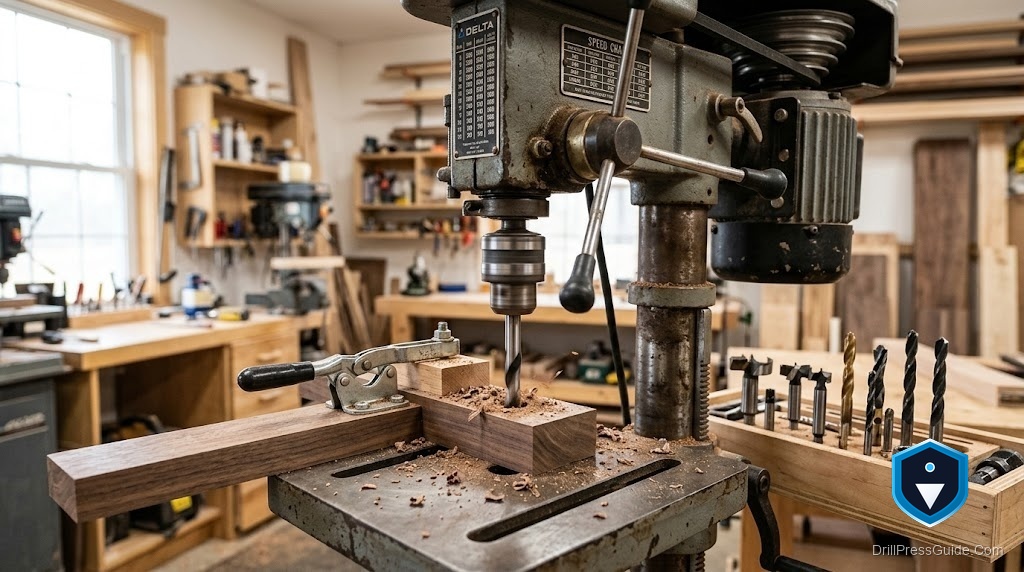
Bit choice decides the finish. Brad-point bits have a center spur that locates the hole and scores the rim for clean edges. Forstner bits give flat-bottomed, smooth-walled holes for hinges, inlays, and stopped holes. A set such as this Forstner bit set covers the common hardware sizes. Spade and hole-saw bits handle large rough openings. Twist bits work but wander without a spur, so for visible woodworking, reach for brad-point and Forstner first.
Workholding and tear-out
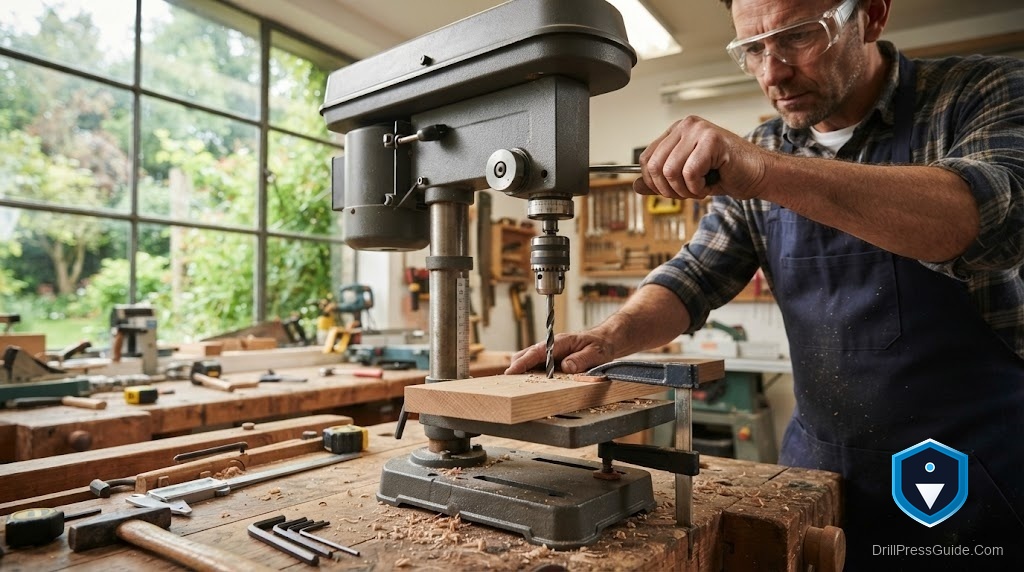
The finish on the far side of the board depends on backing. Put a sacrificial board directly beneath the workpiece so the bit exits into wood, not air, and the underside stays clean. Hold the piece against a fence for repeatable placement, and clamp anything small so it cannot spin, both for accuracy and safety, the constant reminder from OSHA and CCOHS, with fuller setup detail at Pro Tool Reviews. For large Forstner bits, retract often to clear chips and prevent scorching.
The verdict
A wood drill press produces clean, repeatable holes when the speed suits the bit, the tooling suits the hole, and the work is backed and held. Three takeaways: slow large bits down to stop burning and grabbing, choose brad-point and Forstner bits for clean-walled holes, and a sacrificial backer plus a fence are what make the results look professional. Who benefits most? Anyone drilling visible holes for joinery or hardware, where tear-out and wander show. Who can relax? Rough construction drilling, where wood’s forgiveness carries you.
Frequently asked questions
What speed should a drill press run for wood? Small twist and brad-point bits run 1800 to 3000 RPM, larger bits around 1500 to 1800, big Forstner bits 700 to 1200, and hole saws 300 to 700 RPM. Slow the speed as the bit diameter grows to avoid burning.
What bits are best for a wood drill press? Brad-point bits for clean, accurately located holes, Forstner bits for flat-bottomed and hardware holes, and spade or hole-saw bits for large rough openings. Twist bits work but wander more without a center spur.
How do I prevent tear-out on the back of the board? Place a sacrificial backer board directly beneath the workpiece so the bit exits into wood instead of open air. Brad-point and Forstner bits and a slower feed as the bit breaks through also reduce blowout.
Why is my drill press burning the wood? Most often the speed is too high for the bit, particularly with large Forstner bits, or chips are not clearing. Slow the speed, keep the bit sharp, and retract the bit frequently to clear chips and let the hole cool.
Do I need to clamp wood on a drill press? Small pieces, yes, so they cannot spin if the bit grabs. Larger boards can often be held firmly against a fence, but clamping adds accuracy and safety, especially with large bits and hole saws that generate more torque.
What is the best bit for flat-bottomed holes in wood? A Forstner bit. Its flat cutting face leaves a smooth, flat-bottomed hole with clean walls, ideal for hinge cups, inlays, and stopped holes. Run it slower as the diameter grows and clear chips often.
Can a wood drill press also drill metal? Yes, if it reaches low enough speeds. Metal needs far slower speeds than wood plus a sharp HSS or cobalt bit and cutting fluid on steel, so a press with a wide speed range covers both.
References
- Dynabrade, HSS Drill Speed Recommendation Chart. https://www.dynabrade.com/pdf/lit/D1201_Singles/D12.01_pg134.pdf
- Pro Tool Reviews, How to Use and Set Up a Drill Press. https://www.protoolreviews.com/how-to-use-drill-press/
- OSHA, Woodworking eTool: Drill Press. https://www.osha.gov/etools/woodworking/production/machines-tools/drill-press
- CCOHS, Metalworking Machines: Drill Presses. https://www.ccohs.ca/oshanswers/safety_haz/metalworking/drillpresses.html