
Drill Press Steel: Match the Bit, Speed, and Support to the Job
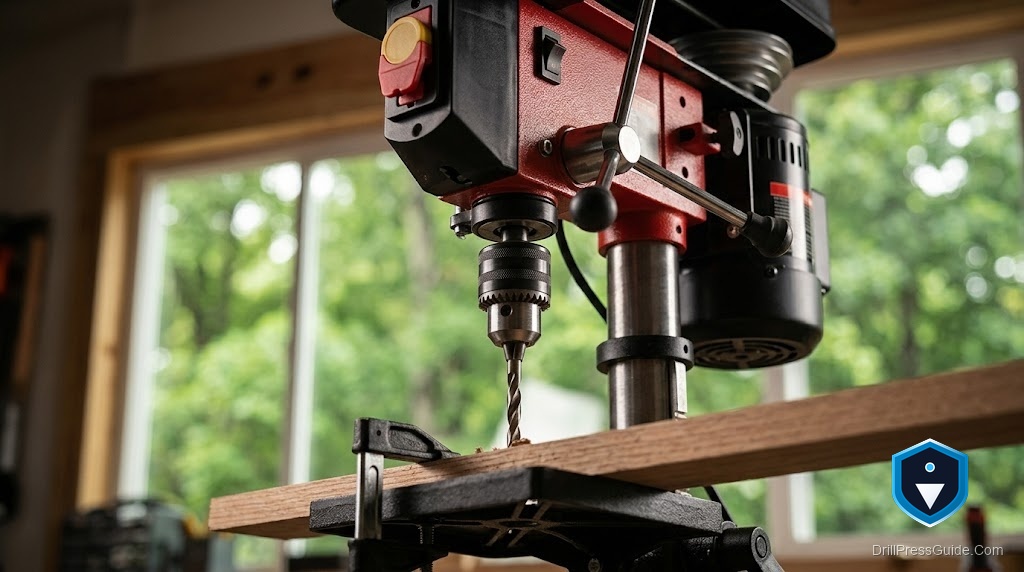
Steel punishes shortcuts. Run the bit too fast, skip the clamp, or push a dull edge, and you get a smoking bit, a torn hole, or a workpiece spinning off the table. The drill press is the right machine for steel because it holds the bit square and drops to the low speeds steel demands, but the result still depends on three choices you make every time: the bit, the speed, and how the steel is supported. Here is how to match all three, whether you are drilling plate, tube, or sheet.
To drill steel on a drill press, use a sharp high-speed steel or cobalt bit, run a slow speed that drops as the bit diameter grows, clamp the steel firmly so it cannot spin, add cutting fluid to cool the edge, and feed hard enough to make chips rather than dust. For thin steel and tube, a step bit often cuts cleaner than a twist bit.
Speed: slower than you think
The most common steel-drilling mistake is running too fast. Steel needs low surface speed, and that speed translates to lower RPM as the bit gets bigger. Starting points on a drill press for mild steel:
| Bit diameter | Mild steel RPM |
|---|---|
| 1/8 in | 3000 |
| 1/4 in | 1500 |
| 3/8 in | 1000 |
| 1/2 in | 750 |
| 5/8 in | 600 |
| 3/4 in | 500 |
| 1 in | 350 |
Harder steel and stainless run slower still, often half these figures, which follows the surface-speed logic of the Dynabrade chart. Set the speed by moving the belt on the stepped pulleys.
Bits for different steel jobs
The bit depends on the steel and its thickness. High-speed steel handles mild steel plate; cobalt holds up in hard and stainless steel. For thin steel and tube, a twist bit tends to grab and tear as it breaks through, so a step bit is often the better tool, it cuts progressively and leaves a cleaner hole. A titanium step drill bit set covers a range of hole sizes in sheet and tube. Whatever you use, keep it sharp; a dull bit in steel rubs, heats, and work-hardens the metal.
Support the steel and cool the cut
Steel generates real torque, so support is not optional. Clamp plate to the table or hold it in a vise; for tube, use a V-block or vise so the round or square section cannot roll or spin. As the Delta drill press manual and safety references from OSHA and CCOHS note, a spinning steel part is a serious hazard. Add cutting fluid to cool the edge and clear chips, feed steadily to make continuous chips, and ease off as the bit exits, especially on tube where it can grab through the far wall.
The verdict
Drilling steel on a drill press works when the bit, speed, and support all match the job: a sharp HSS or cobalt bit, a slow speed that drops with diameter, firm clamping, cutting fluid, and a steady chip-making feed. Three takeaways: steel needs far lower speeds than most people run, cobalt bits and step bits solve the hardest cases (hard steel and thin tube), and support plus cutting fluid protect both the hole and the bit. Who should be most careful? Anyone drilling tube or stainless, where grabbing and heat cause the most trouble.
Frequently asked questions
What speed should a drill press run for steel? Start around 3000 RPM for a small 1/8 inch bit and drop as the bit grows: roughly 1500 at 1/4 inch, 750 at 1/2 inch, and 350 at 1 inch in mild steel. Hard and stainless steel run about half those figures.
What bit is best for drilling steel on a drill press? High-speed steel bits handle mild steel; cobalt bits hold their edge in hard and stainless steel. For thin steel and tube, a step bit cuts cleaner and grabs less than a twist bit as it breaks through.
How do I drill steel tube without it grabbing? Hold the tube in a V-block or vise so it cannot roll or spin, run a slow speed, and ease off the feed as the bit reaches the far wall, where twist bits tend to grab. A step bit reduces grabbing on tube and sheet.
Do I need cutting fluid for steel? Yes. Cutting fluid cools the cutting edge, clears chips, and greatly extends bit life in steel, and it is especially important in stainless. Apply a few drops as you drill and reapply if the hole heats up.
Why does my bit stop cutting in steel? Usually it has overheated and dulled from too high a speed or too little feed, which lets it rub and work-harden the steel. Slow the speed, use a sharp bit, add cutting fluid, and feed hard enough to make chips.
How thick a steel plate can a drill press handle? That depends on the machine’s power, lowest speed, and rigidity more than any single rating. Slow speeds, sharp cobalt bits, cutting fluid, and pecking to clear chips let a capable press work through fairly thick plate.
Can I drill hardened steel on a drill press? Fully hardened steel resists standard bits. Cobalt helps with hard steel, but truly hardened material may need carbide or annealing first. Run very slow, use cutting fluid, and expect slow progress.
References
- Dynabrade, HSS Drill Speed Recommendation Chart. https://www.dynabrade.com/pdf/lit/D1201_Singles/D12.01_pg134.pdf
- Delta 17-900 Drill Press Instruction Manual. https://powertool.manualsonline.com/manuals/mfg/delta/17900.html
- OSHA, Woodworking eTool: Drill Press. https://www.osha.gov/etools/woodworking/production/machines-tools/drill-press
- CCOHS, Metalworking Machines: Drill Presses. https://www.ccohs.ca/oshanswers/safety_haz/metalworking/drillpresses.html


