The Mark 1 Drill Press: How to Identify One and Buy It Well
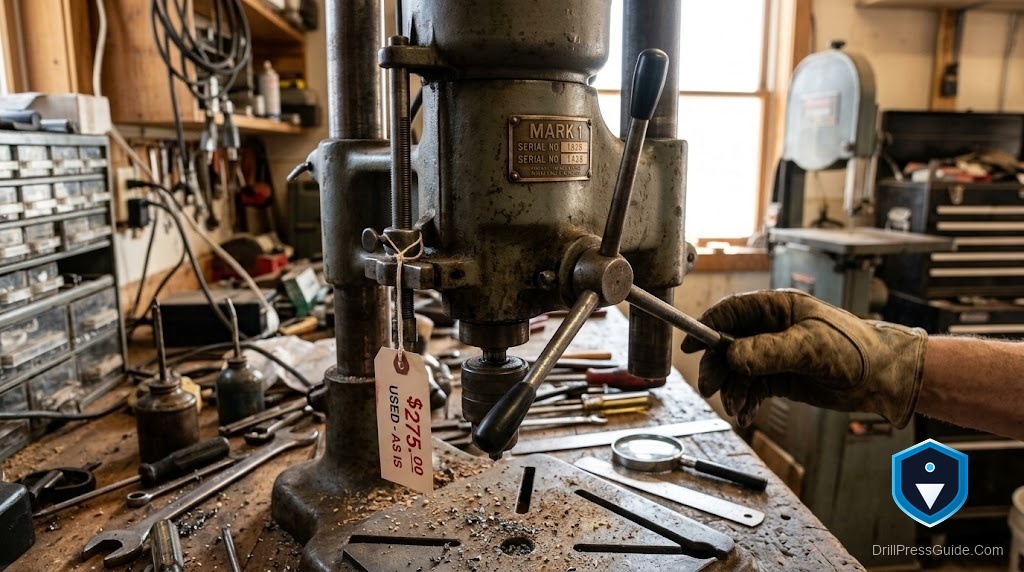
Type “Mark 1 drill press” into a search bar and you quickly learn that the name is doing a lot of work for very little clarity. It turns up on vintage import machines, on badge-engineered presses sold under house names, and in listings where a seller simply calls their old press a “Mark 1” because that is what the faded plate says. If you are shopping for one, or trying to figure out what you already own, the smart move is not to chase a spec sheet that may not exist. It is to learn to read the machine itself, because on a used drill press the metal tells the truth more reliably than the label.
Why the name is slippery
Unlike a WEN 4214 or a Delta 18-900L, “Mark 1” is not a single, well-documented model with one official parts list. It shows up as a series or trim name across different makers and eras, often on imported benchtop presses. That means two machines both called “Mark 1” can be built quite differently. So rather than trusting the name, treat it as a starting point and verify everything by measurement and inspection. This is the same discipline that serves you on any unbranded or lightly branded used press, and it never lets you down.
Read the machine, not the badge
Here is how to size up any Mark 1 press in front of you:
- Swing. Measure from the center of the spindle to the column and double it. That number (often 8, 10, or 12 inches on these machines) tells you the widest workpiece you can reach the center of.
- Spindle taper. Drop the chuck and read the arbor. Small presses are usually JT33; larger ones often MT2. This one measurement decides which chucks and arbors fit.
- Chuck capacity. Typically 1/2 inch on smaller machines, 5/8 inch on larger ones.
- Speed system. Almost always a stepped-pulley belt drive. Count the pulley steps to know your speed range.
- Motor. Note the horsepower and amperage on the plate and confirm it runs smoothly. Fractional HP means light-duty, and that is fine as long as you match the work to it.
- Iron. Heft and casting thickness tell you more about quality than any name. Heavier is generally stiffer and drills straighter.
What to check before buying used
A Mark 1 is a used-machine purchase, so inspect it like one. Turn the spindle by hand for smoothness, check the quill for side play (worn bearings are serviceable), and watch for excessive chuck runout, which can mean a tired chuck or a bent spindle. Confirm the table raises, tilts, and locks, and look hard for cracks in the castings, the one fault you cannot easily fix. Missing feed handles, depth-stop parts, or a chuck are common and usually replaceable with generic spares, so a complete, smooth-running machine is worth more than a rough one with a nicer badge.
Where a Mark 1 fits, honestly
Most machines wearing this name are light-duty benchtop presses, and that sets sensible expectations. They are genuinely good for pilot holes, dowel joinery, small brackets, light metal, and drum sanding, the everyday shop tasks that a handheld drill does poorly. They are not built to hog large holes in thick steel, and pushing a fractional-horsepower press that hard will only bog the motor and frustrate you. Matched to light work, one of these can serve for years. If your work runs to heavy metal or wide stock, skip the mystery-badge route and buy a known 12-inch press with published specs and parts support instead.
Tooling that makes any Mark 1 better
Because these presses use standard tapers and belts, the upgrades are generic and effective. Fit a quality keyed drill chuck with the matching arbor once you have confirmed your taper, and add a solid drill press vise so the workpiece stays put and your holes land where you aimed. A fresh drill press V-belt removes vibration and slippage, and a spare drill press chuck key replaces the one that is always missing. Confirm the arbor taper before ordering, since these machines vary from unit to unit.
The verdict
A Mark 1 drill press is worth owning when the machine in front of you is complete, smooth, and free of cracked iron, because the name tells you almost nothing and the metal tells you everything. Measure the swing, read the spindle taper, count the pulley steps, and inspect the spindle, quill, and castings before you commit. Match it to the light-duty work these presses do well, equip it with a good chuck, vise, and belt, and it will earn its bench space. If you need heavy-metal muscle or a paper trail of parts, choose a documented 12-inch press instead, and let the Mark 1 be the honest little workhorse it is.
Takeaways:
- “Mark 1” is a loosely used series or trim name, not one documented model, so verify by measurement.
- Read the swing, spindle taper, chuck capacity, speed system, motor, and iron rather than trusting the badge.
- Inspect the spindle, quill, castings, and completeness before buying used.
- These are light-duty presses; match them to small work and equip them with a good chuck, vise, and belt.
FAQ
What is a Mark 1 drill press? It is a name that appears as a series or trim label across different makers and eras, usually on light-duty benchtop presses, rather than one single documented model. Identify yours by its measurements, not the name.
How do I identify my Mark 1 drill press? Measure the swing, read the spindle taper (JT33 or MT2) by removing the chuck, note the chuck capacity and motor rating, and count the pulley steps for the speed range.
What taper and chuck does it use? Smaller machines usually use JT33 with a 1/2-inch chuck; larger ones often use MT2 with a 5/8-inch chuck. Confirm by dropping the existing chuck and reading the arbor.
Is a Mark 1 drill press good for metal? For light metal at the right speed, yes. Most are fractional-horsepower, light-duty machines, so they are not built to hog large holes in thick steel.
What should I check before buying one used? Smooth spindle rotation, minimal quill play, acceptable runout, a table that raises, tilts, and locks, no cracked castings, and all major parts present.
Can I still get parts? The common wear items (chuck, arbor, belt, key) are generic and easy to match by size. Confirm the taper before ordering an arbor.
Should I buy a Mark 1 or a known-brand press? If it is complete, smooth, and sold for what it is, a Mark 1 makes a fine light-duty press. For heavy work or guaranteed parts support, choose a documented 12-inch press with published specs.
References
- VintageMachinery.org, drill press manufacturer and photo index (for identifying badged and imported presses): http://vintagemachinery.org/mfgindex/
- OWWM.org, Old Woodworking Machines identification forums and manuals: https://owwm.org/
- Sears PartsDirect, drill press manuals and parts diagrams (reference for matching generic parts by measurement): https://www.searspartsdirect.com/