Drill Press Table with Dust Collection: Cleaner Drilling, Better Visibility
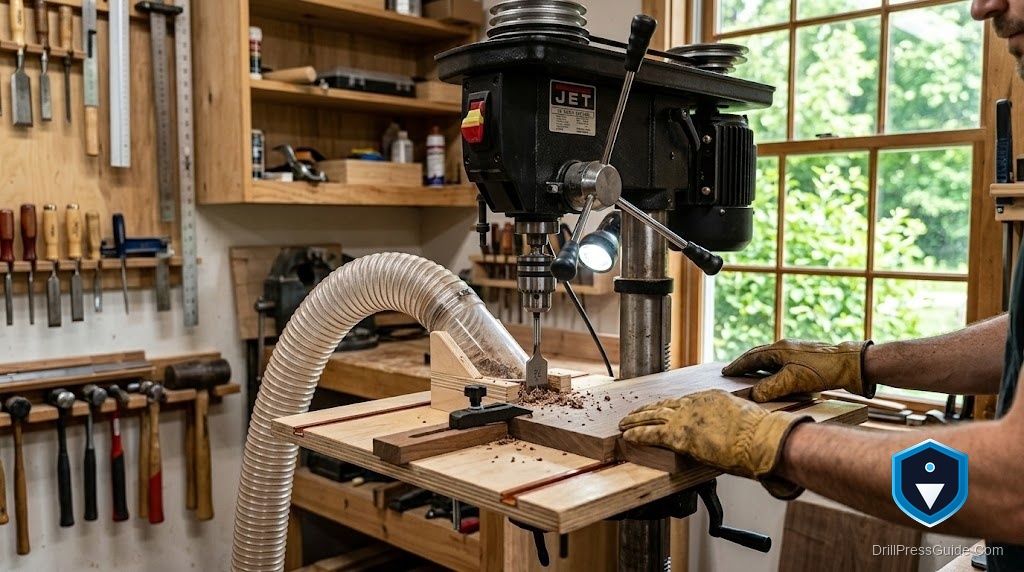
Drilling wood on a drill press throws chips and fine dust straight up into your line of sight and all over the table, which is annoying at best and a visibility and lung hazard at worst. A drill press table with dust collection tackles that at the source, pulling chips away as they are made so you can see your layout line and breathe cleaner air. It is a genuinely worthwhile upgrade, but only if the collection is set up where the dust actually comes from and matched to enough airflow to move it. Here is how it works and how to get it right.
A drill press table with dust collection is a work surface with a built-in or add-on port, positioned near the bit, that connects to a shop vacuum or dust collector to capture chips and dust as you drill. It keeps the table and your sightline clear and reduces airborne dust, adding cleanliness and visibility to the press.
Short answer: a dust-collection table captures chips at the bit by connecting a port near the hole to a shop vacuum or dust collector. Position the pickup close to where the bit exits and match it to enough airflow, and drilling stays clean with a clear view of your work.
Where the pickup has to be
Dust collection lives or dies on pickup location. Chips are made right at the bit, so the collection port has to sit as close to that point as possible, at the hole, or in a fence or shroud that surrounds it. Put the port too far away and the chips simply fall to the table before the airflow can grab them. The best dust-collection tables build the port into a fence or an opening right beside the bit, so the suction acts where the mess is created.
Matching the airflow
A port only works if something moves enough air through it. A shop vacuum provides high-suction, small-hose pickup that suits a drill press well; a larger dust collector moves more air through a bigger hose. Either can work, the key is matching the hose and port size so you keep the airflow up. Too small a port starves the pickup; too large a hose on a weak vacuum loses velocity. Size the connection to the tool you have.
Check before you buy or build
- Port location. The pickup must sit right at the bit, ideally in the fence or a shroud.
- Hose match. Size the port and hose to your shop vacuum or collector.
- Mounting. Confirm the table mounts to your machine and keeps spindle travel.
- Insert. A replaceable insert at the bit exit keeps things clean and protects the bit.
Built-in port versus a shop-made shroud
Against a shop-made shroud, a table with a built-in dust port wins on a clean, integrated pickup and quick hookup, and loses on being tailored to your exact vacuum. A shop-made shroud or fence port, from an IBUILDIT or Woodsmith plan, lets you place the pickup and size it to your hose, though it takes build time. For a fast, tidy solution, buy; for a custom fit, build. You can compare a drill press table with dust collection with a dust collection hose kit.
Setting it up
- Confirm the table mounts to your machine and clears the spindle travel.
- Position the dust port right at the bit, in a fence or shroud if possible.
- Match the hose and port to your shop vacuum or dust collector.
- Fit a replaceable insert at the bit exit and start the vacuum before drilling.
- Clamp the work, set the correct speed, wear eye protection, and keep clear of the chuck, per OSHA and CCOHS.
Who should read this
If you drill a lot of wood and are tired of chips in your eyes and dust in your air, a dust-collection table is a clear upgrade, put the pickup at the bit and match the airflow. If you drill mostly metal, chips are heavier and fall away, so dust collection matters less than a good insert and clamping.
Bottom line
A drill press table with dust collection keeps chips and dust out of your sightline and your lungs by capturing them at the source. The whole thing hinges on placing the pickup right at the bit and matching it to enough airflow from a shop vacuum or collector. Get those two right, buying or building, and drilling stays clean with a clear view of the work.
- Dust collection works only when the pickup sits right at the bit.
- Match the port and hose to your shop vacuum or dust collector’s airflow.
- Confirm the table fits your machine and add an insert at the bit exit.
FAQ
Where should the dust port be on the table? As close to the bit as possible, ideally built into a fence or a shroud around the hole, so it captures chips where they are made.
Do I need a big dust collector? No. A shop vacuum’s high suction suits a drill press well. Match the hose and port size to whatever vacuum or collector you have.
Will dust collection fit my press? Only if the table mounts to your machine and keeps your spindle travel. Confirm the mounting before buying or building.
Does it help with metal chips? Less so. Metal chips are heavier and fall to the table, so a good insert and clamping matter more than suction for metalwork.
Can I build my own dust-collection table? Yes. Plans from IBUILDIT and Woodsmith let you add a fence port or shroud and size the pickup to your hose.
Why does my collection miss chips? Usually the pickup is too far from the bit or the hose is mismatched. Move the port to the bit and match the hose to your vacuum.
References
- IBUILDIT Drill Press Table Plans: https://ibuildit.ca/plans/drill-press-table/
- Woodsmith Drill Press Table Plan: https://www.woodsmithplans.com/plan/pw-drill-press-table/
- OSHA Woodworking eTool, Drill Press: https://www.osha.gov/etools/woodworking/production/machines-tools/drill-press