Rockwell Drill Press Table: What to Measure Before Ordering a Replacement
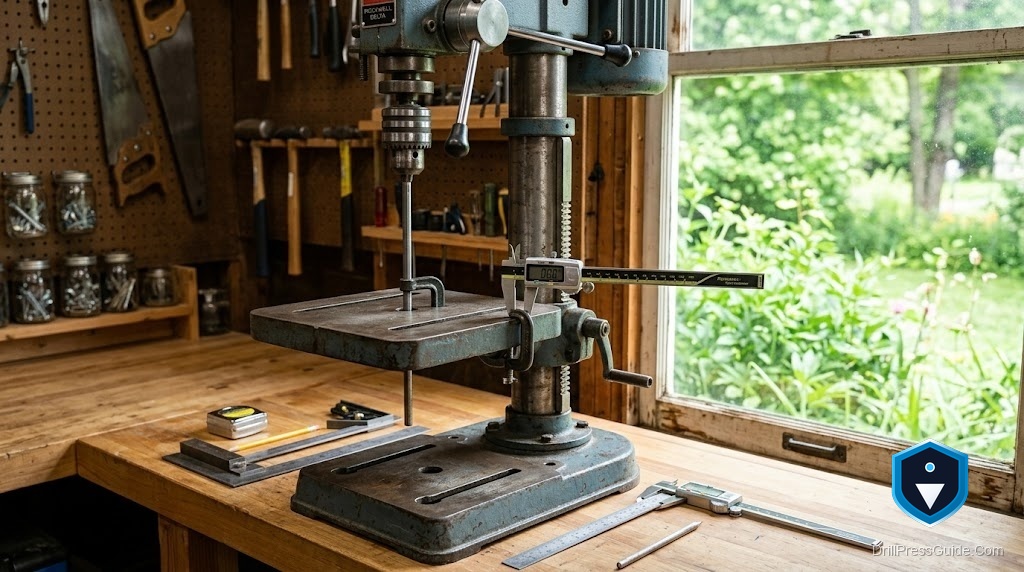
Rockwell drill presses, many of them Delta-Rockwell machines from the mid-1900s, are vintage-tool favorites that keep working long after their catalogs went out of print. That is precisely what makes the table question tricky: these presses are old, the model spread is wide, and factory parts can be scarce. So before you order a replacement or upgrade, the smart move is to measure your actual machine, because on a press this age, fit is everything and guesswork is expensive.
A table for a Rockwell drill press is either the original factory table or a replacement or upgrade top that mounts to the existing table or column. Because Rockwell and Delta-Rockwell built varied vintage models, fit depends on your machine’s table size, column diameter, and mounting. An upgrade adds a fence, stop block, and replaceable insert, and shop-made tables are common on these older presses.
Short answer: measure your Rockwell’s table, column diameter, and mounting before ordering, since factory parts for vintage models are scarce and not interchangeable. A shop-made top from a plan is often the surest fit for an old Rockwell.
Why measuring matters more on a vintage press
On a decades-old Rockwell, you cannot assume a part will be in stock or that a modern table will bolt on. Models differ, and original tables and brackets can be hard to find. Measuring your machine, the existing table size, the column diameter, and how the table clamps and raises, tells you exactly what you are working with, so you can hunt for the right salvaged part or size a new top to fit. Skipping this step on a vintage press is how you end up with a table that will not mount.
Salvaged factory part versus a shop-made top
Because new factory tables for old Rockwells are scarce, your realistic options are a salvaged original or a shop-made top. A salvaged factory table keeps the machine original but depends on finding the right one for your model. A shop-made top, built from a plan and sized to your measurements, is the more reliable route to a good fit and adds modern features, an adjustable fence, a stop block, and a replaceable insert, that the vintage casting never had. A commercial pattern like the WEN DPA2412T and plans from IBUILDIT and Woodsmith show how those features go together.
Measure and check before ordering
- Table size. Measure the existing table so a replacement or top matches.
- Column diameter. The table mounts to or around the column; measure it.
- Mounting. Note how the table clamps and raises, so a part or top can adapt.
- Route. Decide between hunting a salvaged factory table and building a top.
Shop-made table versus chasing a rare part
Against chasing a rare factory table, a shop-made top wins on certain fit and added features, and loses on keeping the machine fully original. If originality matters, hunt for the correct salvaged part; if you just want a flat, capable surface, build one to your measurements. For most working Rockwells, the shop-made top is the practical answer. You can compare a drill press table with fence with T-track hardware to build your own.
Fitting or building one
- Measure your Rockwell’s table, column diameter, and mounting.
- Decide between hunting a salvaged factory table and building a top to your measurements.
- Mount the top flat and secure, clearing the column and travel.
- Add the fence, stop block, and a replaceable insert under the bit.
- Clamp the work, set the correct speed, wear eye protection, and keep clear of the chuck, per OSHA and CCOHS.
Who should read this
If keeping your Rockwell original matters, measure carefully and hunt for the correct salvaged table. If you just want a capable, flat surface with a fence, build a shop-made top sized to your machine, it is usually the surest fit on a vintage press.
Bottom line
Before ordering a table for a vintage Rockwell drill press, measure the table, column diameter, and mounting, because factory parts are scarce and not interchangeable. Then hunt for the correct salvaged table to stay original, or build a shop-made top for a certain fit and modern features. On a press this age, measuring first saves the most grief.
- Vintage Rockwell models differ and factory parts are scarce; measure first.
- Hunt a salvaged factory table for originality, or build a top for a certain fit.
- A shop-made top adds a fence, stop block, and insert the old casting lacked.
FAQ
Why is measuring so important on a Rockwell? These presses are vintage, models differ, and factory parts are scarce and not interchangeable. Measuring tells you exactly what will fit.
Can I still buy a factory table for an old Rockwell? Sometimes only as a salvaged original. New factory tables are scarce, so many owners build a shop-made top instead.
What should I measure? The existing table size, the column diameter, and how the table clamps and raises, so a salvaged part or new top can fit or adapt.
Is a shop-made table a good idea? Yes, often the surest fit on a vintage press. Built to your measurements, it adds a fence, stop block, and replaceable insert.
Salvaged part or shop-made top? Salvaged to keep the machine original; shop-made for a certain fit and modern features. Most working Rockwells do well with a built top.
Will a new top reduce drilling depth? A thick top raises the work, so confirm your spindle travel still reaches your tallest parts after fitting it.
References
- WEN DPA2412T Drill Press Table: https://wenproducts.com/products/24-by-12-inch-drill-press-table-with-an-adjustable-fence-and-stop-block-t
- IBUILDIT Drill Press Table Plans: https://ibuildit.ca/plans/drill-press-table/
- Woodsmith Drill Press Table Plan: https://www.woodsmithplans.com/plan/pw-drill-press-table/